


A small asteroid designated 2025 PN7 has become Earth's latest celestial companion, according to Yahoo News.
Yahoo News reports that NASA this week verified the space rock as a "quasi-moon" following its discovery by the University of Hawaii – a designation given to rare celestial objects whose solar orbits synchronize almost perfectly with Earth's path. Rather than functioning as an actual moon, the asteroid maintains a trajectory alongside our planet, following the Sun in such close alignment that it seems to track Earth through space.
The asteroid measures between 18 and 36 meters across, comparable to a small building's height, as stated by Yahoo News. While modest compared to most celestial bodies, the rock has earned recognition within Earth's orbital vicinity.
Gravitational forces don't bind this asteroid to Earth the way they anchor the Moon, according to Yahoo News. The relationship resembles two runners maintaining identical speeds on parallel lanes – staying nearby without ever making contact.
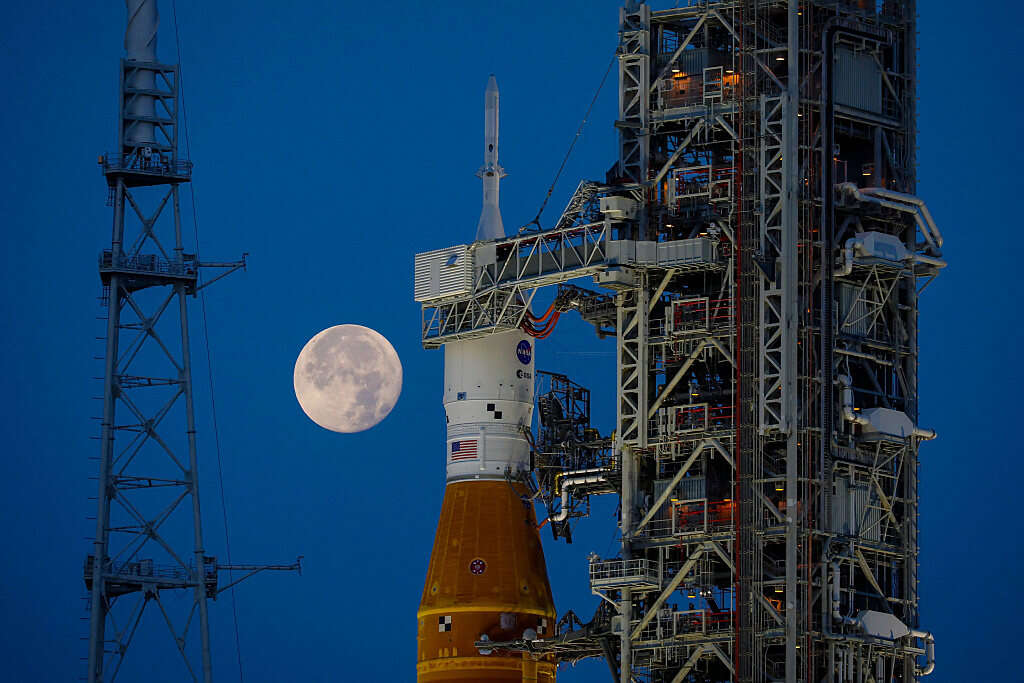
The space rock has likely maintained this synchronized path for approximately six decades and will continue its companionship through 2083 before departing into deeper space, astronomers told Yahoo News. The asteroid approaches within 4 million kilometers (2.5 million miles) at minimum distance, about ten times the Moon's separation from Earth. Maximum distance reaches 17 million kilometers (10.6 million miles). These variations result from gravitational influences exerted by the Sun and other planets.
University of Hawaii researchers initially identified the object through standard telescope observations this year. The team noticed what appeared as a dim point traveling against background stars at Earth's precise solar orbital velocity. Following multiple weeks of tracking, NASA validated the findings – Earth had acquired a temporary orbital companion.
Only eight quasi-moons have received astronomical confirmation to date, with each discovery providing insights into asteroid trajectories and gravitational effects surrounding Earth.
These space rocks offer scientific value beyond mere interest. Quasi-moons contribute to orbital modeling improvements, enhance predictions for objects approaching Earth, and potentially provide accessible destinations for space missions. Their proximity, orbital consistency, and accessibility compared to distant space objects make them attractive research subjects.
The asteroid 2025 PN7 lacks the Moon's prominence, yet its presence merits recognition – a quiet companion maintaining Earth's pace through continuous solar circuits.


