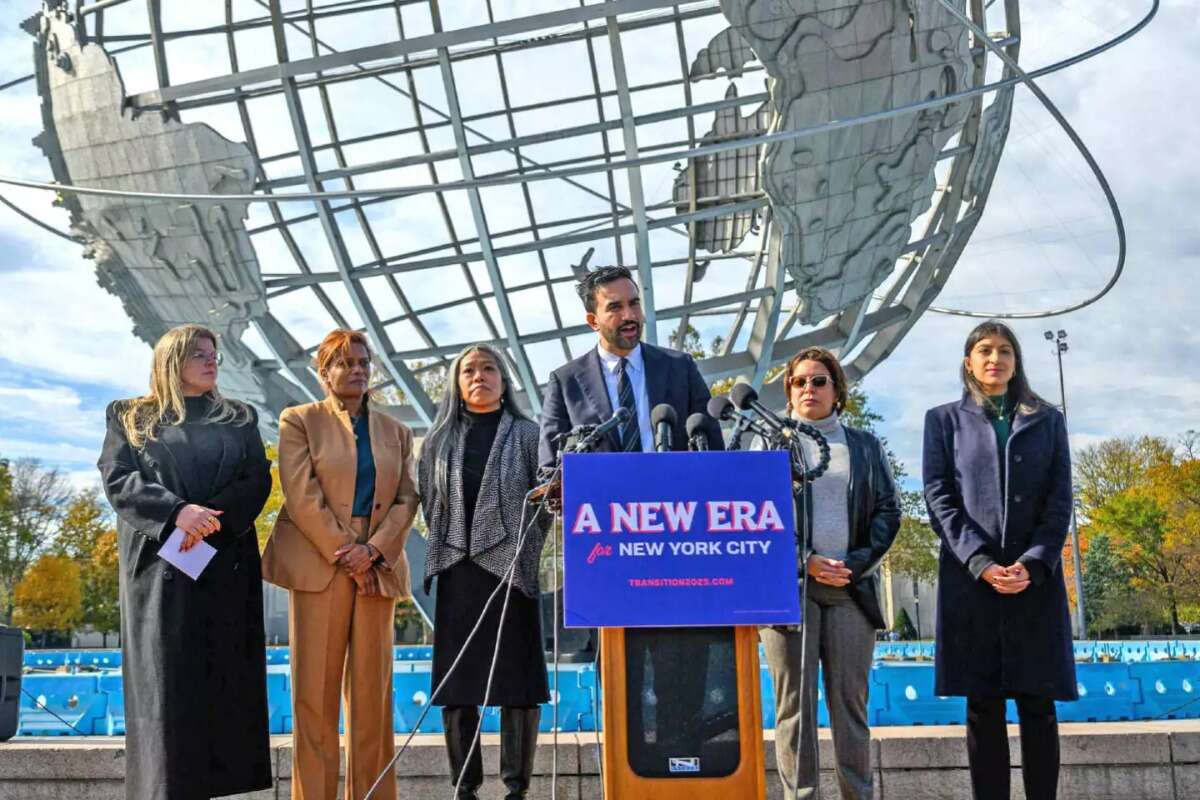
On Tuesday night, Democrats swept every race: Mikie Sherrill will be the next governor of New Jersey; Abigail Spanberger will take over in Virginia; Jay Jones will be the state's new attorney general; and, of course, Zohran Mamdani, the 34-year-old anti-Israel socialist, will soon move into Gracie Mansion, the official residence of New York's mayor.
Anyone who wishes can rage against the victors and once again remind everyone how awful Mamdani is. In the days before the race, the young, inexperienced candidate did everything he could to signal that he had no intention of softening his most extreme positions. On the contrary: he spent the final stretch of the campaign in the company of Jeremy Corbyn, the former British Labour leader ousted over rampant antisemitism.
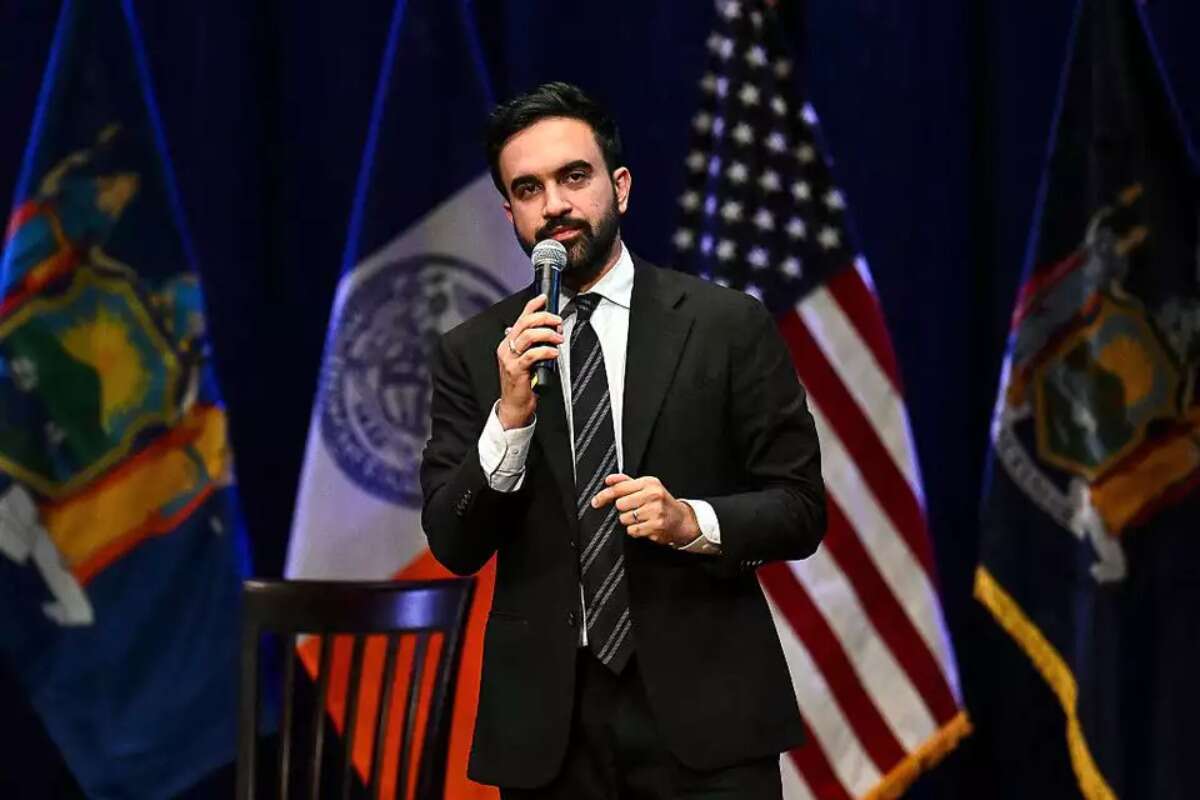
To the million New Yorkers who voted for Mamdani, none of that mattered. Statements such as "When the boot of the NYPD is on your neck, it's been laced by the IDF," meant to blame Israel for all of America's real and imagined evils, only boosted his standing.
But the real story of these elections isn't the winners, it's the losers.
The power of a shout
How did the Republicans suffer such a crushing defeat? In the coming weeks we'll hear countless explanations, hopefully backed by turnout data. But anyone looking for one central cause need not look far: Republicans were beaten because, for months, the party has been waging what increasingly looks like a civil war within its own ranks.
Their leader, President Donald Trump, remains as popular as ever, even as Washington's prolonged paralysis eats away at public support. The federal government, for example, has been shut down for weeks due to the parties' failure to agree on a budget. But Trump, for better or worse, is an unconventional candidate. He was elected despite—and not because of—the Republican Party, and brought with him a broad, diverse coalition of voters who see him, not the party brand, as their champion. With three years left in his term and no legal path to run for a third, the race to succeed him has already begun.
This time, though, the battle is not only over who will be the next Republican nominee after Trump. It's about what the party itself will become.
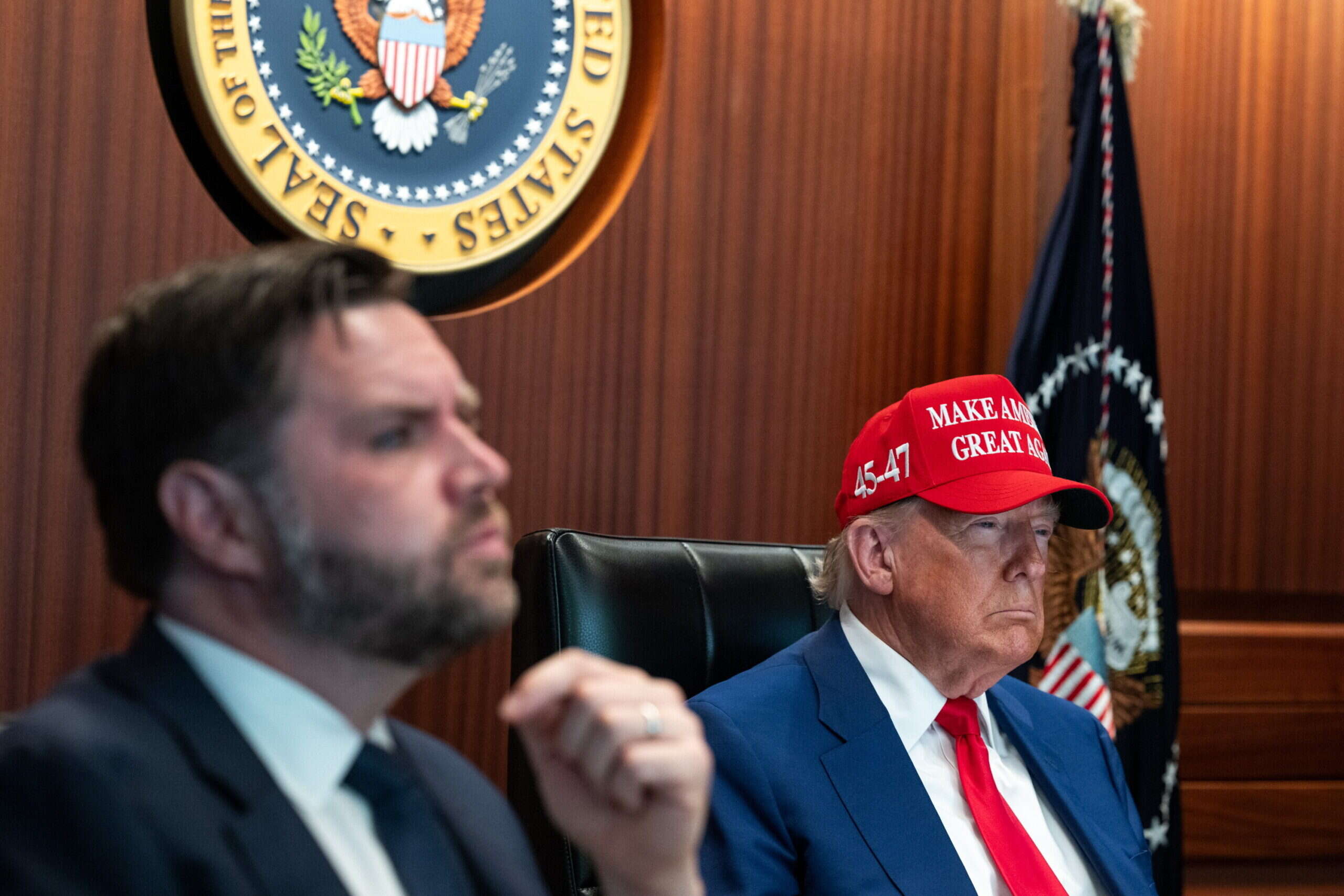
On one side stand figures like Secretary of State Marco Rubio, who promise a return to classical conservatism: a muscular foreign policy, aggressive free-market economics, and an unrelenting fight against the progressive chaos that took root in America under Barack Obama and Joe Biden. On the other side are candidates like Vice President J.D. Vance, pulling the party in a very different direction.
A troubling example of that direction came just last week. Vance spoke at a Turning Point USA event, the conservative movement founded by his late friend Charlie Kirk, who was murdered earlier this year by a left-wing gunman. A student in the audience asked Vance: "I'm a Christian," he said, "and I don't understand why we support Israel, a Jewish state that doesn't seem to share our values."
Vance could have easily explained the importance of the US-Israel strategic alliance. He could have emphasized the obvious point that, in a war between a Jewish democracy and an Islamist terrorist organization, there should be no question where America stands. Instead, Vance mumbled something about Trump and how Israel doesn't tell him what to do, then veered into theology: "The reality is that Jews don't believe Jesus Christ is the Messiah," said Vance, a Catholic convert baptized in 2019. "My approach has always been that if we have disagreements, we should discuss them publicly."
Imagine for a moment a serious presidential candidate declaring that Americans should publicly debate whether Catholic politicians can be trusted to represent voters rather than follow the pope's orders from Rome. Or whether Hindus, who don't believe in one God, should be allowed to run for office. Such questions sound absurd, and rightly so. The separation of church and state is a bedrock principle of the American constitution. So what made the vice president, one of the GOP's highest-ranking figures, think that the right response to a political question was to turn it into a religious one?
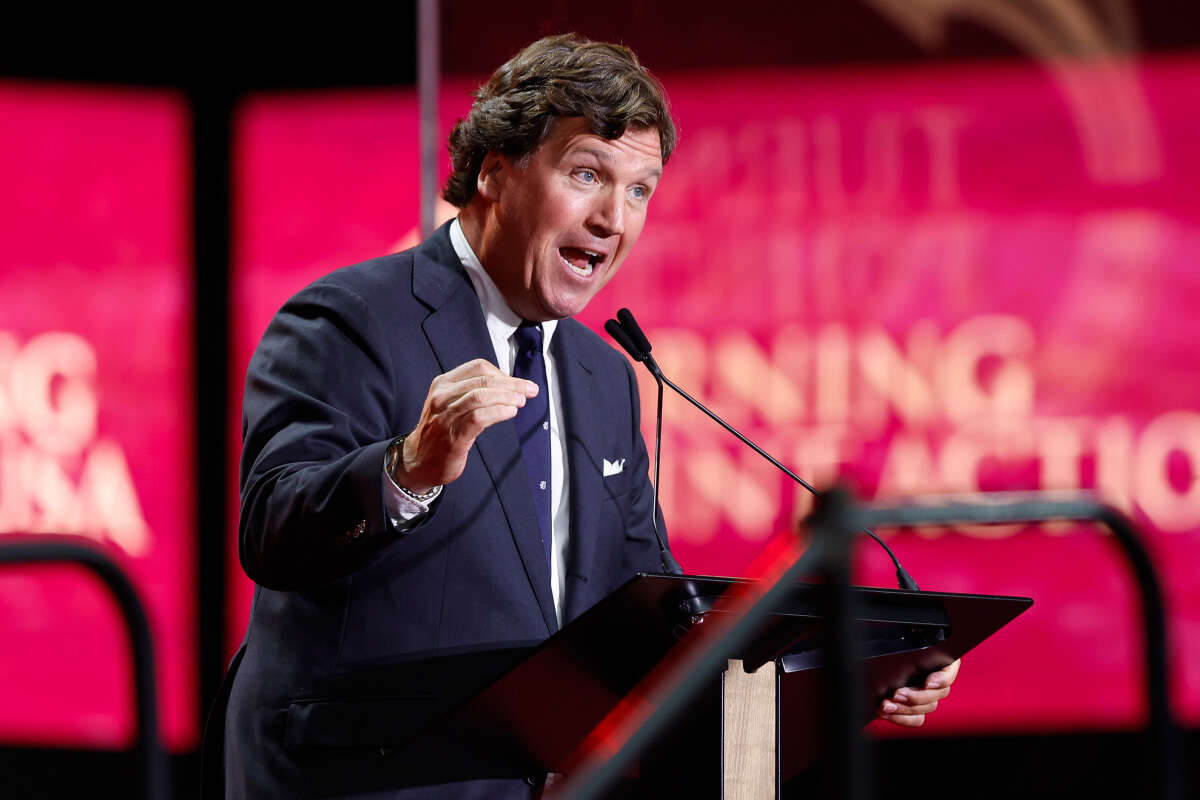
The answer, in short, is Tucker Carlson.
The popular television host was ousted from Fox News in 2023 under complex circumstances. He launched his own podcast and wasted no time steering it in a new ideological direction. In February 2024 he traveled to Moscow for a warm interview with Vladimir Putin, who claimed, among other things, that Poland was to blame for the Nazi invasion in World War II and that Volodymyr Zelensky was the villain in his war with Ukraine. Carlson then toured Moscow's subway and shops, telling his audience that such order and cleanliness couldn't be found in any American city.
Some raised eyebrows, lavish praise for Russia and propaganda that demeaned the US hardly sound conservative. But Carlson was just getting started. Months before the presidential election, he hosted online influencer Darryl Cooper, who told viewers that Hitler was the real victim of World War II and that Winston Churchill refused to compromise with the "peace-loving" German chancellor only because a small group of people—no need to specify who, but they control the banks and the media—pressured him.
Last month, Carlson invited an even viler guest: Nick Fuentes, a social-media personality who has repeatedly expressed admiration for Hitler and Stalin.
What drove the supposedly conservative pundit to such extremes? The reasons are many, but the overall direction is clear: Carlson, and now Vance after him, understand that to capture the imagination of young and apathetic voters, one must sound extreme and exciting.
Replacing one madness with another
Some call this trend the woke right: just as the progressive left embraces absurd ideas, like denying biological reality and claiming men can become women and vice versa, the right is now flirting with its own delusions. If the left compares every conservative to Hitler, the right responds by admiring Hitler himself. If the left denounces public expressions of faith, the right flaunts overtly religious dogma.
Is this strategy sustainable? Sadly, for now, yes. Mamdani, a textbook representative of left-wing wokeness, won 81 percent of the vote among young women aged 18 to 29 in New York. Carlson, the face of right-wing wokeness, has surpassed media giants like Joe Rogan and taken his podcast to the top of the US ratings. Voters—especially younger ones—are flocking to the loudest, most extreme voices on both sides, a reality that no serious politician can ignore.
Instead of governing or even trying to beat the Democrats, Republicans are spending more and more time reacting to provocations from Carlson and his allies.
Just last month, Kevin Roberts, head of the leading conservative think tank the Heritage Foundation, released a fiery video defending Carlson, claiming the right must not bow to the left's "cancel culture" and declaring his unwavering support for his friend. Almost immediately, politicians, columnists, and major conservative donors pushed back, rightly arguing that conservatives must be clear about what they stand for. There is nothing conservative, they said, about backing a demagogue who boosts his profile by promoting ideas, such as support for Russia and Iran or chummy interviews with neo-Nazis, that have nothing to do with mainstream Republican values.
To his credit, Roberts listened, apologized, and fired the young staffer responsible for the pro-Carlson video. But the damage was done. In the critical weeks before key elections, Republicans focused not on policy or candidates but on internal feuds that signaled to voters that the party had lost its way.
And that process is deeply troubling.
Voters who have traditionally backed Democrats but are repelled by radicals like Mamdani looked naturally to the GOP, as one of only two parties in a binary system, and wondered if they might find their new political home there. But a Republican Party that seems intent on signaling that its next leader could embrace dangerous, delusional, anti-American ideas has abandoned the moderate center. The same holds true on the other side: any Republican seeking refuge from today's madness finds only a different flavor of madness across the aisle.

The question of price
The consequences of this spiral were visible this week at the ballot box. In New York—where affluent, highly educated voters, the classic profile of woke leftists, abound—the radical candidate swept over a million votes. Elsewhere, voters recoiled from the GOP's recent turmoil and placed their trust in uninspiring but steady Democratic candidates.
Since this internal civil war shows no sign of ending, it's not hard to imagine a similar defeat awaiting conservatives in next year's far more consequential elections. One can only hope that someone in the party will finally read the map correctly and make the effort to define what Republicans actually believe in. If that doesn't happen, the GOP will be left with only the loudest fringe voices, and a shrinking voter base.
Still, there is another possibility. The voices already warning against extremism, like Texas Senator Ted Cruz, might yet lead a rare process in global politics: one in which candidates are required not merely to throw around slogans and promises but to confront serious questions honestly and explain, clearly and credibly, what they truly stand for.