


Tuesday brought the collapse of a bridge at a hydropower facility in southwest China, with the structure plunging into a river mere months following its opening, Reuters confirmed. A Barkam County official verified the failure to the state-run Global Times, reporting zero casualties while noting Monday's discovery of fractures on the roadway and slope prompted authorities to impose "temporary traffic controls," according to Reuters.
Widely shared footage on Chinese social media platforms captured the Hongqi Bridge in Sichuan Province buckling before dropping into the waterway below, creating a massive dust cloud. The incident occurred approximately 3 p.m. local time near the G317 national highway, according to China Central Television (CCTV) News. Local transportation and security bureaus reported Monday afternoon deformation signs on the right-bank slope hours before the failure, leading officials to promptly "shut down the structure" to all movement and issue public warnings about potential safety risks, CCTV News said.
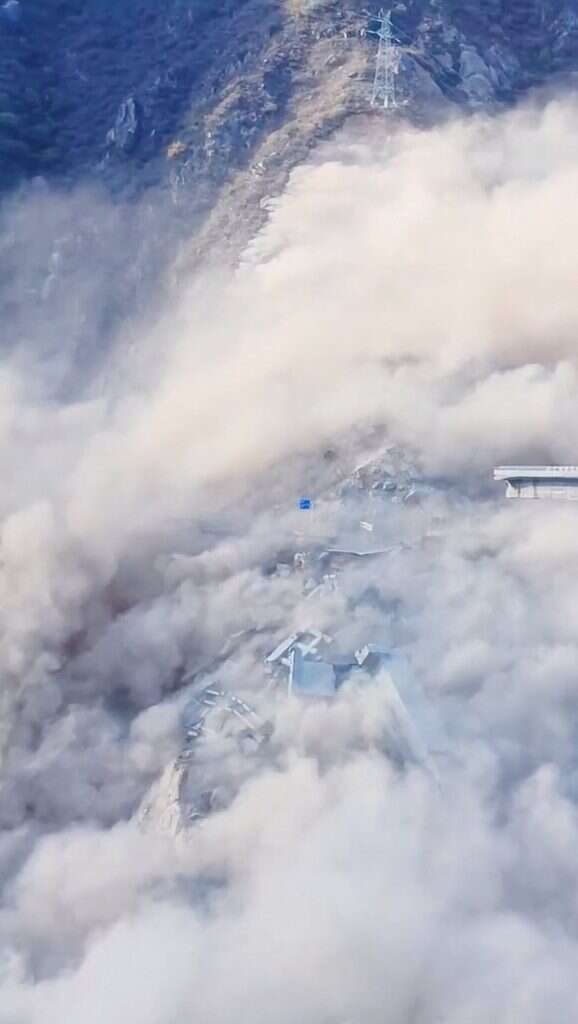
Positioned in Sichuan Province's mountainous Maerkang area, the Hongqi Bridge reached completion earlier this year as part of the G317 national highway – a crucial route connecting central China to Tibet, Times Now reported. The 758-meter (2,487-foot) cantilevered two-lane beam structure stood roughly 625 meters (2,051 feet) above the canyon floor, with piers extending up to 172 meters (564 feet) in height. It was constructed by the state-backed Sichuan Road & Bridge Group to expand access to the Tibetan Plateau, according to Times Now.
Part of broader governmental efforts to improve connectivity and drive economic growth across western China's rugged landscape, the bridge construction represented infrastructure ambitions meant to showcase engineering progress. Authorities intended the span as a national symbol, yet vehicular traffic resumed only months before the collapse – marking a brief operational chapter for what was designed to demonstrate China's engineering capabilities.
The collapse's cause remains undisclosed by state-run outlets, though early assessments suggest "geological instability" may have contributed, with officials confirming no vehicles or pedestrians occupied the bridge during the incident as investigations continue, CCTV News reported.


