


French army captain Alfred Dreyfus was elevated posthumously to the status of brigadier general on Tuesday, 130 years after his mistaken treason conviction in what is considered one of France's most infamous instances of antisemitism.
This prominent case of antisemitism has generated outrage over several generations, and France on Tuesday promoted Alfred Dreyfus, a Jewish army captain who was incorrectly convicted of treason in 1894, to the status of brigadier general as an act of formal reparation, France 24 reported. The law is regarded as a significant symbolic action in contemporary France's battle against antisemitism, arriving during a period of rising concern regarding hate crimes directed at Jews within the country, amid the context of the Gaza conflict.
On Monday, President Emmanuel Macron and Prime Minister Sebastien Lecornu affixed their signaAlfred Dreyfus, brigadier general, antisemitism, treason convictiontures to the promotion, establishing it as law, which subsequently appeared in the Official Journal of new legislation on Tuesday. "The French nation posthumously promotes Alfred Dreyfus to the rank of brigadier general," the law stated. The legislation received unanimous support from the lower house of Parliament in June, and the Senate endorsed the measure earlier this month, according to France 24.
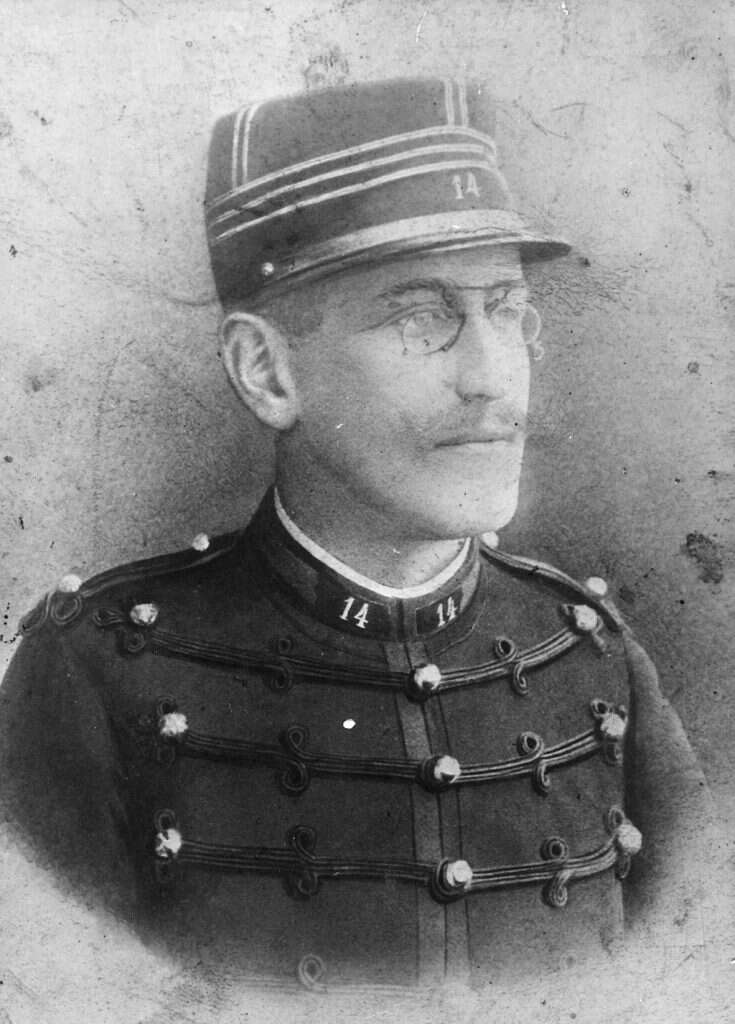
In October 1894, Dreyfus, then a 36-year-old army captain from the Alsace area of eastern France, faced accusations of transmitting secret data regarding new artillery equipment to a German military attaché. The "Dreyfus affair" began with this accusation, which was based on comparing the handwriting on a piece of paper found in the German official's wastepaper basket in Paris.
Amid an aggressive antisemitic press campaign, Dreyfus underwent a trial. However, the celebrated "J'accuse...!" ("I accuse") pamphlet was subsequently written by novelist Emile Zola to support the captain. Despite the absence of concrete evidence, the captain was convicted of treason, given a life sentence at the notorious Devil's Island penal colony in French Guiana, and publicly stripped of his rank.
The head of the intelligence services, Lieutenant Colonel Georges Picquart, secretly reopened the investigation and determined that the handwriting on the damning message belonged to Ferdinand Walsin Esterhazy, another officer. When Picquart presented this evidence to the general staff of the French army, he was himself forced out of the military and jailed for a year, while Esterhazy was acquitted.
The captain was brought back to France for a second trial in June 1899. He was initially found guilty and sentenced to 10 years in prison, before receiving an official pardon, although his name was not cleared of the charges. It took until 1906, following numerous unforeseen developments, for the High Court of Appeal to overturn the initial ruling, thereby exonerating Dreyfus. He was restored to his position with the rank of major and awarded a Legion d'Honneur decoration. Serving during World War I, he passed away in 1935 at the age of 76.
Individuals who advocated for the new law hold the belief that had Dreyfus been permitted to continue his professional pursuits normally, he would have advanced to the highest position within the French army.
The largest Jewish community outside of Israel and the United States resides in France, which also hosts one of the biggest Muslim communities in the European Union. Since the Palestinian terrorist group Hamas launched an attack on Israel on October 7, 2023, the number of reported assaults against members of France's Jewish community has increased significantly.


