


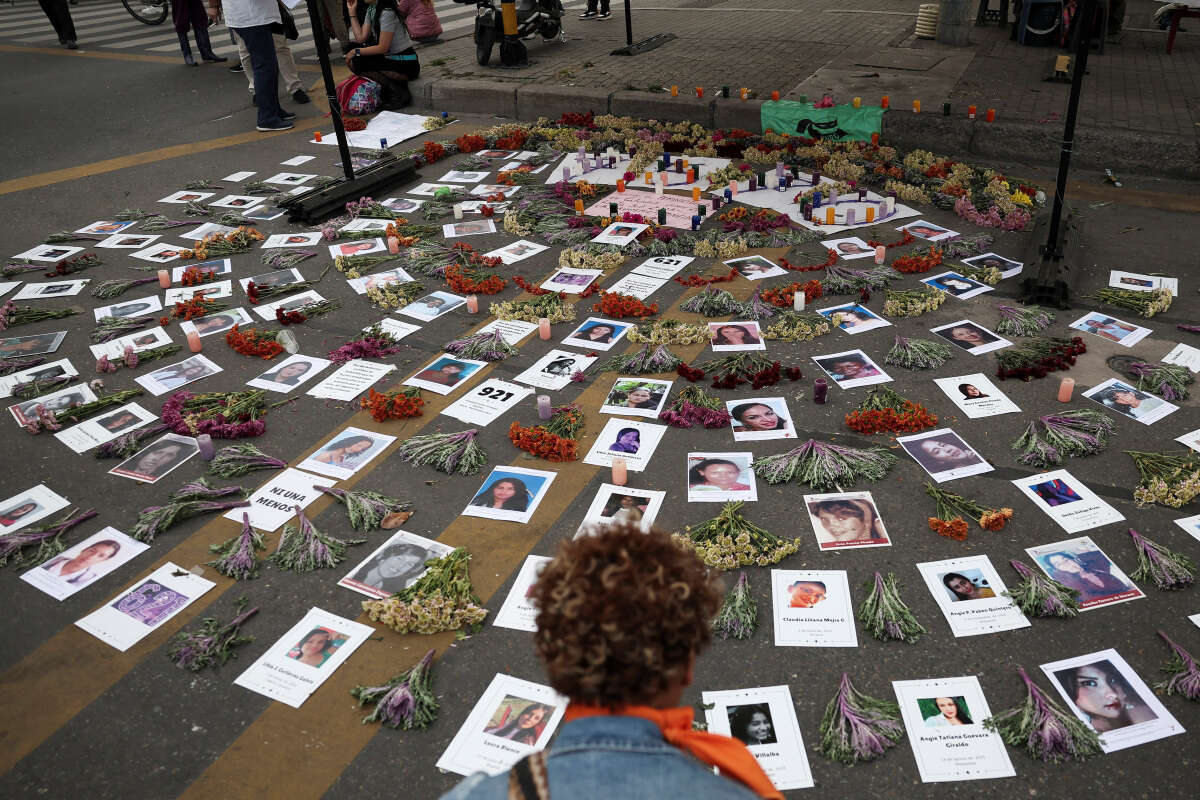
Protests have swept across Italy in recent days as women's groups call for stronger action against gender-based killings, reports the BBC. On Saturday, demonstrators led by Non Una Di Meno filled Rome's streets with banners against violence toward women.
Lawmakers in Italy's parliament have voted unanimously to designate femicide – the murder of a woman for reasons linked to her gender – as a separate offence under the criminal code. The measure introduces a mandatory life sentence. It was passed symbolically on the International Day for the Elimination of Violence Against Women.

The reform follows the murder of 22-year-old Giulia Cecchettin, killed in November 2023 by her former boyfriend, Filippo Turetta. Her death shocked Italy and renewed the push for legal recognition of femicide. Turetta stabbed her repeatedly, then left her body beside a lake, the BBC reported.
Thousands attended Cecchettin's funeral that winter, turning the tragedy into a national reckoning. Her sister Elena's public statement resonated nationwide. "He was not a monster," she said, describing the killer as "the healthy son of a deeply patriarchal society," the BBC reported. Her comments helped ignite protests calling for structural change.
Two years later, MPs approved the new law after extensive debate. Italy now joins a small group of nations treating femicide as a distinct type of homicide. Prime Minister Giorgia Meloni introduced the proposal, which gained support from both the governing coalition and the opposition. Many MPs wore red clothing in tribute to female victims of violence, the BBC reported.
Judge Paola di Nicola, who co-drafted the bill, described its intent to classify and analyze such crimes accurately: "Femicides will be classified, they will be studied in their real context, they will exist." The judge helped review 211 recent murders of women to identify repeat features before finalizing the framework, the BBC reported.
At her home in Rome, di Nicola said, "Talking of such crimes as rooted in exasperated love or strong jealousy is a distortion." She added, "This law means we will be the first in Europe to reveal the real motivation of the perpetrators, which is hierarchy and power." According to the BBC, Italy joins Cyprus, Malta, and Croatia in enshrining a definition of femicide in national law.
The statute covers killings based on "hatred, discrimination, domination, control, or subjugation of a woman as a woman," as well as those occurring when she ends a relationship or seeks independence, the BBC reported. Official data listing 116 murdered women in Italy last year – 106 of them gender-related –will now be classified separately. Future cases judged femicide will automatically draw life terms.
Giulia's father, Gino Cecchettin, told the BBC the legislation may not have saved his daughter, but said dialogue itself matters. "Before, many people especially from the centre and extreme right didn't want to hear the word femicide," he said. "Now this is a world where we can speak about it. That's a little step, but it's a step."
Following his daughter's death, Cecchettin started a foundation promoting education to combat misogyny. He said, "I wanted to understand what had come to [Filippo's] mind. He was a student, a beloved son. Like a normal guy." His research found widespread gender stereotypes and young men unable to process emotions, the BBC reported. He now visits schools across Italy urging respect and better emotional education. "If we give them the right tools," he said, "they will not act as Filippo."
However, efforts to mandate such education face resistance from far-right MPs who prefer optional courses for older students. While the bill enjoys broad backing, some experts question its legal clarity. Law professor Valeria Torre of Foggia University called it a "poisoned meatball." She told the BBC, "There is no lack of protection, no legal gap to fill." Torre argued that determining when gender is the motive will be difficult and that funding equality measures would be more effective.
Other advocates agree that legislation must be paired with wider anti-inequality programs. A new exhibition in Rome, the Museum of the Patriarchy, highlights Italy's gender imbalance, the BBC notes. Italy ranks 85th on the Global Gender Gap Index, with just over half of its women employed.
Fabiana Costantino from Action Aid Italy said, "For us, the way to fight against violence against women is to prevent the violence, and to prevent the violence we have to build equality." One showcase includes catcalls on loudspeakers and a wall projection of murdered women's names. She explained, "We have to destroy the base in order to destroy the problem in its worst form, which is femicide," the BBC reported.
The parliamentary session ended late at night with an address promising that violence against women "will not be tolerated, will not go unpunished." All 237 deputies voted in favor, greeted by applause. Judge di Nicola told the BBC this unity showed "our country has a common political will." She added, "It shows that Italy is finally speaking about violence against women having deep roots."


