In a candid and pointed interview, former Biden administration special envoy Amos Hochstein, a central figure in managing diplomatic contacts between Israel and Lebanon, laid out a complex picture of the year since the temporary ceasefire born after October 7.
"It's very easy to say where these war start and how we should do it," he said, warning against Israel renewing the campaign in Lebanon to force Hezbollah to disarm. Pressed by the interviewer that this was also the message before the Lebanon operation by Israel in late 2024, he said," Let's be fair. we wanted to get to a ceasefire before the land invasion because that is what the Israeli government wanted and that is what we wanted as a result. What we wanted publicly in Lebanon at the time that 'we are not going to stop this war until Hamas stops its war, it meant that Hamas is going to decide the future of Lebanon...and we said at some point Israel is going to say enough is enough." But he cautioned, "disarming will not happen by Israel.. you can't live in a state of war, the Lebanese have to do it."
Video: Amos Hochstein during the Israel Hayom Summit
He said that the ceasefire Hezbollah was not the result of the terror group's goodwill, but "a demonstration of military weakness." He revealed that alongside the ceasefire, efforts began to install a new presidency in Lebanon, which he described as "the most pro-Western the country has had for years – to create a stable basis for the move of disarming Hezbollah."
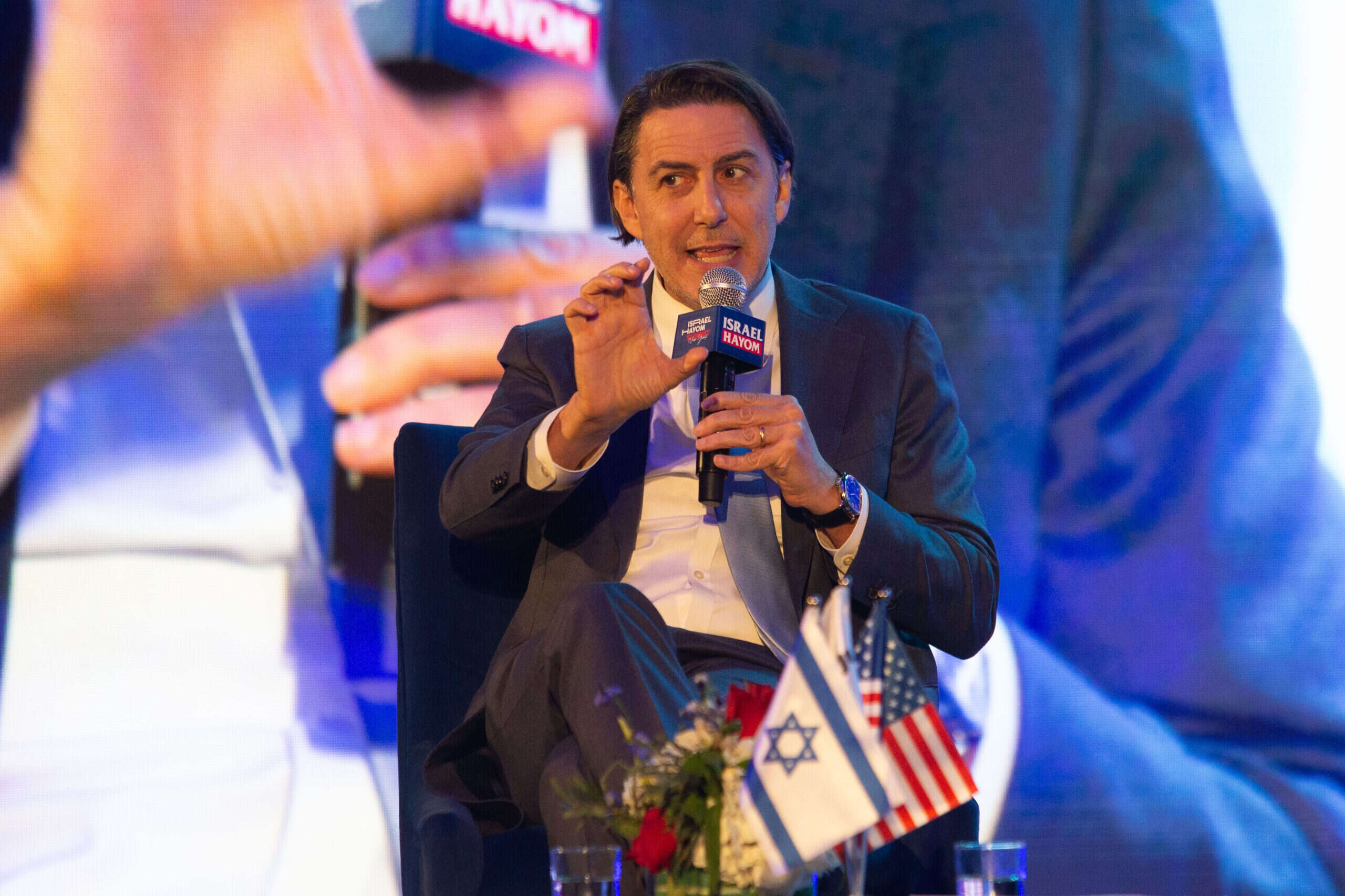
Yet a year later, the reality is grim. The Lebanese government has not fulfilled its part, and Hezbollah has not been weakened enough to voluntarily relinquish its power. Hochstein stated this explicitly. "Hezbollah must disarm, and the Lebanese government must fulfill what it committed to." However, he emphasized that Israel must give the Lebanese government a genuine opportunity to lead the move before opting for a military solution. "Returning to war will not achieve this, unless Israel plans a full occupation, which no one wants."
At the start of his remarks, he recalled the initial moments of anxiety for the hostage families when speaking with the US president. "I was there when Biden refused to leave the call – that is a moment that will stay with me all my life," he said.
When asked if this followed the same logic that previously led him to oppose military action against Hezbollah, Hochstein clarified the distinction. The difference, he argued, is that a previous campaign weakened Hezbollah but did not dismantle it. He maintained that military force alone would not solve the strategic problem – necessitating a multi-stage American-Lebanese plan to generate real change on the ground: evacuating the south (of Lebanon), long-range missiles have to be disbanded, and implementing actionable steps on clear schedules. Regarding how long Israel should remain patient, he refused to set a deadline but emphasized that the US must lead in creating a practical path, rather than merely issuing declarations.
The final part of the interview addressed a pressing question: Does the Democratic Party still support Israel? Hochstein rejected the gloomy forecasts. "There is still strong support, both in Israel and among American Jewry. Not all Democrats are Mamdani," he said. He admitted that antisemitism is rising on both the left and the right but warned against panic. "The US is still the safest place for Jews in the world – and I believe it will remain so." Hochstein concluded with cautious optimism, noting that while the challenges are immense – in Lebanon, in Israel, and within US Jewry – there is no room for despair. "History has proven that it is possible to cope with these waves. We need to fight – and not give up."