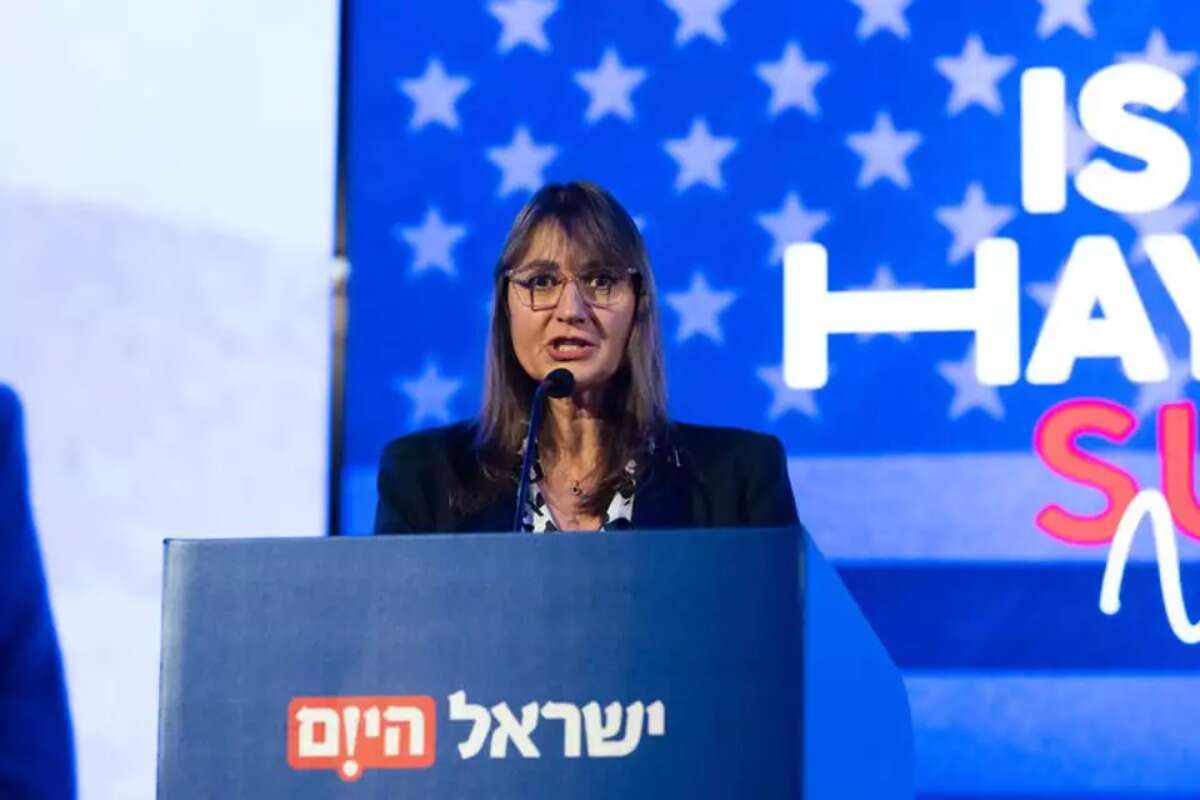
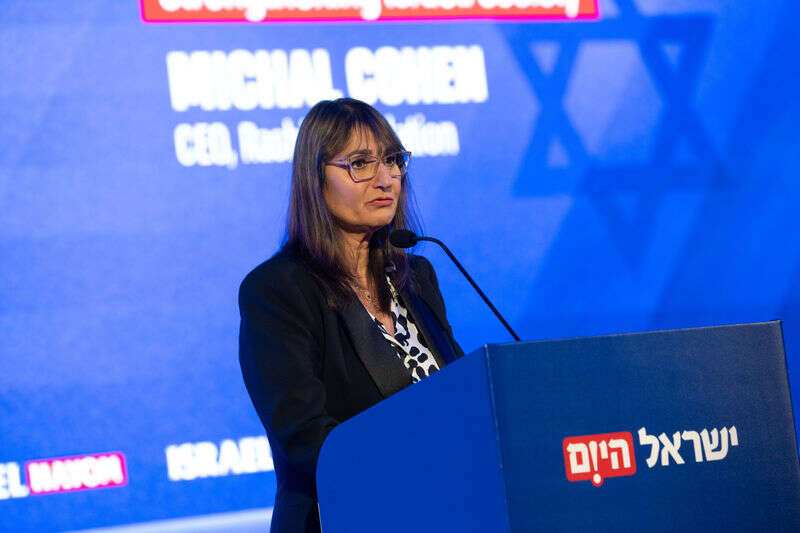
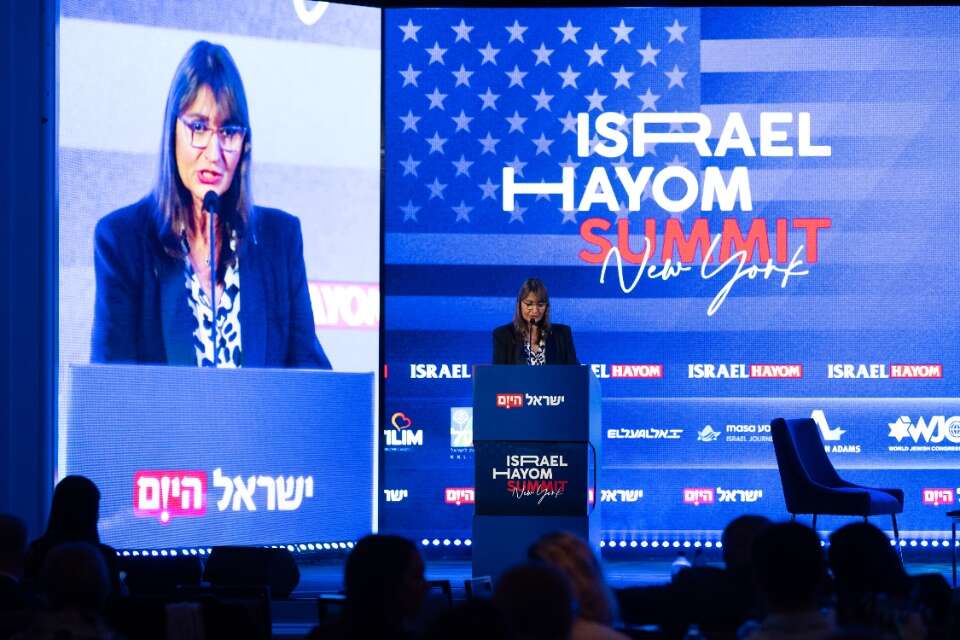
During her remarks at the Israel Hayom summit in New York, Michal Cohen, CEO of the Rashi Foundation, shared the organization's origins and vision. She recalled that everything began with the simple goal that "no child should go hungry" and stressed that although forty years of activity have brought new programs and challenges, the mission has remained the same. "AA secure and thriving Israel that aiming for strength a society in which every individual can realize his or her full potential."
Cohen said this is a "moral, ethical, and social obligation" to create equal opportunities for every child, regardless of their starting point. She noted that the forum was meeting when Israel is still facing "one of the most difficult and painful crises in Israel's history. A crisis that has touched every area of life—security, society, health, economy, education, and community."
Video: Michal Cohen at the Israel Hayom summit
Cohen described the anguish of families and the uncertainty they face, but also the social awakening that emerged. "It showed us the goodness and compassion within Israeli society." According to her, communities, organizations, businesses, volunteers, local authorities and partners from Israel and abroad mobilized and provided hope. She emphasized that the events of recent weeks also strengthened the bond between Israel and the Diaspora. "We are one people."
She said that at the start of the crisis, there was an urgent need for rapid solutions, and at times the state did not fully recognize the urgency. Cohen noted that philanthropy in Israel and the Diaspora played a significant role and was among the first to respond, alongside organizations that had already been working in the south and north.
"Residents of the periphery get less"
Cohen said Israel now stands at a critical crossroads that will test its ability to overcome the crisis. Physical infrastructure must be rebuilt, she said, but "social infrastructure is needed. we need growth guided by long-term vision." She described how evacuees from the south and the north, after moving to central Israel, discovered just how wide the disparities truly are. "As residents of the periphery they get less. Much less. Their children get less, and if nothing changes, their grandchildren will get less, too."
According to her, this means less education, less health care and fewer employment opportunities. "They are not worth less - they simply receive less." This is where philanthropy has an essential role, she said. "Philanthropy has the power, flexibility, resources, and courage to work together, to create high-quality infrastructure, that ensures growth for decades to come."
Cohen stressed that in a country where "crisis follows crisis," it is necessary to build foundations that ensure resilience and a shared future. "Philanthropy has not only the ability, but also the responsibility, to be part of this collective effort."
"We are optimistic"
Cohen said that social change does not allow for despair. "Those who work to change social reality don't have the privilege of being pessimistic. We are optimistic. with a sense of mission and responsibility."
The responsibility, she said, is "to give our children an equal opportunity, to create the future they want, not the future that imposed on them." Cohen concluded with a message of repair and growth. "We have the chance to transform a great disaster into a rare opportunity: to become a society that acknowledges its weaknesses and is not afraid to repair them. To rebuild not only what was destroyed, but also what we should be - a values-based society grounded in morality, justice, and solidarity."