Seven hundred and ninety two days have passed since the Oct. 7 massacre, and the last remaining hostage, Staff Sgt. Ran Gvili remains held in Gaza. Hamas still maintains control in parts of the Gaza Strip beyond the Yellow Line, and even more so underground. Although the terrorist organization has lost most of its military and political leadership in Gaza, along with more than 20,000 fighters, it is restructuring, recruiting and carrying out a new round of appointments.
According to Arabic media reports, Hamas has reassigned its operatives to positions left vacant after Israeli strikes during the war, including roles in its military wing, political bureau, shura council and administrative bodies in the Gaza Strip. It has also reportedly established a technical committee tasked with transferring governance to a technocratic body.

On Thursday, Egyptian Foreign Minister Badr Abdelatty said progress had been made toward forming a technocratic administration for Gaza. He said a list of candidates had been compiled and consultations were underway with relevant parties. So far, however, the Palestinian Authority and Hamas have not reached agreement on the matter.
In other words, beyond the three senior figures in Hamas' military wing who survived the wave of assassinations, new commanders have been appointed. Those surviving officials are Izz al-Din al-Haddad, the current head of the military wing, Raed Saad and Muhammad Odeh. The same applies to the Gaza-based political bureau, whose members were mostly killed in the war or are abroad. But this does not mean Hamas has fully recovered. By definition, thousands of new operatives and commanders function at a far lower operational level compared to the organization's capabilities on the eve of Oct. 7.
Premature celebration
Hamas supporters celebrated in recent days following the killing of Yasser Abu Shabab, head of the Popular Forces in eastern Rafah, the first militia in Gaza established in cooperation with Israel. Even so, the group declared it would continue his path, and quickly appointed his deputy, Rassan al-Dahini, as his successor.
In a show of strength, al-Dahini held his first inspection of the forces in a military formation. He later declared, "Together we will act until evil and terrorism are eliminated and justice is done for the victims."

Photo: Reuters Reuters
Speaking to Israel Hayom, Hossam al-Astal, head of a rival anti-Hamas organization in Khan Younis, said the People's Forces in Rafah would survive Abu Shabab's death. "They will manage. Rassan al-Dahini is the second in command there, and he knows the work, the people and everything." Despite Hamas threats, al-Astal appeared unfazed. "Hamas always needs to create chaos and claim we have problems so people will not join us. But people are constantly calling us and asking for help."
According to him, "The new Gaza, God willing, will grow. There is no more Hamas. We have great confidence and many friends. There are problems, but they are small. Hamas terrorists cannot cross the Yellow Line. They have police in al-Mawasi and there they kill people. They do it to show they are still present, just as they did with the Durmush clan after the cease-fire." He added that "something new will happen soon. There is no Hamas, and what remains of Hamas is 5 to 7 percent."
Al-Astal and al-Dahini are not the only militia leaders who oppose Hamas in Gaza. Rami Khalas, who heads another militia operating in eastern Gaza City, stressed on Friday, "We remain committed to fighting terrorism and extremism in order to build a new future for our Palestinian people." Another leader, Shauki Abu Nasira, a former security prisoner, declared over the weekend, "The death of Abu Shabab strengthens our determination to continue. Death to Hamas." All of these men previously served in the Palestinian Authority's security apparatus.
The anti-Hamas militias are signaling that they intend to stay. Still, they cannot realistically provide a governing alternative to Hamas on their own. The terrorist organization still controls thousands of fighters in the heart of the Gaza Strip. Without IDF protection, it is doubtful these militias could survive Hamas attacks. Even if a trained Palestinian Authority police force were eventually allowed to enter the Gaza Strip, there is no guarantee that Hamas or other terrorist organizations would lay down their arms.
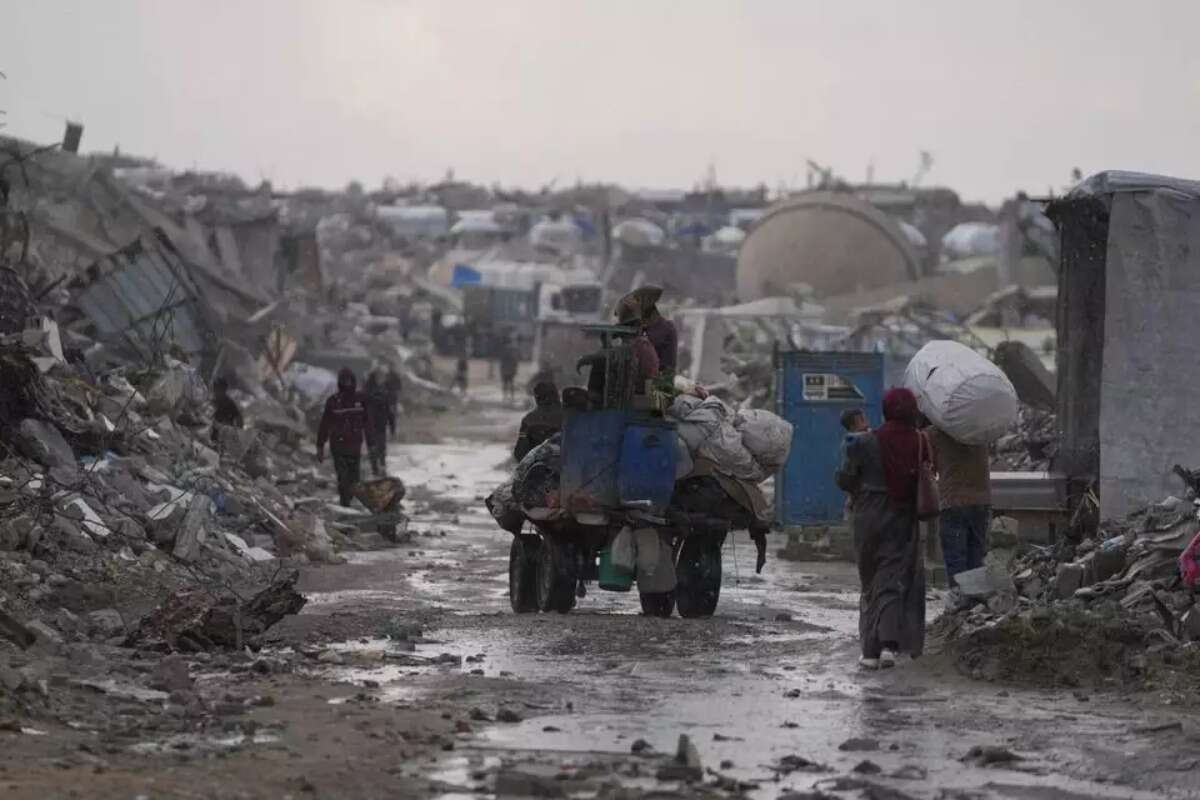
Inside Gaza, the humanitarian situation continues to deteriorate as winter sets in. The tents housing displaced families are flooded with rainwater and sewage infrastructure remains destroyed, leading to the spread of disease. Residents complain of inadequate medical services and the hardship of living without shelter after countless homes were destroyed in the war.
Meanwhile, Hamas' health ministry reported that hundreds of bodies have been removed in recent weeks since the cease-fire began. The ministry also reported 367 deaths in strikes during that period. Since Oct. 7, 2023, the Gaza health ministry claims that 70,354 Palestinians have been killed.