

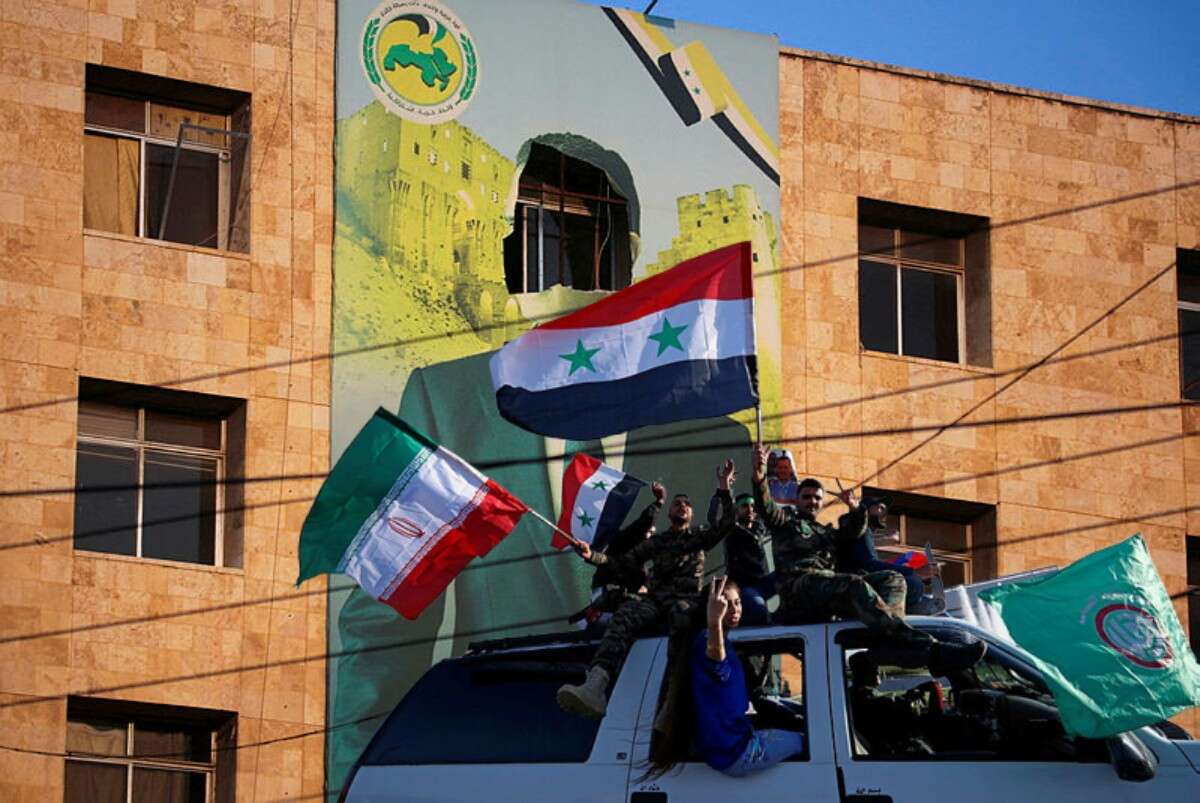
Tehran's Revolutionary Guards and diplomatic corps abandoned Bashar Assad in his final days, executing a total evacuation from Syria as opposition forces stormed through the country, sources disclosed to AFP.
Iran had functioned as one of Damascus's most essential supporters throughout the civil war that ignited in 2011 after the regime's brutal response to pro-democracy demonstrations, sending military advisers and Revolutionary Guards forces to Syria, AFP reported.
Revolutionary Guards units and regional allies – chiefly Hezbollah fighters from Lebanon, plus combatants from Iraq and Afghanistan – had occupied strategic locations and propped up Assad's regime, only to vanish as Islamist-led forces charged toward the capital, according to AFP.
Syrian military officers and troops operated under Revolutionary Guards command, whose influence grew during the conflict while Assad's authority weakened, AFP reported.
A former Syrian officer posted at a Guards security facility in Damascus said that on December 5, 2024, his Iranian commander ordered him to an operations center in Mazzeh district the next day to address an "important matter," according to AFP. The ex-officer, requesting anonymity over safety concerns, said his commander – identified as Hajj Abu Ibrahim – delivered a bombshell announcement to about 20 Syrian officers and soldiers assembled for the briefing, AFP reported.
"From today, there will be no more Iranian Revolutionary Guards in Syria. We're leaving," those present were informed, according to AFP. "It's all over. From today, we are no longer responsible for you."
They were instructed to destroy or burn classified documents and extract hard drives from computers, AFP reported. The declaration came as Islamist forces secured massive gains, yet it still caught Syrian soldiers by surprise, he said, according to AFP.
"We knew things hadn't been going well, but not to that extent." They received advance payment covering one month and departed for home, AFP reported.
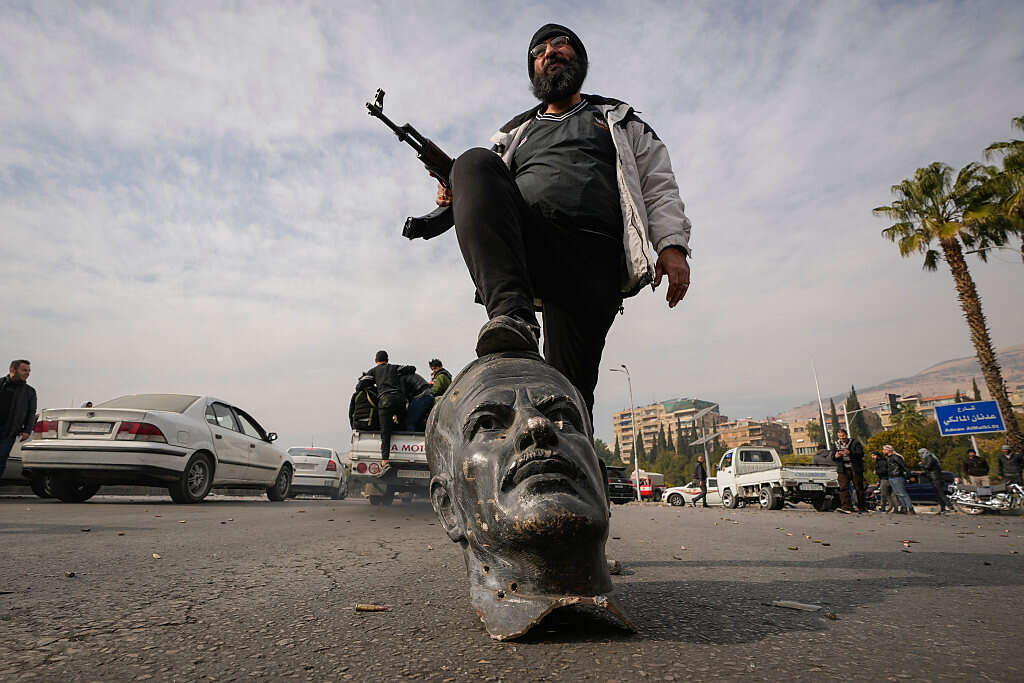
Within two days, Islamist forces captured Damascus without fighting after Assad escaped to Russia, according to AFP. Two Syrian staff members at Iran's Damascus consulate, requesting anonymity for security purposes, also recounted a hurried Iranian departure, AFP reported. The consulate stood empty by December 5 evening as Iranian diplomats scrambled across the border into Beirut, they informed AFP.
Multiple Syrian employees "who held Iranian nationality left with them, accompanied by senior Revolutionary Guards officers," one former employee stated, according to AFP. At Jdeidet Yabus – Syria's primary Lebanese border crossing – taxi operators and former staff documented enormous congestion on December 5 and 6, with eight-hour delays to cross the frontier, AFP reported.
Both ex-consulate workers said Iranians instructed Syrian personnel to remain home and compensated them three months' wages, according to AFP.
The embassy, consulate and all Iranian security installations were abandoned by December 6 morning, they said, AFP reported.
Throughout the conflict, forces under Iranian authority concentrated in critical Damascus zones and suburbs, especially Sayyida Zeinab district – site of a significant Shiite Muslim shrine – and around Damascus airport, plus near Lebanese and Iraqi frontiers, according to AFP.
Sections of northern Aleppo and other provincial sites also functioned as major deployment zones for personnel and combatants, AFP reported.
At a location that formerly operated as a crucial Iranian military base south of Aleppo, Colonel Mohammad Dibo said when the city fell early in the rebel campaign, "Iran stopped fighting," according to AFP.

Iranian forces "had to withdraw suddenly after the quick collapse" of Assad's military, stated Dibo, who participated in the rebel offensive and currently serves in Syria's new armed forces, AFP reported. On severely damaged walls at the deserted base, an AFP journalist observed Iranian and Hezbollah slogans plus a mural showing a sword slicing through an Israeli flag, according to AFP.
Israel – Tehran's foe – had conducted hundreds of airstrikes on Syria during the war, primarily claiming it targeted Assad's forces and Iran-backed organizations, AFP reported. The anonymous former Syrian army officer said that on December 5, a high-ranking Iranian military official known as Hajj Jawad and several Iranian troops and officers were transported to Russia's Hmeimim base on the Mediterranean coast, then airlifted to Tehran, according to AFP.

At the deserted site near Aleppo, Dibo said following the city's collapse, "some 4,000 Iranian military personnel were evacuated via Russia's Hmeimim base" where they had sought refuge, AFP reported. Additional personnel escaped overland through Iraq or Lebanon, he stated, according to AFP.
The departure proved so hurried that "when we entered their bases" in Aleppo province, "we found passports and identity documents belonging to Iranian officers who didn't even have time to retrieve them."


