


Moscow enforces stringent limitations on Bashar al-Assad nearly 12 months following his Syrian departure, with curtailed mobility and prohibited public visibility, multiple outlets indicated to Euronews.
Moscow placed severe requirements on Assad's residence when providing refuge in April 2025, Russian Ambassador to Iraq Elbrus Kutrashev revealed to Euronews. Assad must avoid all media visibility and political involvement, Kutrashev informed the Islamic Republic News Agency, according to Euronews.
Russian intelligence agencies maintain Assad under exceptionally severe protection, the UK-based Syrian Observatory for Human Rights stated to Euronews. His mobility remains highly constrained, and he has ceased to give public addresses, Euronews reported.
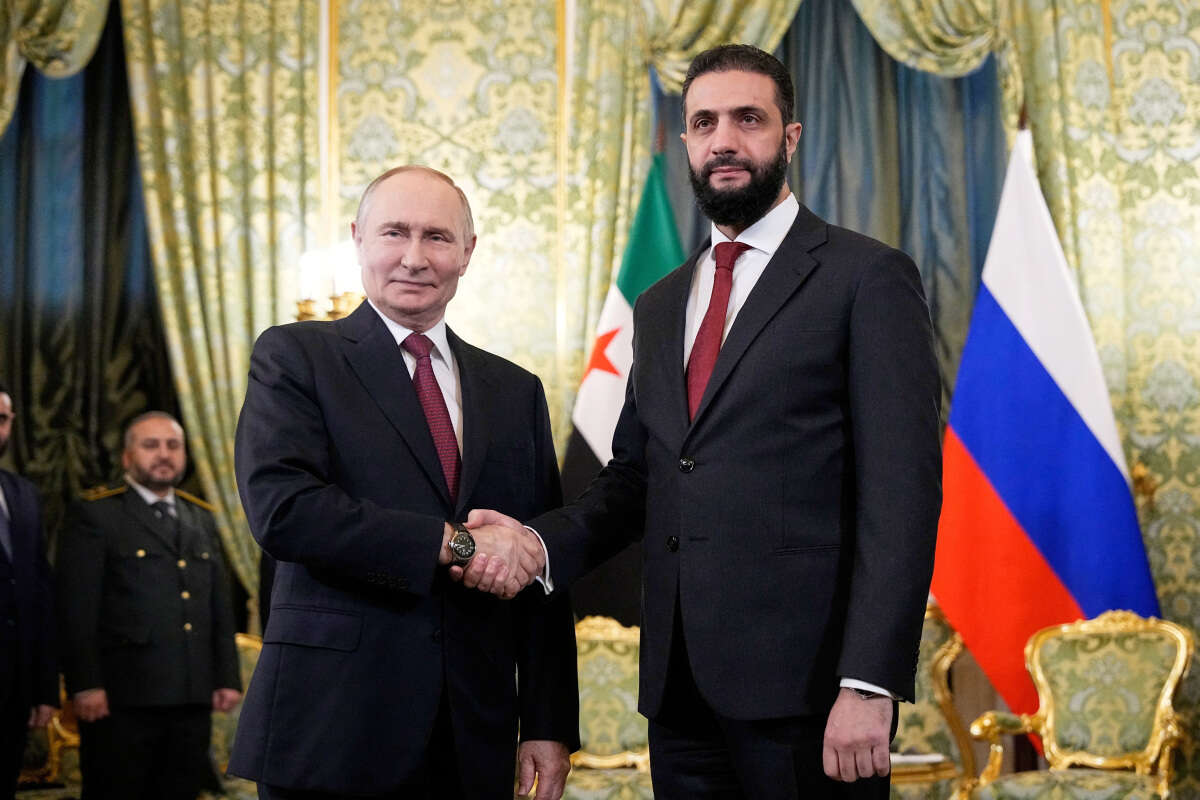
The ousted Syrian dictator, who abandoned Damascus on December 8, 2024 when troops under current interim President Ahmed al-Sharaa seized the capital, delivered a solitary public declaration eight days following his flight, Euronews noted. Assad claimed in his December 16 declaration that his exit "was not pre-planned" while asserting his desire to persist in combat, though Moscow insisted on his "immediate withdrawal," according to Euronews.
Following that statement, Assad has preserved virtually complete silence, Euronews reported. His firstborn child, Hafez – bearing his grandfather's name, whose authority he assumed – distributed footage in mid-February depicting him strolling near the Kremlin and describing the clan's rushed Syrian evacuation, though Assad personally has issued no additional public commentary, Euronews stated.
Russian Foreign Minister Sergey Lavrov verified in October that Assad and his relatives reside in Moscow, declaring Russia provided them refuge for humanitarian purposes, Euronews noted.
The Syrian Observatory for Human Rights asserted in September that Assad received hospital treatment in critical status following suspected poisoning, Euronews reported. The monitoring organization stated that he remained in a hospital on Moscow's periphery for nine days before being discharged on September 29, according to Euronews. Lavrov refuted the poisoning allegations in October, declaring Assad "has no issues living in our capital," Euronews noted.
German weekly Die Zeit disclosed in October that Assad inhabits Moscow's contemporary financial quarter, though the precise address remains unverified, according to Euronews. The residences are characterized as premium units featuring elevated ceilings, floor-to-ceiling windows, and proximity to shopping centers and dining establishments, Euronews noted.
A contact close to the Assad clan informed Die Zeit that the family owns numerous apartment units and occasionally occupies a villa outside Moscow, Euronews reported. The contact asserted Assad "spends much of his time playing online video games" and interacts with bodyguards from a private security firm compensated by the Russian government, according to Euronews.
During 2018 and 2019, the Assad administration transferred approximately $250 million in currency to Moscow, with clan members acquiring at least 18 premium apartments in the city, media outlets disclosed to Euronews.
The US State Department calculated Assad's family fortune at between $1 billion and $2 billion in 2022, financed from "arms and drug trafficking and the rental economy" through shell corporations, Euronews reported.
Syria's transitional administration under al-Sharaa has demanded Assad's extradition for prosecution, according to Euronews. Russia has declined to surrender him, with the Kremlin asserting that President Vladimir Putin personally granted him asylum and that it would remain unaltered, Euronews reported.


