An Israeli intelligence delegation that traveled to Brussels, classified reports delivered to Israeli ambassadors in European capitals, and a broad advocacy campaign – this is how Israel succeeded in changing the European Union's stance toward the Palestinian Authority, and forced Europeans to publicly acknowledge for the first time that Abbas continues paying salaries to terrorists, despite his commitment to stop.
At the end of November, a meeting was held in Brussels between senior Palestinian Authority officials and representatives of donor countries. On the agenda: examining the reforms the Authority committed to implement – chief among them stopping payments to terrorists and their families, a reform the Palestinians declared had already been carried out.
The Authority's commitment to reforms didn't stem from goodwill, but from financial distress. Unlike the past, the Europeans decided to stop serving as an "open wallet" and conditioned continued aid – hundreds of millions of euros – on meeting commitments.
A day before the meeting, Foreign Minister Gideon Sa'ar issued an unusually detailed declaration: The Authority not only hasn't stopped payments to terrorists – it has actually increased them. The only change: instead of transferring the money through a designated fund, the Authority found alternative and covert channels.
The response from Brussels was unprecedented. "We understand that recently a payment was made to the families of prisoners," the Union stated in an unusual declaration. "We are very sorry about this decision. It appears to contradict previous statements. We have requested clarifications from the Palestinian Authority."
Palestinian Authority representatives, who arrived in Brussels expecting to raise additional funds, encountered rare criticism. During the meeting, several representatives of donor countries made clear – both to the Palestinians and to their friends in Europe – that part of the funds are conditioned on implementing the reforms.
The Palestinian representatives, unaccustomed to such criticism, committed to establishing a transparent fund that would reflect the transfer of money and to stop payments to terrorists. But they also understand that supervision over them has grown – not only from Israel, but also from the Europeans, whose credibility toward the Authority now lies on the table.
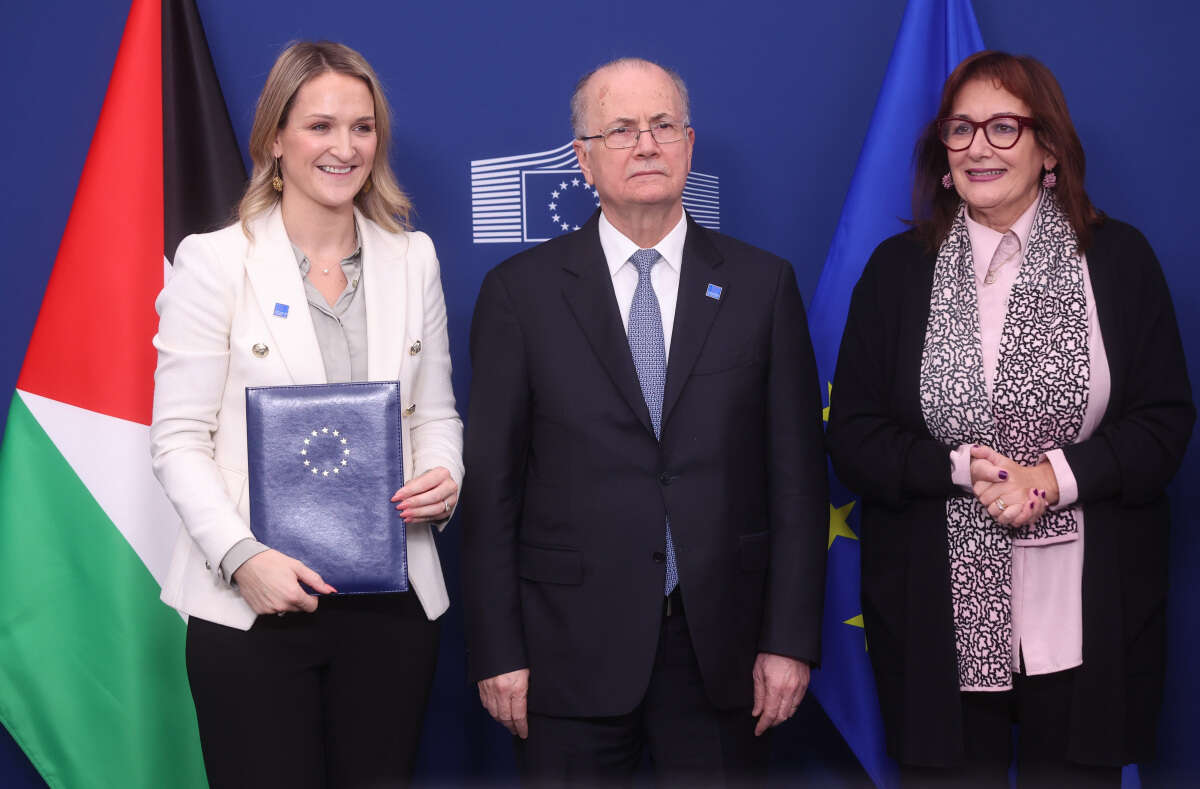
The Authority committed to stopping payments to terrorists back in February, and earned praise from world leaders – President Macron even cited this as a turning point. But in Israel, they didn't buy the deception. In Jerusalem, they understood that behind the declarations, the money continues to flow.
To substantiate the claims, Sa'ar led an effort based on intelligence from the IDF and other agencies. While the Palestinians prepared for the Brussels meeting, the Foreign Ministry led a covert campaign designed to block the space for denial – both by Authority officials and by Europeans who preferred to ignore.
Intelligence agencies prepared a report, but not all of it could be revealed publicly – parts of the evidence were redacted to protect intelligence sources. Once approved for distribution, the report was presented at every meeting with foreign ministers – so that no room for doubt remained: The Authority continues to pay, despite its declarations.
In parallel, a booklet was prepared that summarized the intelligence evidence. It was sent to Israeli ambassadors in major European capitals, who then passed the information directly to the foreign ministers in the countries where they serve.
"Intelligence indicates that the policy of payments to terrorists is still ongoing, despite the declaration about Abu Mazen's decree," the report stated. "This is done through various channels intended to conceal the continuation of payments, while presenting a false impression of reforms."
The report further stated: "The policy wasn't canceled but only disguised anew. Some payments are now channeled through alternative channels, creating a misleading impression of reform. In practice, the PA continues to finance and encourage terror. The PA continues to pay, just in a new method."
The report notes documentation of payment collection from Palestinian postal branches. It was further noted that terrorists who were released in the deal received salaries throughout their time in prison, and some even received additional grants from the Authority after their release.
The report also quotes Abbas himself, who said on February 25: "If we have only one penny left, it will be given to the prisoners and martyrs. I will not allow anyone to remove any commitment or penny given to them. They are more honored than all of us."
In mid-November, an Israeli delegation of intelligence personnel traveled to Brussels. They met with European Union officials and presented the Palestinian violations – which led the Union to acknowledge that the Authority is not meeting its commitments. The European Union is the largest donor to the Authority, and public criticism from it against the Authority is rare. Until now, the Union preferred to remain silent. Now, even in the Authority, they understand that continuing the payments could drag them into confrontation with their largest funder.
A Commission Spokesperson said to Israel Hayom: "We can confirm that a meeting took place between the Israeli Ambassador to the EU, Israeli delegation and Commission representatives to discuss a broad range of topics relating to the Middle East"