


"The Basij was created precisely for Iran's current moment," analysts in the Middle East said this week, describing the Islamic Republic's ruthless militia that is spearheading efforts to crush the latest wave of protests. When the death toll is taken into account, the accuracy of that assessment becomes chillingly clear.
Human rights organizations reported this week that more than 2,400 people have been killed in unrest across the country. Unofficial tallies already point to thousands of victims in what many describe as a bloodbath. Many were killed by gunmen from the Basij militia, fighters who do not hesitate to harm even those closest to them. It is therefore unsurprising that Basij operatives are often the first to die during mass demonstrations. In some documented cases, protesters even set them on fire. Evidence of the depth of public hostility toward the Basij was plentiful even before the current uprising. Every few weeks, Iranian media reported on civilians put on trial for killing militia members.
What lies behind this hatred? What role does the Basij play in the machinery of Iran's authoritarian rule? And will its members succeed in choking off the protest movement, or will the hope for freedom prevail this time?

Militia or "military power"
For the past seven years, the Basij has been commanded by Gholamreza Soleimani, an officer in the Islamic Revolutionary Guard Corps holding a rank equivalent to brigadier general in the Israel Defense Forces. Despite the name, he is not related to Qassem Soleimani, the former commander of the IRGC's Quds Force who was killed by the US in January 2020.
Gholamreza Soleimani began his career in the militia during the Iran-Iraq war in 1984, serving first as a company commander and later as a battalion commander. Because of his deep involvement in the brutal suppression of protests in recent years, he is under sanctions imposed by the US, the UK, Canada and the European Union.
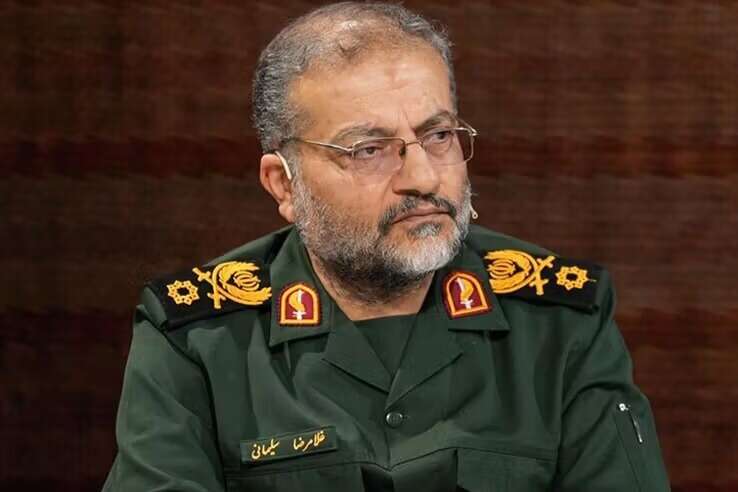
Like other senior figures in the regime, he has repeatedly declared that the Islamic Republic will continue its efforts to destroy the State of Israel. "The enemy has deluded itself into thinking that assassinating scientists and commanders would stop the progress of Iranian civilization, but we will continue on our path until the complete liberation of Palestine," he said after the 12-day war.
In 2019, the Basij commander boasted that the militia had already become a "regional military power," operating in four Arab countries. At the time he was quoted as saying, "The influence of the Basij is no longer limited to Iran's borders. It can be seen in Syria, Iraq, the Mediterranean coast (meaning Lebanon), and southeastern Hijaz (meaning Yemen)." This was a clear hint that Iran had dispatched Basij members to assist the terrorist organizations it supports throughout the Middle East.
Everywhere at once
Indeed, it is difficult to find a sphere in Iran in which the Basij is not involved, from arresting protesters to carrying out the most obscure assignments.
Just days ago, for example, militia members arrested a young Iranian man named Arfan Soltani during an anti-regime protest in the city of Karaj. The charge against Soltani, according to Iranian exiles, was that he dared to lead the demonstration. He was sentenced to death by hanging, prompting a social media campaign against his execution. On Thursday it emerged that the efforts had borne fruit, after Iran announced that the sentence had been overturned.
Another brutal practice involving Basij members is the blinding of protesters by firing directly at their eyes. Foreign media have repeatedly exposed how hundreds of Iranians, between 400 and 500 according to some reports, lost their eyesight during the demonstrations.
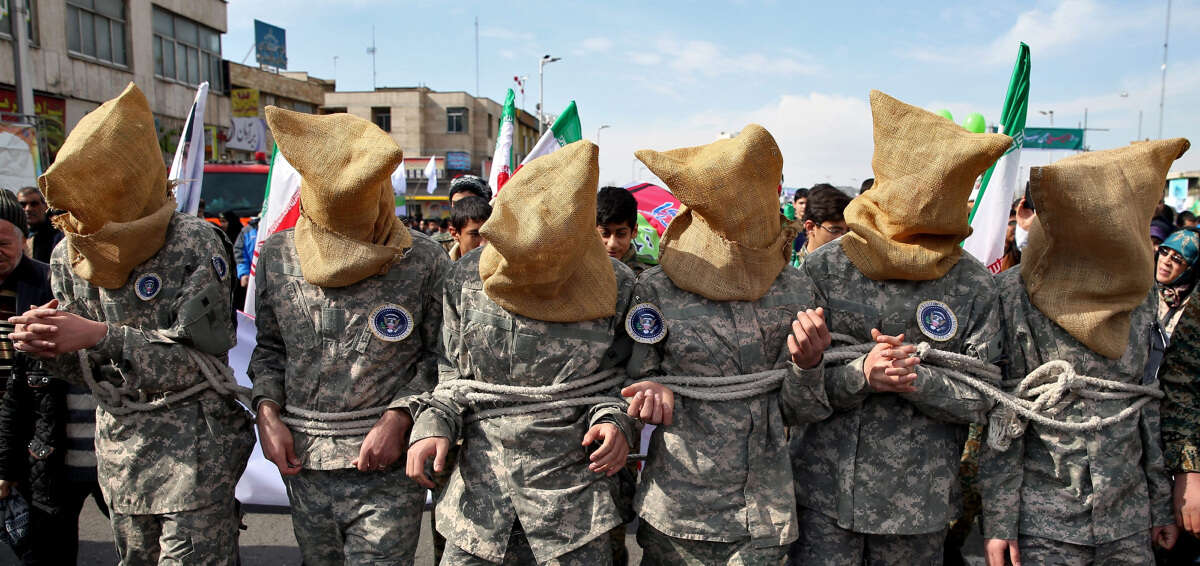
Even before the current unrest, the story of Nechirvan Maroufi was published in November by IranWire. In 2022, Maroufi was a conscript in the Iranian army. After finishing a shift, he went to take part in a protest, which was quickly crushed by regime forces, including Basij members who arrived on motorcycles and opened fire at participants fleeing in all directions. The protest erupted after the killing of Mahsa Amini, a young Kurdish woman who was detained by the regime's so-called morality police and tortured for allegedly not wearing her hijab properly.
"It is impossible to describe the pain," Maroufi recalled. "My retina was torn. Blood was pouring out. At the hospital they gave me morphine and tramadol. I calmed down for half an hour and heard voices saying, 'Nakhyrvan is alive.' My father put his hand on my forehead. I asked, 'What happened, Dad?' He said, 'Nothing.' I said, 'I can't see anymore, right?' He lowered his gaze." Today, after a series of surgeries in Iran and abroad, Maroufi can see with only one eye.
According to the Basij's official news channel, during the current wave of protests its members were tasked with arresting Iranian bloggers to prevent them from reporting on events inside the country. In addition, they monitored online activity, at least until the regime ordered a complete internet shutdown.
All of this is part of a structured doctrine. As early as 2021, Basij chief Soleimani announced a "plan to control the internet." He unveiled an ambitious scheme to train eight million users to "enforce control over the digital space." In other words, to spy on Iranian citizens on social media and spread regime propaganda.
In direct continuation of this approach, the militia is constantly involved in neighborhood surveillance, passing intelligence on regime opponents and coordinating with other security and intelligence bodies. It is a Big Brother composed of countless informants.
Moreover, the Basij operates in close cooperation with the IRGC's intelligence apparatus. In August, for example, the militia carried out a large-scale raid alongside the intelligence services in the city of Isfahan, during which regime forces stormed numerous homes and shops to arrest women from the Baha'i minority. Regime agents frequently assaulted detainees, threatened them, confiscated phones and laptops, and vandalized personal property.
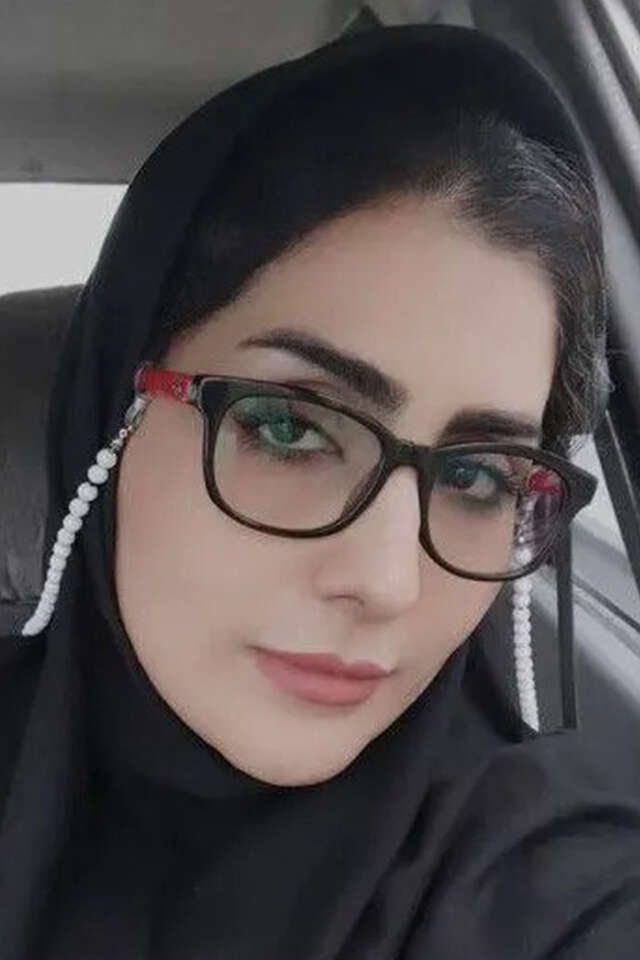
The extent of the Basij's influence can be seen in the following case. Mahta Sadri was the editor-in-chief of the regional news channel Gilan Sadr in Gilan province in northwestern Iran. In September she was summoned to court after the head of the local Basij student cell filed a complaint against her. The reason was an accusation of "critical coverage" of a local militia official.
In other cases, the Basij has been dispatched by intelligence bodies to carry out special missions. Last summer, against the backdrop of the 12-day war, militia forces were sent to confiscate private security cameras in Tehran and Karaj. The move was apparently driven by regime fears that intelligence agencies had hacked the cameras.
Ali, a resident of Tehran, told IranWire that the Basij raided his family's home at 2:30 a.m. "My elderly parents have heart problems and stay home during the day while my sister and I work," he said. "So we installed cameras inside and outside the house. When the doorbell rang repeatedly, I checked and saw about 10 people in civilian clothes, armed, standing outside our door."
They kicked the door and tried to force their way in. The police did not respond. Eventually, the Basij entered with a search warrant, claiming suspicion regarding the security cameras, and confiscated the hard drive of the recording device. In another no less bizarre incident, a small restaurant owner said Basij members demanded that he "change the direction of the security cameras."
The origins
The father of the militia was Ayatollah Ruhollah Khomeini, the first leader of the Islamic Republic after the 1979 revolution. He founded the organization that year to "defend the revolution," amid his not unfounded fears of Iran's military generals. Indeed, despite waves of purges, an attempted military coup took place as early as 1980. The Basij was effectively designed to block the Iranian army, or any other force that might attempt to launch a new revolution.
But the militia quickly became Khomeini's doomsday weapon. In the 1980s, the Basij was used to recruit children, youths and adults who were sent to the killing fields of the war with Saddam Hussein's Iraq, which invaded Iran. More than anything else, the militia left its mark through the infamous "human wave" assaults. To help clear minefields, Basij members were sent to their almost certain deaths to allow forces to advance. In other cases, they were ordered to charge Iraqi troop formations.
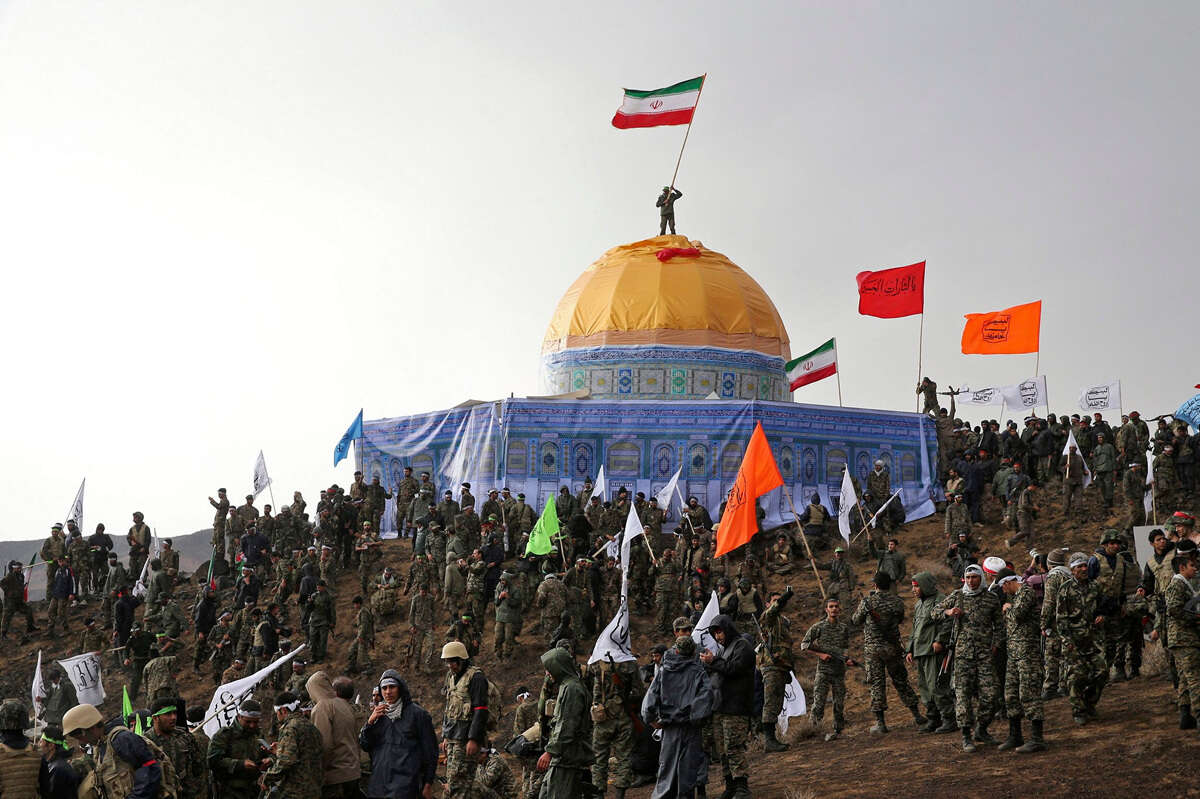
From then until today, the Basij has maintained trained military units within the Revolutionary Guards, providing logistical and combat support. As the IRGC's influence grew, the Basij became part of a vast economic and political network that enjoys privileges and positions within state institutions. The US Treasury has estimated that this network channels billions of dollars through real estate, stock market holdings and other assets.
"According to the Basij doctrine, if the official security forces and the army cannot or will not defend the regime, then this force, composed mainly of trained and armed civilians, will carry out the task," an influential Arab media outlet wrote. Accordingly, the militia recruits from all strata of Iranian society: urban and rural residents, school pupils, university students, women, the elderly, members of tribes and civil servants.
Within regime circles, the Basij is presented as the "guardian of the revolution" and the "last line of defense." According to official Iranian sources, the number of Basij members runs into the millions. By contrast, the Iranian opposition told Israel Hayom that the figure is only in the hundreds of thousands, a discrepancy that likely stems from differences between the various types of forces the Basij operates.
Either way, the militia's armed members constitute the largest force at the disposal of the Iranian regime. They play a significant ideological role in promoting revolutionary discourse and spreading messages of loyalty to the supreme leader, whether through religious activities or propaganda campaigns.
In this context, Iranian-American scholar Saeid Golkar divides the Basij into three categories: regular forces, active forces and special forces. The "regular" members undergo basic ideological training. The "active" members complete a six-week program and are more deeply involved. The "special" forces are full-time employees of the Revolutionary Guards.
Recruitment is carried out mainly through mosques. An Iranian exile told Israel Hayom that Basij members also used mosques as military centers to equip themselves with weapons before going out to suppress protesters. As a result, she said, several mosques were set ablaze across Iran. This may be the clearest symbol of the Basij's reputation among the Iranian public. Even houses of worship associated with the militia have become symbols of repression and tyranny.


