


As Iran continues its brutal crackdown on protests following the killing of thousands of demonstrators, the comprehensive report published recently by UN Watch reveals what it calls a deafening silence from the majority of the UN Human Rights Council's special rapporteurs.
The report examined the conduct of 54 experts and found troubling evidence of political bias and moral double standards. Despite a surge in executions by the Iranian regime, intensified persecution of minorities, particularly the Baha'i community, and violent repression of women, most of the experts whose mandates cover these issues did not publish a single statement condemning Tehran's actions.
Out of 87 special rapporteurs, only five expressed support for or endorsed the official statement condemning Iran's repression, which was issued on January 13, two and a half weeks after the protests began and after attempts to violently suppress them were already well underway. Apart from that official statement, only a handful of posts appeared on social media.

One striking example cited in the report concerns the UN expert on freedom of religion. While homes belonging to Baha'is in Iran were being demolished and dozens of believers arrested solely because of their faith, the rapporteur chose not to issue any official statement denouncing the regime. The same pattern applied to the expert tasked with monitoring the right to life.
The report notes that despite the sharp rise in executions in Iran, many of them carried out after sham trials and without due process, the response from the international human rights machinery was weak and minimal. Experts responsible for freedom of expression and the right to life issued dozens of condemnations against Western countries and Israel, yet refrained from releasing even a single statement against mass executions and the repression of journalists in Iran during the period reviewed by the report.
UN Watch also draws a direct comparison between the treatment of Iran and that of Israel. The data show that experts who never published a condemnation of Iran, despite overwhelming evidence of repression and the killing of protesters, were highly active in drafting harsh statements against Israel.

The report names specific experts who, it says, repeatedly used their mandates to attack Israel, while completely ignoring human rights abuses in authoritarian states. While Israel is condemned for acts of self-defense or for construction in Judea and Samaria, these same experts avoided criticizing Iran for supplying weapons to terrorist organizations, crushing protests over water and bread shortages, or poisoning schoolgirls.
According to the report, the double standard is especially evident in the conduct of certain individuals. Francesca Albanese, the UN special rapporteur for the Palestinian territories, is cited as frequently launching severe attacks on Israel, accusing it of promoting "apartheid" and even "genocide," while calling for an arms embargo against the country. At the same time, the report says, she consistently ignores Iran's role in arming and financing terrorist organizations that target civilians.
Another example highlighted is Balakrishnan Rajagopal, the UN special rapporteur on the right to housing, who swiftly condemned Israel over building demolitions but remained completely silent when Iranian security forces brutally destroyed the homes of members of the Baha'i community in Iran.
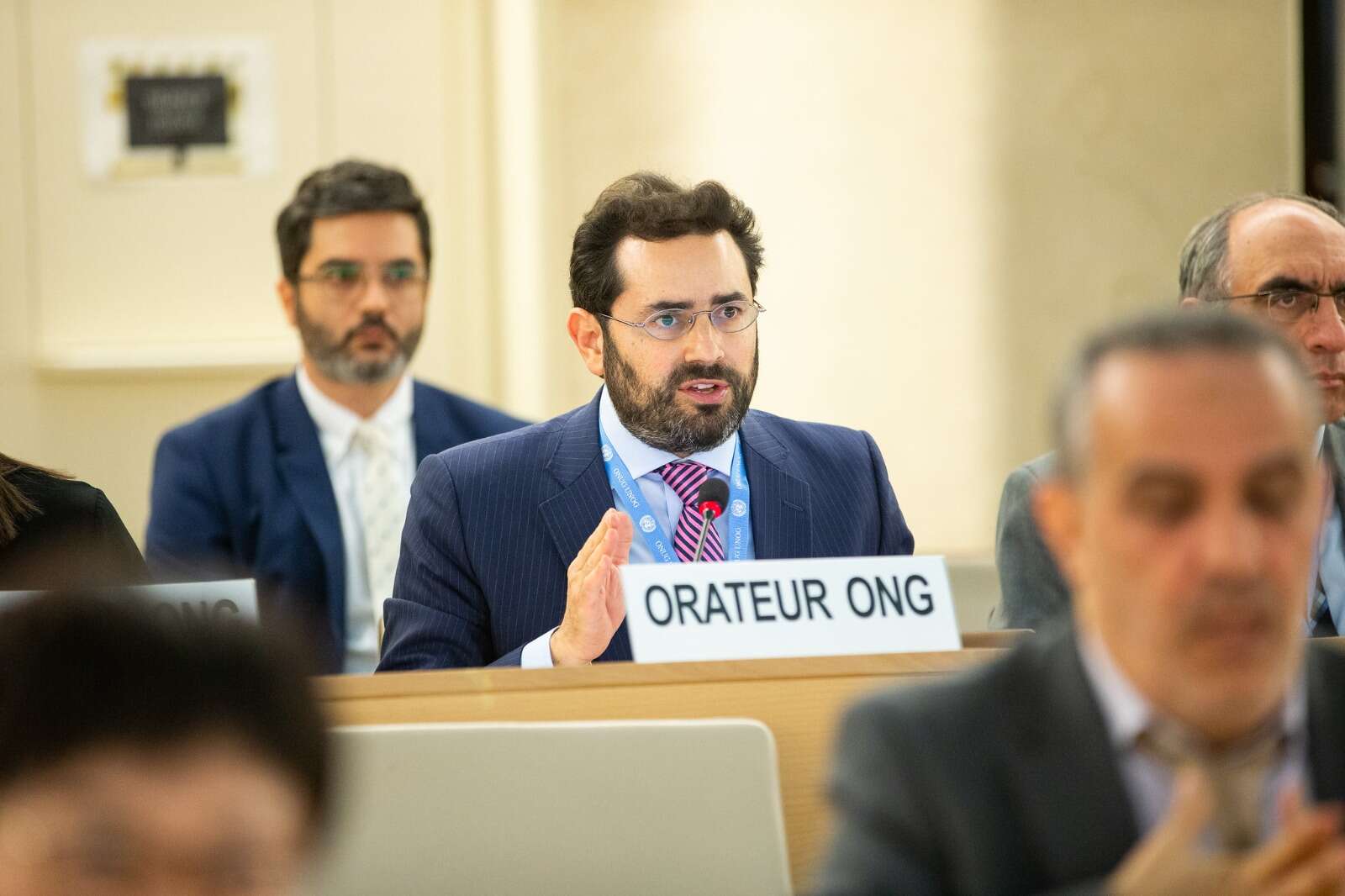
Hillel Neuer, executive director of UN Watch, said the findings prove that many UN experts are not motivated by genuine concern for human rights but by political agendas. "When they stay silent in the face of Tehran and scream in the face of Jerusalem, they lose all legitimacy," Neuer said. "Their silence amounts to a green light for the ayatollahs to continue hanging dissidents from cranes."
The report concludes with a call on democratic countries that are members of the UN to stop funding these mechanisms and to demand reform in the appointment of experts. "It is unacceptable that an expert charged with defending freedom of expression ignores the arrest of hundreds of journalists in Iran, yet finds time to condemn Israel week after week," the report states.
UN Watch also presents additional examples of what it describes as radically different responses. While condemnation of Iran's repression was delayed and lacking in support, on January 7, 2026, just four days after the US arrested Venezuelan ruler Nicolas Maduro, 19 UN experts jointly signed a strongly worded statement of condemnation.
The same pattern, the report notes, emerged after Israel's pager attack against Hezbollah, a designated terrorist organization, on September 17, 2024. By September 19, 22 UN experts had already jointly condemned Israel for what they called a "terrifying violation of international law."


