


The Iranian opposition website Iran International reported on Sunday that, according to information it has obtained, more than 36,000 people have been killed in the violent suppression of the protests. The site described executions of wounded protesters inside hospitals and called the events the "deadliest two-day protest massacre in history."
According to earlier reports, Iran International described January 8 and 9 as the peak days of the protests, when millions took to the streets. Last week, the site estimated that 1.5 million people protested in Tehran alone. According to the report, the Iranian regime cut off the internet and all communications with the outside world, while security forces opened fire on demonstrators using snipers positioned on rooftops and trucks mounted with heavy machine guns.
In images that recently emerged despite the severe internet blackout, protesters' bodies can be seen with medical equipment still attached, shot in the head. According to the site, this constitutes evidence of executions of wounded protesters who had been hospitalized, since if they had been shot in the head on the street there would have been no reason to hospitalize them in the first place. Doctors and nurses confirmed to the site that "confirmation killings" were carried out on the wounded.

An Iranian citizen from the eastern part of the country, who managed to make contact with the outside world despite the digital blackout, told Israel Hayom that the regime used mortars in small cities in Iran, a claim that cannot be independently verified due to the ongoing communications shutdown. "Tens of thousands were killed within two nights," he said. "Europe and the democratic countries are silent about this." Asked whether the situation was now under control, he replied: "What remains right now is only ashes beneath the sand."
According to Iran International, three doctors and four nurses in Tehran said security forces entered hospitals and removed wounded patients who were in the middle of treatment. Two additional nurses described how, after a wounded young man was transferred into an ambulance in a clash zone in western Tehran, a security officer entered the vehicle and shot him twice, killing him before their eyes.
According to information obtained by the site, following a speech by Supreme Leader Ayatollah Ali Khamenei on January 9, senior commanders in the Islamic Revolutionary Guard Corps used phrases such as "victory through terror" and "fight them until there is no rebellion." According to a similar report in The New York Times, on January 9 Iran's supreme leader ordered the Supreme National Security Council to suppress the protests by any means. Two Iranian sources briefed on his instructions told the newspaper that security forces were sent out with orders to shoot to kill and show no mercy, after which the death toll surged.

As previously reported by Israel Hayom, Israel assisted in obtaining intelligence indicating mass executions in Iran, contrary to assurances US President Donald Trump received from Iranian President Masoud Pezeshkian. Information held by the US administration includes evidence of executions carried out in various ways, the use of live fire against protesters in the streets, and executions of protesters after they were detained.
The figure of 36,500 dead is based, according to the site, on internal reports from the intelligence organization of the Islamic Revolutionary Guard Corps that were transferred to the Supreme National Security Council. A report submitted to the Iranian parliament's National Security Committee cited at least 27,500 deaths, while sources in the Interior Ministry told the site that the number had crossed the 30,000 mark.
Earlier, Time magazine reported that two senior officials in Iran's Health Ministry told it that up to 30,000 people were killed on the streets of Iran on January 8 and 9 alone. According to the report, the scale of the killings overwhelmed the country's capacity to handle the bodies, with supplies of body bags running out and large trucks replacing ambulances.
HRANA, an Iranian human rights news agency, published an update on Saturday: over the 28 days since the protests erupted, the organization documented 641 protest events in 195 cities across 31 provinces throughout Iran. According to HRANA, the confirmed death toll stands at 5,459, with another 17,031 deaths under investigation. More than 40,000 people have been arrested, including 325 minors.
Iran's Fars News Agency reported on Saturday that Iran had begun gradually lifting the international internet blockade imposed nearly three weeks earlier, saying access was first restored in Isfahan and Fars provinces on Thursday and was expected to expand nationwide within 24 hours. However, the international organization NetBlocks, which monitors global internet connectivity, reported that the blackout was continuing, noting that international connections were restored only briefly before being cut again.
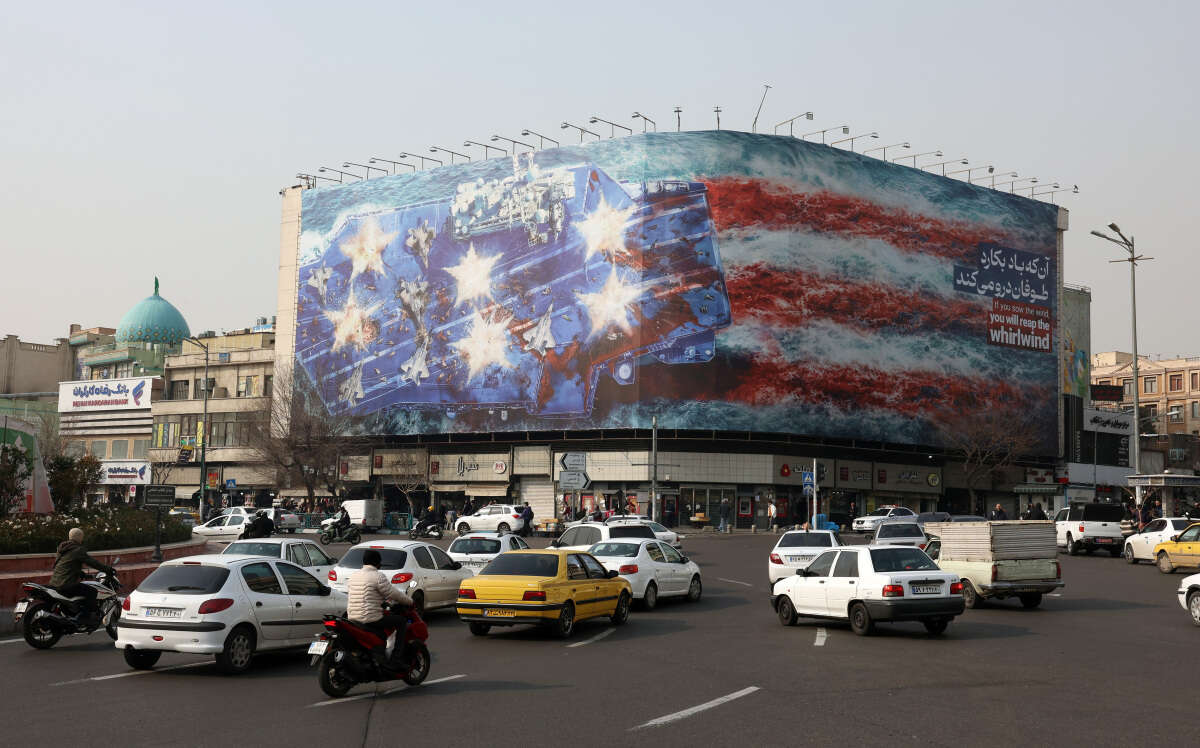
Against the backdrop of a US military buildup in the region, a senior Iranian official warned on Saturday that Tehran would treat any American strike as "total war." Speaking anonymously to Reuters, the official said: "This time we will treat any attack - limited, unlimited, surgical, kinetic, whatever they call it - as an all-out war against us, and we will respond in the hardest way possible to settle this." At the same time, in Tehran's Revolution Square, a regular venue for Iranian threats, a new poster was displayed depicting the destruction of a US aircraft carrier, bearing the caption: "If you sow the wind will reap the whirlwind."


