


As speculation swirls over the likelihood of a strike against Iran and regional tensions reach a boiling point, US President Donald Trump continues to keep everyone guessing. Speaking with reporters in Davos on Wednesday, he voiced hope that no further military steps would be taken against Iran. In the same breath, he stressed that the US would act if Tehran resumed advancing its nuclear program.
The implication is that as long as the current situation in Iran holds, military action would be taken only if it renews its nuclear activity. On Thursday, at the launch of what he termed a "Board of Peace," Trump added: "Iran wants to talk to us, and we'll talk."
Is he planning to send US forces on a punitive mission against the regime? That seems doubtful. His softened rhetoric does not point in that direction. Had that been his intention, one would expect him to amplify reports about the scale of the casualties and atrocities involved in the regime's crackdown, using them to bolster the legitimacy of an attack.
Has Trump returned to the path of accommodation and abandoned the idea of regime change? That too is unclear. Trump understands well that as long as the clerical regime in Tehran remains in power, it will not relinquish its ambitions. Any achievement against such a regime would therefore be temporary and limited. Still, public and diplomatic discourse in recent days has cast doubt on the feasibility of achieving regime change quickly, as Trump would prefer. Instead, assessments point to a prolonged interim period of chaos. These assessments, together with the relative lull in protests inside Iran, may have curbed ambitions in the White House, at least for now.

What, then, is the purpose of the US military buildup and deployment in the region? First and foremost, readiness for a range of possible scenarios. The situation is fragile, and it is difficult to predict how events will unfold. Force availability signals deterrence, shortens response times, and projects reassurance to US partners.
Second, the buildup enables preparedness for the next opportunity. Given Iran's persistent structural problems, the assumption is that a renewal of protests is only a matter of time. Moreover, the deployment itself could help encourage such unrest. Trump wants to be in a position to make good on his promise that "help is on the way" when that moment arrives.
Third, the forces are meant to deter Iran from resuming its nuclear program. Fourth, they provide readiness for the possibility that Iran will seek to retaliate for any military action taken against it in response to its armament efforts. As a reminder, this was one of the key issues discussed by Prime Minister Benjamin Netanyahu and Trump at their meeting in Mar-a-Lago in Florida less than two months ago, before the wave of protests in Iran came to dominate the agenda.
From Israel's perspective, developments regarding Iran largely reflect a positive trend. Tehran is mired in diplomatic, military and economic distress. Its allies and proxies are unable to come to its rescue. The "maximum pressure" campaign and secondary sanctions are taking their toll. There is no light at the end of the tunnel.

Still, Israel cannot afford to stand aside and let events run their course. It must do everything in its power to ensure that the US is not tempted to enter negotiations with the Iranian regime. The mere existence of political dialogue would provide the regime with a lifeline vis-à-vis its protesting citizens, signaling the possibility of agreements that could ease conditions.
Political negotiations would seriously undermine the prospects for regime change precisely at a moment when that possibility is becoming tangible, even before considering the additional gains the regime could extract from such talks. Past experience offers little basis for optimism regarding what negotiations with the Iranian regime can deliver.
A second issue that Israel's political leadership must advance with Washington concerns Iran's rehabilitation and rearmament. Amid warnings about nuclear activity and the killing of protesters, the threat posed by ballistic missiles has been conspicuously absent. Despite some discussion of the issue, it appears this threat has yet to receive appropriate attention in Washington. One can assume that Israel's leadership continues its diplomatic and security efforts on this front, mindful as well of the window of opportunity at its disposal.
Presence and freedom of action matter more than an agreement
Events this week in the Kurdish region of northeastern Syria illustrate the depth of change in the region and its moral implications. The Kurds, who played a significant role in the fight against jihadist terrorism emanating from the Islamic State, Jabhat al-Nusra and other extremist groups, have now become a target of the regime in Damascus, led by the jihadist Ahmed al-Sharaa, known as the hardline al-Julani, and his partner, the "good friend" Recep Tayyip Erdogan.
Accounts from Kurdish sources depict ethnic cleansing and a genuine attempt to eradicate the Kurdish people. They also convey undisguised disappointment with the US stance, alongside an expectation that Israel will extend a helping hand.
Given Israel's renewed standing as a regional power and against the backdrop of Turkish ambitions in the area, Israel's leadership in Jerusalem cannot remain silent in the face of shifting balances of power in regions of strategic importance to it. Nor can it ignore such cries for help from those who see themselves as aligned with Israel. Conduct in these tests will shape Israel's standing, particularly in the old-new Middle East in which we live.
From the specific case of the Kurds to the broader picture, Syria itself: the sequence of events since Julani rose to power underscores the instability of this arena and the rapid swings between extremes. In some ways, this mirrors the challenge present in other open fronts. The dramatic achievements of the war have created a new reality, but one that is still taking shape. The old order has been dismantled; a new order has yet to solidify.

The challenge in such a reality is to secure achievements and thwart the enemy's efforts to rebuild strength and erode them. This stretches the attention and capabilities of the defense establishment and political leadership to the limit, demands flexibility and rapid response, and runs counter to the natural desire for stable routine. Yet this stage is unavoidable. Attempts to shorten the path through dubious arrangements or premature agreements could prove far too costly. This applies as well to pressures to establish an Israeli-Syrian security arrangement.
In Washington, this is viewed as another layer of the Abraham Accords and an opportunity to shape a new regional order. But Israel, having been burned before, must adopt a cautious and skeptical approach. It is entitled, and indeed obliged, to assume that the ruler's friendliness toward the West is merely a survival tactic. Even if he himself were to change, he remains bound by commitments to a base whose behavior can be seen in clashes with Druze, Alawites and now also Kurds.
Israel must preserve freedom of action, both aerial and ground, in Syria. This will allow it to continue proactive operations against hostile elements entrenching themselves in the area, prevent weapons smuggling and terrorist intentions, and safeguard additional interests. Under no circumstances should Israel relinquish security control of the buffer zone or its hold on the Mount Hermon crest, a vital observation point for blocking linkages between Syria, Hezbollah and Iran.
A situation in which Israeli forces are forced into friction with the Turkish military in southern Syria cannot be acceptable to Israel, even if formal diplomatic relations exist between the two countries. The Golan Heights constitute Israel's strategic defensive line on its eastern border, and their status is not open for discussion.
It is hard to believe that Julani would be willing to reach arrangements with Israel under these conditions. That does not mean Israel should compromise. Tangible assets and freedom of security action are preferable to dubious arrangements, even if they are formalized.
The gates of hell
Ali Shaat, head of the "Palestinian National Committee for the Administration of the Gaza Strip," announced from Davos that the Rafah crossing would reopen next week. It remains unclear whether this will happen on the stated date and whether the crossing will be used for goods as well as for people. In any case, once the statement has been made, the direction is clear.
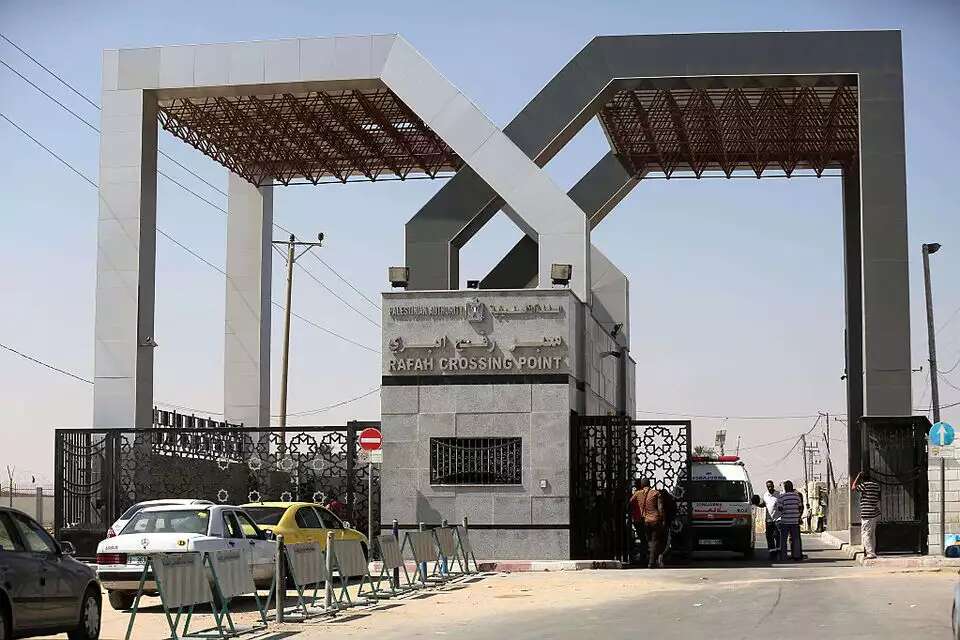
As if the existing openings and crossings through which dual-use items flow to the benefit of the Hamas terrorist organization were not enough, this route is now set to open as well, with oversight that evokes tales of Chelm. Confronting our enemies' rearmament efforts on all fronts, and in the Gaza Strip in particular, requires an unconventional organizational response: a joint effort by the Israel Defense Forces, the Shin Bet security agency, the Coordinator of Government Activities in the Territories, the police, the Tax Authority, the crossings authority, the State Attorney's Office and others.
For this to happen, political direction is required, as are resources and, above all, an understanding of the processes involved. Because of their complexity, these processes demand a level of sustained attention that is not always present among decision-makers and senior officials. That is what our enemies are counting on. It is time to bring about change here as well.
This article was originally published in Makor Rishon.


