


The release last year of documents related to the assassination of President John F. Kennedy by the Trump administration did not put an end to theories about an additional gunman beyond Lee Harvey Oswald. Now, according to a report published Sunday in New York, a privately shot film from 62 years ago may actually support the claim that there was another shooter in the assassination that shook the US for decades.
On January 15, a federal judge issued a discovery order requiring the US government to provide information about the fate of a privately owned black-and-white 8 mm film shot by Orville Nix, an air-conditioning technician from Dallas. Nix filmed the scene on November 22, 1963, during the moments of the assassination of the 35th president of the US in Dealey Plaza in Dallas, Texas.
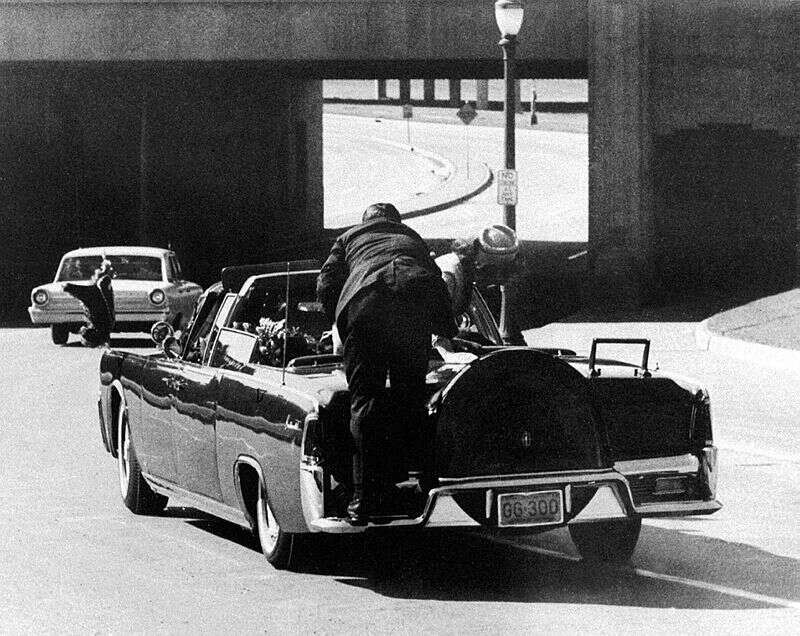
Nix's granddaughter, Gayle Nix Jackson, filed a lawsuit against the federal government demanding the return of the film or compensation estimated at more than $900 million. The film, which has been in government custody since 1992 under the JFK Records Act, is said to be the only known footage that captured the small grassy knoll near Dealey Plaza. This is the location from which many believe additional shots were fired beyond those attributed to Lee Harvey Oswald.
Nix, who died in 1972, filmed the scene from a distinctive angle. The footage shows First Lady Jacqueline Kennedy climbing onto the limousine after the shots were fired. Unlike the well-known Zapruder film, which documented the fatal bullet striking Kennedy's head, Nix's film focuses on the fence behind the grassy knoll and may contain clues, and possibly conclusive proof, of a second gunman, using advanced optical technologies and artificial intelligence. The Warren Commission, it should be recalled, concluded in 1964 that Kennedy was assassinated by Lee Harvey Oswald acting alone.
The film, initially seized by the FBI, has not been seen since 1978, when it was sent for analysis to a private company known as the Los Angeles-based Aeronautical Corporation. The company claimed the footage was returned to the National Archives, but the archives said they only have a copy and not the original. The order issued three weeks ago requires the federal government to provide an updated account of the film's status and whereabouts.
Jackson, through her attorney Scott Watnik, argued that under the Fifth Amendment to the US Constitution, which states that the government may not take private property without providing "just compensation," she is entitled to appropriate restitution. The federal government, for its part, relies on the 1992 JFK Records Act, which granted the government ownership of evidence related to the Kennedy assassination and established a process for releasing records to the public.
Attorneys for Nix Jackson told the New York Post that they want to use the case, and any potential trial if a settlement is not reached, to force the government to release new information about how and where it stored materials, including fragments of Kennedy's brain and recordings of internal communications among Dallas police officers on the day of the shooting.
"This is evidence in the murder, after all, of our president," Watnik said of the film. "That makes it all the more important that we know where these materials are." Lawyers for the Nix family also claim that among the Kennedy-related materials the government has failed to locate over the years are the original copy of the president's supplemental autopsy report, up to three photographs taken during the autopsy, and Kennedy's brain.


