


Throughout the years, and out of 3,530,814 olim, Russia, the United States, and France have stood out as the main countries from which Jews immigrate to the Holy Land in a sustained trend. But recently, and more precisely in the last two years, an intensifying Aliyah trend has been recorded from a country with more modest numbers, specifically during one of the most complex security periods Israel has known – Britain.
Britain has the fifth-largest Jewish community in the world, and the second-largest in Europe after France, with approximately 300,000 people. Ministry of Immigration and Absorption data show that annual immigration from Britain remained relatively low throughout the early 2000s. Then, in 2025, at the height of the war, the country recorded its highest number of olim in twenty years: 889. This stands in stark contrast to 2023, when the war began, and immigration hit its lowest point at 406, representing a drop of more than 50%.
As can be assumed, the widespread pro-Palestinian support in the country, whether by Islamists or by anti-Israel activists from the far left, and as a result the substantial rise in antisemitism, has led to a growing sense of insecurity for the Jewish community, more than half of which lives in London.
"It's not the same place my grandparents grew up in," A' (23), a soldier in the Israeli Air Force's technology division who made Aliyah as part of Garin Tzabar (a pre-army immigration program) in 2025, told Israel Hayom. "It's not easy. I lost quite a few friends after October 7. When I started thinking about what I wanted my future to look like, I didn't see myself in England," he shared about the decision to leave his homeland at a young age.
The reason for this is a combination of unprecedented events that have begun to open the eyes of British Jews. A fresh scandal from within the BBC – Britain's public broadcaster – joining a series of serious incidents of fake news and biased coverage, was the wording that omitted the targeted Jewish extermination in International Holocaust Remembrance Day broadcasts, for example. Alongside the sense of lack of representation in local media, there are incidents more severe than that – such as the attack at the synagogue in Manchester on last Yom Kippur, which led to the deaths of two people, and ended a long period from the year 1190 in which, as far as is known, no antisemitic attacks took place in the country.
Particularly worrying data published in the British Telegraph in September 2025 as part of a survey revealed that one in five Britons is antisemitic, and almost half of Britain's population (45%) believes that Israel treats Palestinians the way the Nazis treated Jews – and together with the government's policy under Keir Starmer, who, as will be recalled, recognized the establishment of a Palestinian state despite criticism that it was a "prize for Hamas," and leaders like London Mayor Sadiq Khan, who said in the past that "from the river to the sea" is not an antisemitic call, the heads of Jewish organizations are worried, to say the least.
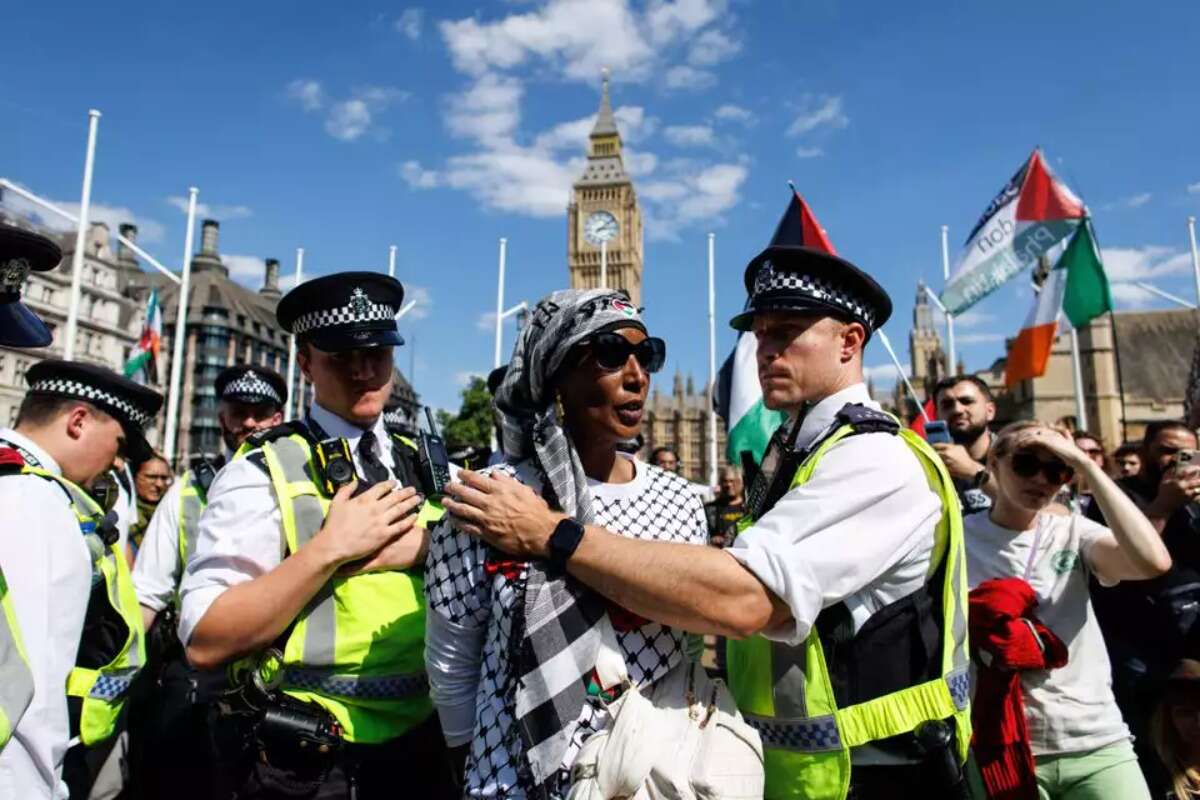
"The 'Israel-Palestine' issue has shown deeper issues in our society," British-Jewish journalist Nicole Lampert told Israel Hayom. "I've been writing about antisemitism since October 7, and some people [of the Jewish community are thinking, do we have a future in this country? Antisemitism has infiltrated areas of everyday life, like the teachers' union, which is obsessed with Israel, and the health services – there is a frightening number of antisemitic doctors. Jewish people are frightened to go to hospitals and use their full names. Some asked to have their Jewish identity taken off their medical records," she said about the troubling trend.
"There's a problem for Jews, but also for the country as a whole. People feel let down by the Labour Party. They're trying to hold on to the Muslim vote. Leaders would repeat every accusation made by Hamas; it felt very dangerous," she said, adding, "British Jews had an awakening: however integrated we are, we're still going to experience hatred."
Lampert emphasized that these feelings are joined by the understanding that there is no ability to rely on the country's security mechanisms to protect the Jewish community. Therefore, during her visit to Israel to cover the war, despite the complex security reality, she felt a weight lifted from her shoulders. "There, you're not going to be judged for being Jewish," she concluded.


