

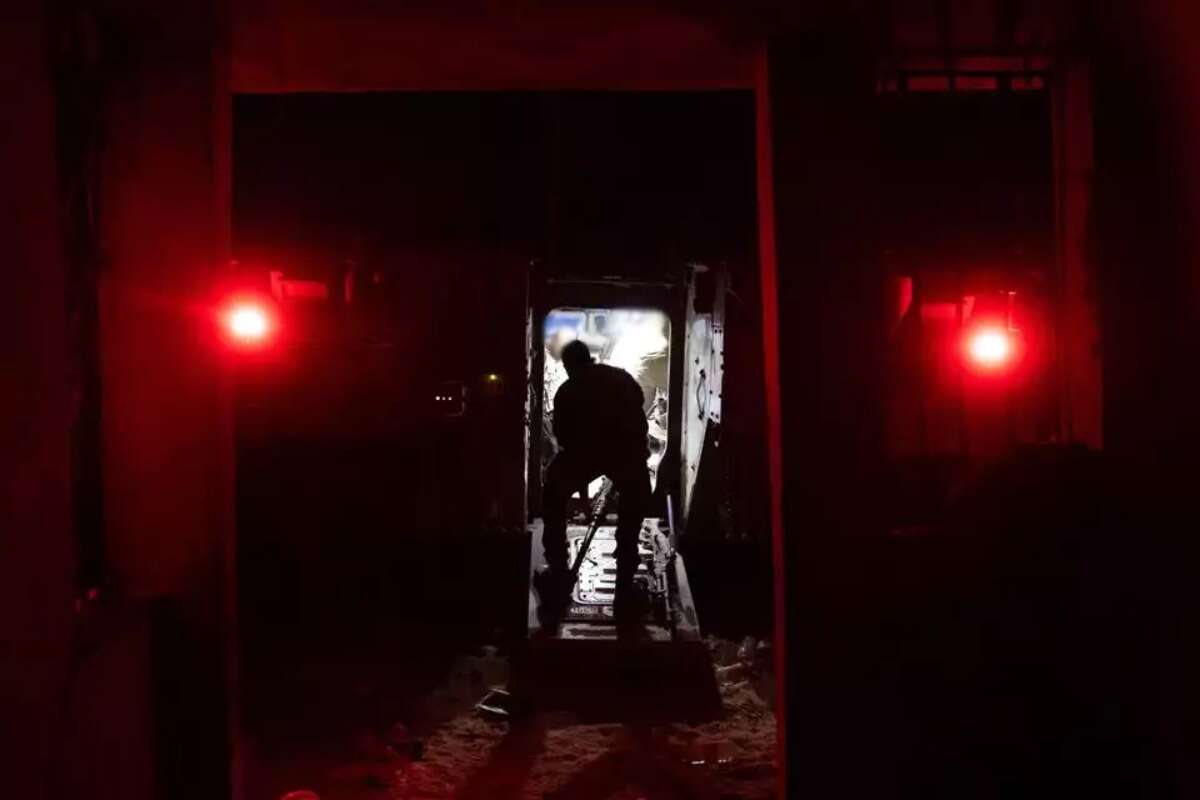
After meeting with us, Lt. Col. Y., head of the Subterranean Branch in the IDF Southern Command, waited for representatives of the US military near a Hamas attack tunnel discovered close to Kibbutz Nir Am about a decade ago.
The Americans wanted to hear an explanation of the phenomenon and exchange information on tunnel warfare. Some believe the danger will fade with slogans like "total victory," while others think this is only the beginning.
"Look at Pakistan and India," Lt. Col. Y. says. "The Pakistanis plant explosives under Indian patrol routes. Between Mexico and the US there are smuggling tunnels that make what we see here look like child's play. In the war between Russia and Ukraine, the subterranean front has taken on major significance. Go back to history. What did the Maccabees do? They dug. You see it in Iran, in Yemen, in Lebanon, and it is only going to intensify. We as a military understand this. Today, at the Kirya in Tel Aviv you sit in a bunker, and at Northern Command you sit in a bunker, which is essentially a fortified underground facility. The world is moving in that direction. Whoever controls the subterranean realm will control many things, because it is a front that has not yet been fully cracked technologically, and in my view not even physically. On land you know if you hit the target, and if you blow up a satellite you see the result with your own eyes. Underground, you have no real sense of whether you accomplished the mission. It is a lot of trial and error, and waiting to see how the enemy responds."

Right under our noses
Until October 7, Israel knew that digging was taking place in Gaza, and on a massive scale. But for a long time, warning signs were ignored, and there was a refusal to believe that one day we would discover a dark, brutal world beneath the ground. Today, after more than two years of fighting, tunnel experts who grew out of experience on the ground are warning against falling asleep on watch again.
"Before the war we said, 'It's there, we're here, we'll make sure there are no tunnels crossing the fence.' Basically, we created a separation," says Lt. Col. R., commander of the IDF's 603rd Combat Engineering Battalion, who knows Gaza's shafts and passageways intimately. "At the end of the day we're the tactical level, but I hope the level above us understands there is no other way. If they are digging beyond the border, it's not to get home faster. It's to get here and slaughter Jews. We understand their learning curve is constantly improving, and we are doing the same. I am a million percent certain that at this very moment they are digging."
Are new tunnels still being found at this stage?
"There are surprises all the time. Even right now. We won't go into details because we're dealing with it, but there are surprises in depth and length. Intelligence is not precise down to where a tunnel starts and where it ends. It gives an assessment, and you have to find it. Before the war, locating a subterranean site was considered an achievement. We'd say, 'Wow.' But last Saturday alone, just in my sector, a company commander destroyed a kilometer and a half of tunnel. It's no longer exciting. We're in a different place in understanding the enemy."
In 2024, the New York Times estimated that Gaza's underground network was between 560 and 720 kilometers long. When I try to understand how many tunnels have been found in recent years, Lt. Col. Y. is careful not to cite a number.
"When we began the ground maneuver, the target of the first brigade to cross the fence was Hamas' 'Ashkelon' outpost," he recalls. "Everyone was waiting to see a tunnel explode. We encountered two shafts and said, 'Let's go.' In hindsight, those were agricultural pumping shafts, but we still said we had blown up a tunnel. From that moment, everything flipped. It's not normal, but every meter, every maneuvering force encountered subterranean infrastructure. The terrain produced more information than we ever knew. We set up collection and management systems for every shaft the forces encountered. Today the system is at the level of thousands. I won't say how many, but it's closer to tens of thousands than to a few thousand shafts that were probed and marked by the forces."
The two officers, who have spent years studying hundreds of tunnels, never imagined when they enlisted that a significant portion of their service would take place underground. Today, it is part of their daily routine.
"In tunnels without reinforcement you feel the humidity and you sweat," says Lt. Col. R. "Once we prepared infrastructure inside a tunnel to pump in a certain substance. Two days of work, but days of Sisyphean labor where you spend most of the time inside with no ventilation. Physically, it's hard on the body. When you come out, you get fresh air into your lungs and it feels great."
Lt. Col. Y., who has become an expert on all things subterranean, agrees. "There wasn't a single time I exited a tunnel and wasn't happy," he admits.
Fighting insects
Neither officer shows any trace of contempt for the work done by the enemy. Lt. Col. R. is keen to stress this point. Over the two years since the fighting began, the IDF realized it is not dealing with amateurs hauling wheelbarrows underground. This is an organization that works methodically and knows exactly where it wants to go.
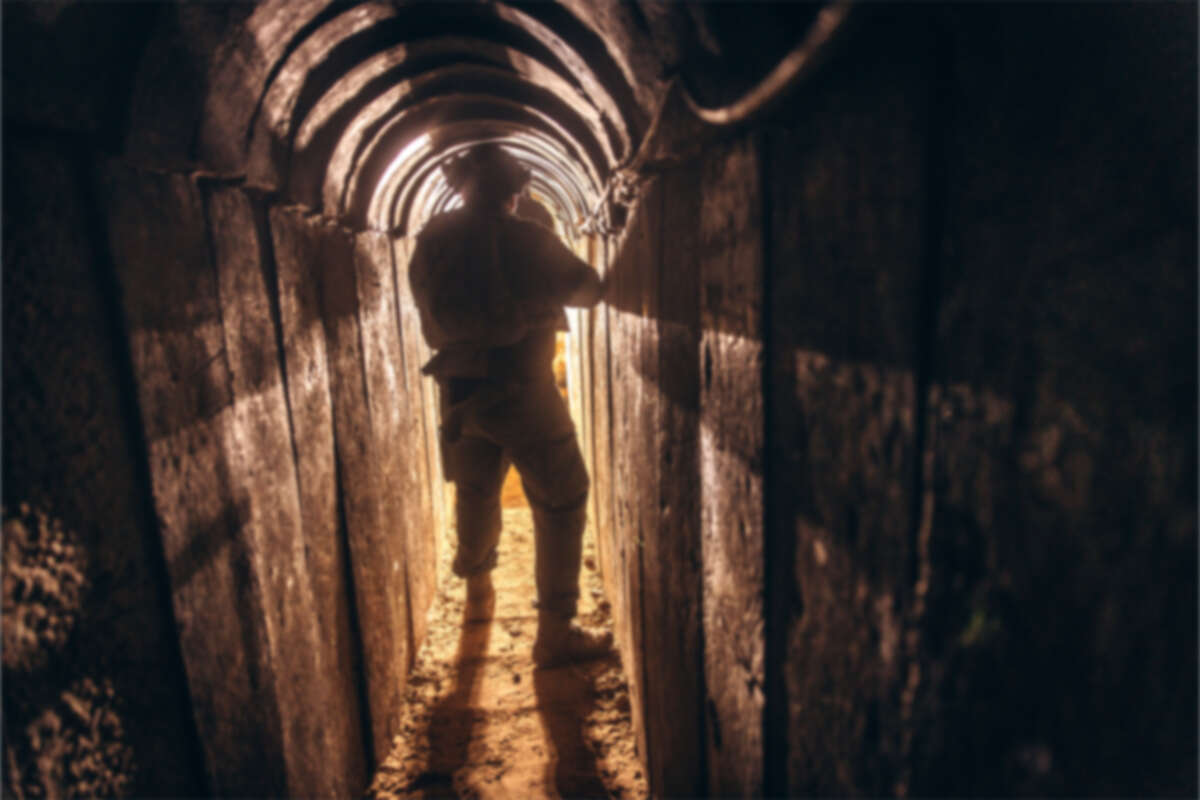
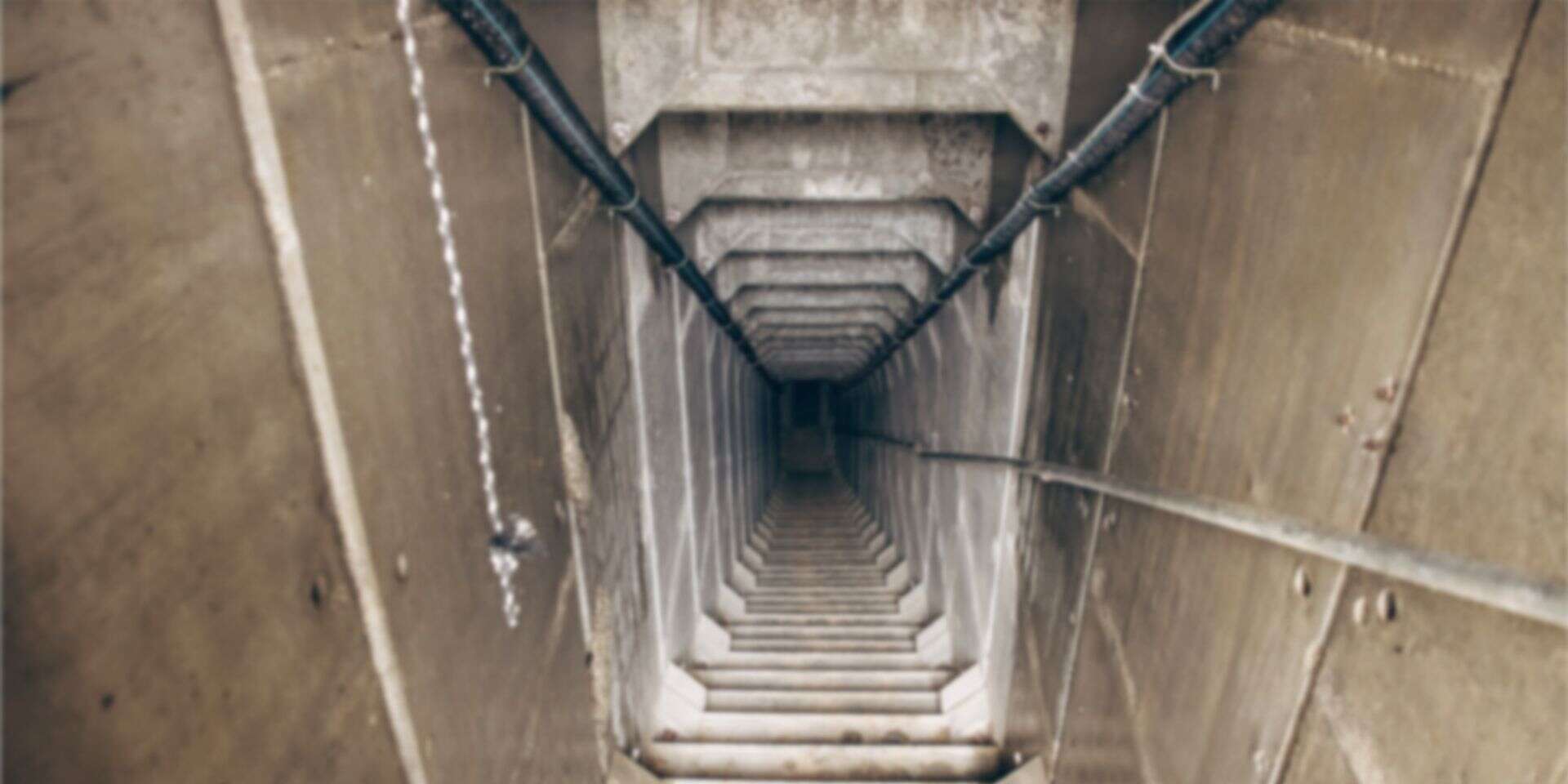
"I know the image sometimes is of four laborers with shovels, but that's light years from reality," says Lt. Col. R., 37. "Here, in the tunnel we're standing over now, they dug with pneumatic drills. That's a completely different pace. Since then they've advanced significantly. They have good mapping of where they dug, at what depths and angles. In northern Gaza there is the 'Orchid-like' tunnel, six meters wide, with vehicles driving inside. So it's not just the size that's impressive. You need ventilation systems, engineers who know what they're doing, water drainage, electricity, communications, sleeping quarters. In Gaza City we found a tunnel with an elevator."
Lt. Col. Y., 36, knows the findings well. "They live there in routine times, not just during war," he says. "We saw prayer rooms, offices, production sites. Think about what it means to lower an entire factory deep underground. And I'm not talking about five meters down, but 30 meters. You encounter a place where they mix high explosives, an insanely toxic chemical process. Underground, this is planning at the most advanced level. Hamas invested close to a third of its annual budget in the subterranean program. It understood the relative advantage, and once it understood how we operate, it improved."
To this day, it sounds like a cat-and-mouse chase beneath the surface. Both sides are in an arms race, one refining digging methods, the other improving detection and destruction.
"The most challenging thing is the endless learning competition, even during the war," says Lt. Col. R. "Over these two years we've seen monthly changes in their infrastructure, thinking, and operational methods. Hamas understands how we work and adapts defensively, and we have to reinvent ourselves."
Lt. Col. Y. jumps in. "Unlike the IDF, Hamas can change much faster. It places no real value on human life. From its perspective, if you try something innovative underground and die, it's not a disaster. Another factor is the absence of regulation. A field operative understands something and implements it the next day. He doesn't need to go to a company commander, who needs to go to a brigade commander, who needs approval from Sinwar. I cannot absorb the cost of soldiers' lives just to learn faster. Think of evolution among creatures with an 80-year lifespan versus insects that live four days. The evolution of warfare is faster. And if you ask what parameters allow Hamas to survive, it's the population it relies on and the subterranean realm."
Because of the understanding that underground warfare requires a decisive response to the advantage Hamas has built over the years, the IDF has been developing solutions on the move, drawing on accumulated field experience.
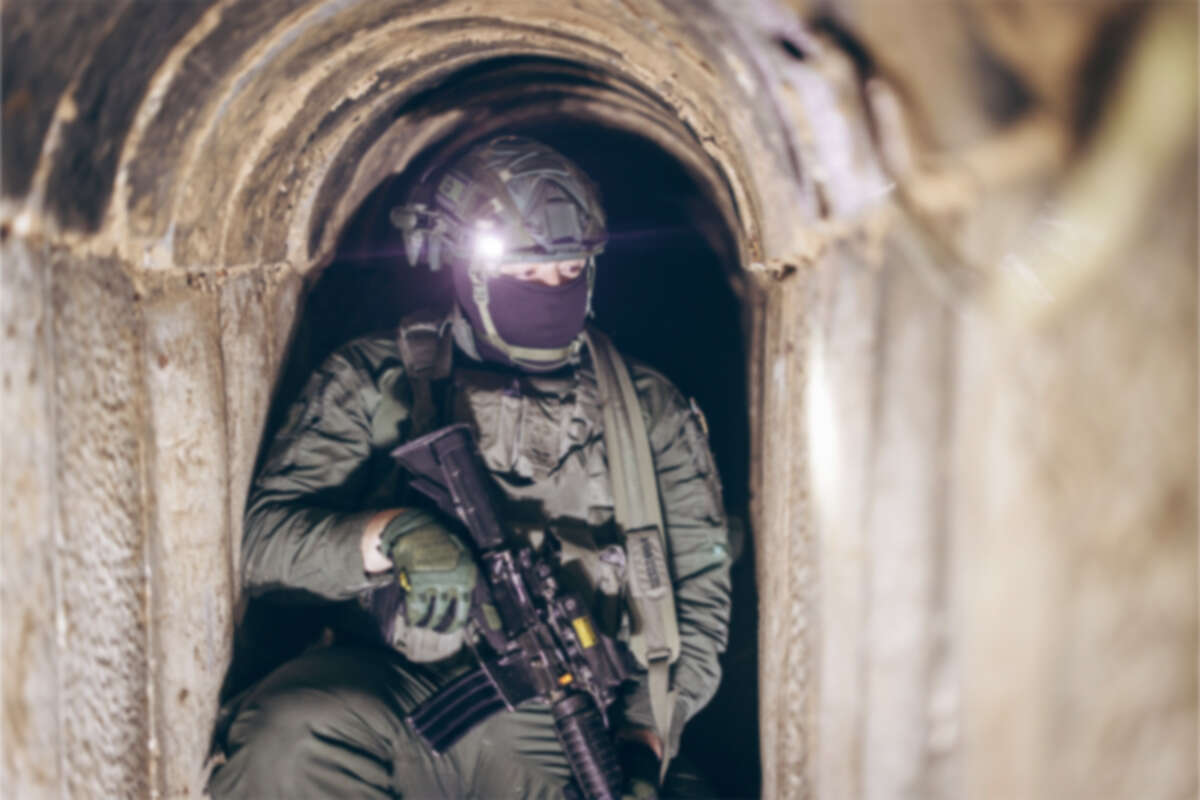
"We discovered connectivity between tunnels," says Lt. Col. D., a company commander in the elite Yahalom engineering unit. "Imagine a corridor you're walking down, sometimes you knock on the wall, feel a hollow space, open it and discover something new. We said the first thing is to cut the Strip north to south, then cut it east to west. That way we prevented reinforcements and movement. We came up with operational ideas that weren't just 'let's blow up a shaft,' but a systemic way of looking at the network and forcing the enemy into closed spaces it can't escape. In a tunnel the space is narrow and low. Operatives sit there eating dates and canned food until supplies run out and they have nowhere to relieve themselves. That's real. They suffocate until they come out and are killed, basically."
Everyone, now
One of the biggest challenges underground was not just the fear of direct clashes with terrorists, but the concern that hostages could be harmed during operations, a possibility that hovered for two years of fighting.
"I gathered the guys, brought them into the office, and said, 'No one leaves until there's an operational idea or a ruse that allows us both to protect the hostages inside the tunnels and to destroy the enemy or push it away so it doesn't hurt us,'" says Lt. Col. D., 34. "You're careful with the means you use. During Operation Gideon's Chariots II in August 2025, we developed an idea that in practice meant no hostages were killed in underground operations, largely thanks to it."
What kind of methods?
"A set of actions. Some inside the tunnels, some aerial, and also the pumping of liquids. When you pump liquids into a tunnel, you can choose the flow strength and level, whether it's lethal or not. I'll leave it at that."
Another key to dealing with the subterranean threat was the intelligence treasure trove discovered in command tunnels that were exposed. Today, almost every soldier can distinguish between tunnels used by low-level Hamas operatives, like those found in large numbers in Rafah, which were filthy and neglected, and tunnels of senior leaders uncovered in Gaza City, which were painted and sometimes had synthetic grass and conference rooms.
On one computer hard drive, security camera footage led in May 2024 to the discovery of the bodies of Shani Louk, Itzhak Gelerenter, and Amit Buskila, all murdered on October 7.
"In the footage we saw bodies being taken out of a building, loaded into a vehicle, and lowered into a shaft," says Lt. Col. Y. "We found the shaft and uncovered an explosive charge hidden in the wall, aimed exactly at the entrance. They were waiting for the moment we arrived. Through tactical actions by the force, the charge was neutralized, and we realized something of value was hidden inside. The force located the three bodies in two separate graves. There was a small doubt there might be another body, because we identified a blockage of sacks from floor to ceiling. For 12 hours we cleared an enormous number of sacks, each weighing 20 kilograms. Every piece of fabric was collected with reverence and placed in a Ziploc bag. We essentially set up a forensic lab. We didn't bring back new information, but it showed that everything would be done to bring a hostage home."
The search for the body of Lt. Hadar Goldin, killed and abducted by Hamas during the 2014 Gaza war, was also conducted based on intelligence, painstaking work that stretched over a year and a half.
"We didn't sleep for long nights," says Lt. Col. R. "If someone took a satellite image of the area, they'd see the number of shafts drilled, because every time a new intelligence fragment came in. We carried out several searches a week and turned over every centimeter. Imagine a length of 10 kilometers, and you go concrete slab by concrete slab, opening, searching, and closing. It's thorough work."
Did it frustrate you that you didn't find living hostages?
Lt. Col. R.: "There were areas we avoided searching because you understand that if you corner a kidnapper, the easiest thing for him is to kill the hostage. In the Strip you can see where there are still standing houses, ones that weren't hit because hostages were nearby. We didn't strike there, above ground or below."
In the end, it was Hamas that closed the open wound of the Goldin family, returning the officer's body last November. Lt. Col. Y. is convinced it happened only because the terrorist organization understood the IDF was close to finding the body itself.
"They realized we were right there, and that if they didn't return it, they wouldn't even gain the half gram of legitimacy from returning a fallen soldier who became a symbol," he says. "Hamas did it because it had no choice."

Destroying the "how"
When senior officers talk about the tunnel industry, they point to the areas around Rafah in southern Gaza as the capital of digging.
"There's a joke that wherever you drop a drill there, you'll hit a tunnel," says Lt. Col. Y., no longer smiling. "At first we laughed, and in the end we discovered it was true. Historically, Rafah is the mother of tunnels. It started with a unit that led smuggling between Gazan Rafah and Egyptian Rafah, but I have a subterranean archive in command with testimonies from 1967 of tunnels that were basically underground pantries. From the 2000s it became an empire. Every crime family that wanted to set up a business without a headache dug a tunnel."
Lt. Col. R.: "Just along the Philadelphi Corridor, over nine kilometers, we found about 200 tunnels, and I've been in all of them. Sometimes you find one tunnel beneath another. That's what happens when you don't need city permits. In my view, the future hinges on the question of our presence. If there's a presence, we'll have the ability to sample and inspect digging on a daily basis. The moment we leave, their ability to dig freely becomes much easier. We saw digging in Philadelphi just 30 meters from an Egyptian position. There's no confusion. The Egyptian saw them digging."
The detection of tunnels in Rafah increased Gazans' use of drones and maritime smuggling. "Carefully and humbly, we understand that the situation in Philadelphi does not allow Hamas to operate freely today," says Lt. Col. Y. "We see other efforts intensifying, which reinforces the understanding that underground operations are complex for them. But we don't trust anyone."
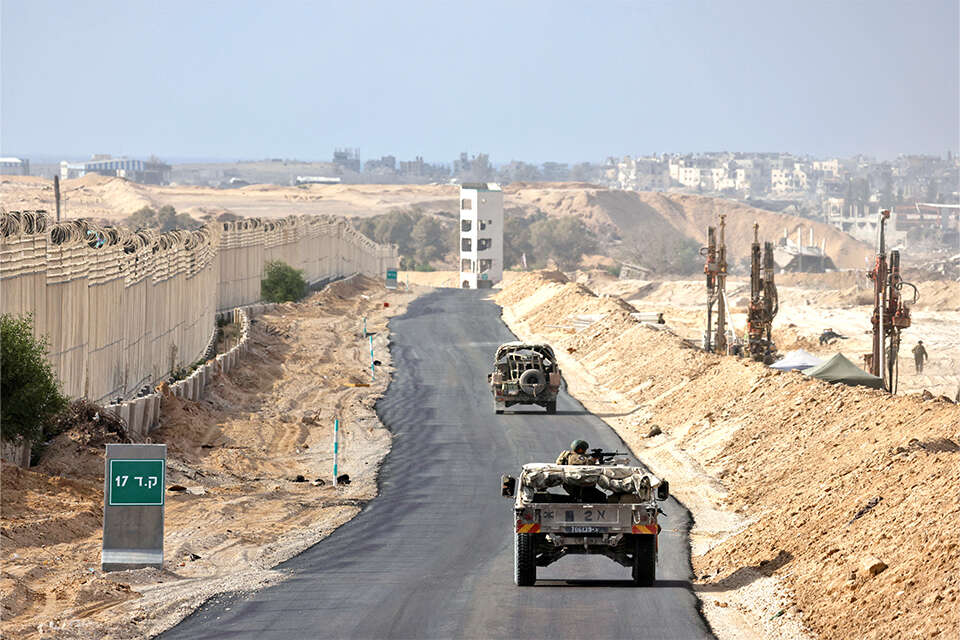
Today, extensive work is underway to destroy a large portion of the tunnels, whether through controlled explosions, sealing with concrete, and other projects requiring massive effort.
"These are major engineering operations," explains Lt. Col. Y. "The largest concrete pour ever done in Israel was around 20,000 cubic meters. We have a tunnel into which 12,000 cubic meters were poured over three days. That's about 1,000 truckloads and shutting down concrete plants across the southern region. But this was a tunnel that demanded treatment because it threatened Israeli communities. We are focused on destroying subterranean infrastructure in the Green Area, territory under Israeli control. That's the mission given to us by the political leadership and the IDF chief of staff. There is no hermetic seal underground, but we want to get as close as possible, to locate tunnels reaching the area and destroy them."
How do you decide which tunnel to destroy?
Lt. Col. Y.: "A substantial amount of underground infrastructure has been handled. If you quantify it in percentages, once you hit 50 percent or more, the damage becomes significant. We have inflicted significant damage. Hamas doesn't function as a single integrated system. It can't enter a shaft in Gaza City and exit in Rafah. It has to move above ground. The issue isn't how many kilometers you destroyed, but what you destroyed. You need to eliminate centers of gravity that destabilize the organization. When we destroyed the attack tunnels, we destabilized it. When we destroyed junctions connecting battalions and brigades, we prevented it from conducting organized fighting. When we hit underground command centers, senior leaders had nowhere to convene and make decisions. When we eliminated production sites, where would they manufacture explosives? We focused on systemic and strategic centers of gravity. Still, in the Green Area I don't want a single meter of a functional tunnel. That's a statement. IDF forces will defend areas only when they are confident in the subterranean space beneath them."
Lt. Col. R.: "It's easy to stand on a rooftop, see standing buildings, and say, 'There's a cluster there that threatens us, let's remove it.' Underground there is no 100 percent certainty. The threat of a raid on an IDF post is very real. These terrorists aren't going to become better people. The distance between the buffer line and the kibbutzim is six to seven kilometers, which is a major digging investment. Digging toward an IDF post is shorter and could yield a bigger operational 'achievement.' They will try to hit us. If there's a raid soon, I won't be surprised."
Just last month, in an area of Rafah under IDF control, six terrorists emerged from an underground shaft and exchanged fire with Israeli forces.
"It was pouring rain," Lt. Col. R. recalls. "They disappeared into the rubble. To avoid endangering soldiers, we used two robotic D9 bulldozers to push the debris until the terrorists popped out. Armed terrorists were moving in our territory and firing during the incident."
Lt. Col. Y.: "Before the war, the average digging rate was six to 11 meters per day. The pace has slowed significantly. Digging has become manual, less massive, but that doesn't matter. In my view, their intention now is not to reach communities. Think about it: if Hamas manages to abduct a soldier, we're back to square one. That's the goal from their perspective. If you think they're digging for defensive purposes, I say they're doing it for offensive ones. They just don't know the timing."
Are there still cross-border attack tunnels?
Lt. Col. Y.: "You have to look at this more deeply. There hasn't been a single raid since October 7 until now from attack tunnels. Hamas understands the superiority that has been developed here in the underground barrier space. There's something strong here, especially in deterrence. They dug dozens of attack tunnels and didn't use them. They didn't attack our maneuvering forces through them because they understood the IDF has superiority there and it's better for them to avoid it."
A bottomless pit
The Gaza Strip is in ruins, and in the IDF there is an assessment that even now Hamas operatives are using remaining tunnels to hide, especially as targeted killings continue. There, underground, the enemy is preparing for the day after.
"You can dig a hole in the ground too," says Lt. Col. Y. "To stop it, you need something more complex, and it's not at the system-wide, IDF level. The destruction caused by the fighting is now fertile ground for digging. How do you distinguish, amid entire neighborhoods lying in rubble, between someone clearing sand to salvage belongings from a destroyed home and someone digging a tunnel? At this stage Hamas isn't fantasizing about strategic tunnels. It's planning moves that can yield a tactical advantage in the next round of fighting. And that's something it knows how to do."
Lt. Col. R., commander of the 603rd Battalion, knows where the challenges will arise soon.
"The tunnel in Gaza City that housed Hamas' intelligence data was 13 meters deep, in a UNRWA compound," he says. "It took time to find it, and while we were searching for the shaft, a deputy battalion commander and a company commander from the IDF's Shaldag unit were killed by a sniper ambush. The electricity we identified underground was connected to UNRWA headquarters. That's the challenge. Identifying a digging workshop in the middle of nowhere and saying, 'These are Hamas operatives,' is easy. Identifying a UNRWA employee building what appears to be a regular structure in his compound is different. No one notices if instead of 10 trucks, 200 trucks of sand leave the site. He builds a tunnel in a place that is hard to strike because of legitimacy and international law."
As we spoke, gunfire could occasionally be heard across the border. With it came the understanding that despite the return of the body of Ran Gvili, the final hostage, and talk of the next phase in Gaza, it will take a long time before the threat to the south of Israel is removed.
"The underground threat we will face in the future won't resemble what we're dealing with today, so we'll have to improve," Lt. Col. Y. is convinced. "Factually, Hamas is deterred. But the question is whether it has a choice. From its perspective, what it went through was successful. To sustain two and a half years of fighting against the strongest army in the Middle East, regardless of how, all within a relatively small territory, that's a significant achievement in its eyes."


