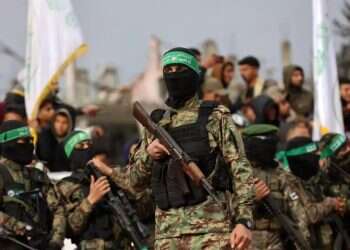
Indonesia's armed forces chief, Gen. Maruli Simanjuntak, said Tuesday that his troops were preparing to deploy a peacekeeping force to the Gaza Strip, following an official statement confirming that Indonesia would send forces to take part in a multinational task force in Gaza.
Indonesia's status as a Muslim country that does not maintain official or direct relations with Israel has raised eyebrows among many in Israel. Concerns that the broadly pro-Palestinian stance of much of the Indonesian public could influence the force's conduct toward the Hamas terrorist organization are not unfounded.
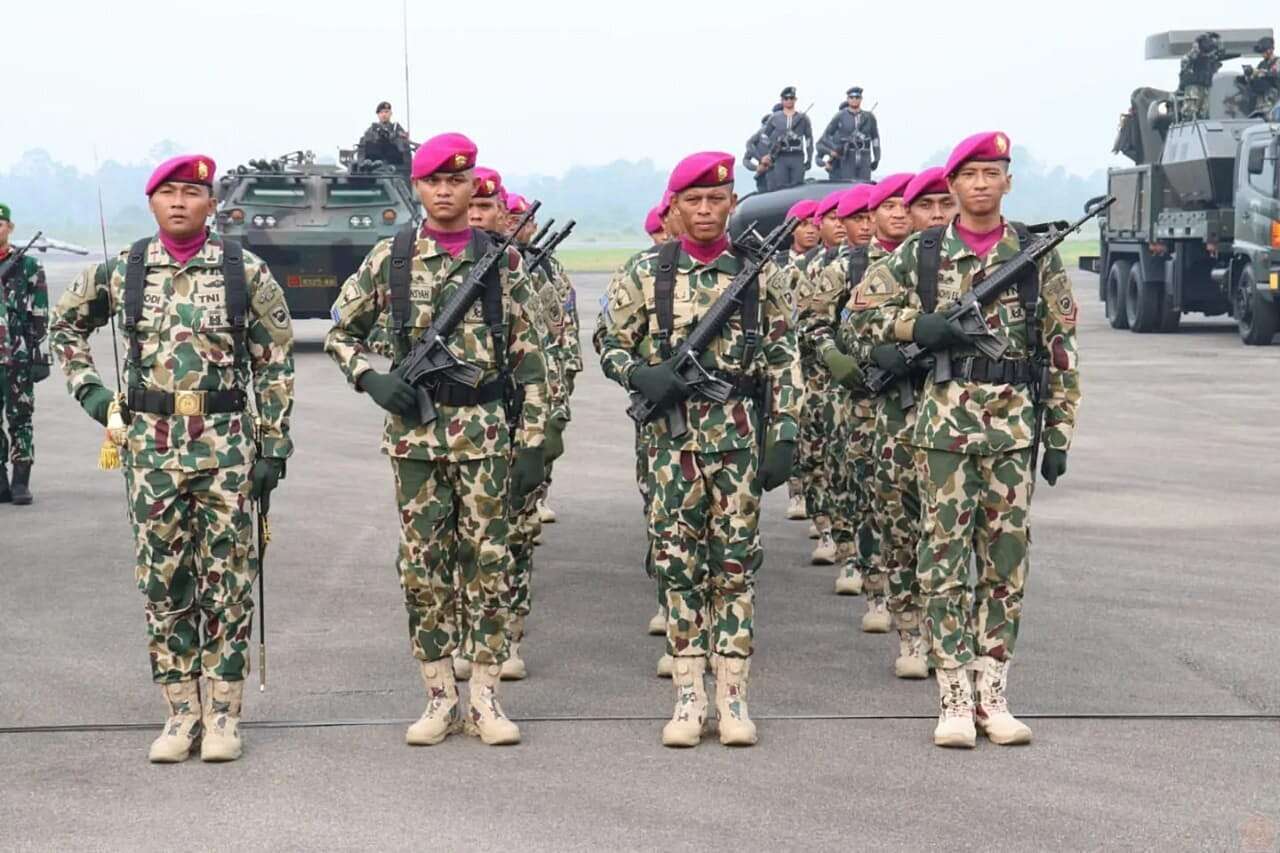
At the same time, another question arising from Jakarta's dramatic announcement is whether the Southeast Asian country actually possesses forces suited to the nature of the mission, and whether it is capable, if it truly chooses to do so, of fielding a force able to contend with the harsh and complex conditions in the Gaza Strip. To answer that question, it is necessary to examine the Indonesian military itself, its equipment, its capabilities and its record in past military operations.

The Indonesian armed forces were established in 1947 through the merger of guerrilla units that fought Dutch colonial rule and local forces that had been loyal to the foreign administration, following Indonesia's independence. Indonesia's armed forces, including the navy and air force, number more than 400,000 active-duty personnel, along with a similar number of reservists at varying levels of operational readiness. This makes it one of the largest militaries in Southeast Asia.
Compared with other regional militaries, the Indonesian armed forces possess impressive logistical capabilities for transporting equipment and personnel. This is largely due to Indonesia's status as a vast archipelagic state and the overseas missions its military has conducted. The Indonesian Air Force operates 24 C-130 Hercules transport aircraft, including at least five upgraded Super Hercules models. It also fields European-made A400M Atlas tanker and transport aircraft, significantly extending its airlift range. The Indonesian Navy operates five amphibious warfare ships designed to transport large forces overseas, as well as 23 landing craft that support them.
The Indonesian military is experienced in deploying forces to distant locations and operating expeditionary units in hostile environments marked by active insurgencies. In recent years, Indonesian forces have conducted an ongoing military campaign against rebel groups in western Papua, a territory Jakarta considers an integral part of Indonesia. Until 2005, the military fought insurgents in the Banda Aceh province in the country's north, a conflict that ended with an agreement granting the province a degree of autonomy. Indonesian forces also fought in East Timor until 1999, deploying large formations in an effort to suppress an uprising by the island's residents. In addition, Indonesian troops have taken part in peacekeeping missions in Lebanon, the Democratic Republic of Congo and Iraq. Altogether, Indonesia has deployed more than 24,000 soldiers overseas over the past several decades.
The Indonesian military's experience in fighting armed groups and terrorist organizations across the region and beyond is considerable, but it also presents a troubling dimension. In nearly every conflict involving Indonesian forces, allegations of war crimes have surfaced. In East Timor, Indonesian troops took part in what is known as the East Timor genocide, during which, according to UN claims, more than 200,000 of the island's Christian residents were killed between 1975 and 1999.
In Banda Aceh, a Muslim province that is part of Indonesia, repeated UN reports pointed to a deliberate policy by Indonesian forces that included summary executions, rape and the systematic burning of homes. In western Papua as well, Indonesian military forces have been accused of maintaining a policy of discrimination and violence against the Christian Papuan population, alongside a system that favors Muslim settlers from elsewhere in Indonesia.