


In January 2024, Benjamin Netanyahu visited the Bnei David pre-military academy in the settlement of Eli. In those days, the prime minister was looking for a new military secretary, who would replace Maj. Gen. Avi Gil, nearing the end of a three-year term. During the visit, as Netanyahu sat down for lunch, Rabbi Eli Sadan joined him. Sadan is a dominant figure in the religious Zionist community and the founder of the academy, which has made it its mission to integrate knitted-kippah wearers into the IDF. Sadan had several recommendations for the military secretary post, all of them officers who grew up in religious Zionism or are identified with it. The prime minister listened closely.
A short time later, Netanyahu summoned three candidates to his office for the role, considered one of the most sensitive in Israel's defense system: David Zini and Dado Bar Kalifa, both from the heart of the religious Zionist community, and Barak Hiram, who is secular but lives in the settlement of Tekoa and is considered an especially hawkish officer. However, a person who spoke with Netanyahu after that round of meetings says the prime minister was not impressed by any of the three candidates, even though he would later appoint Zini as head of the Shin Bet security agency. A few days later, Netanyahu asked to interview another candidate: Roman Gofman.
Gofman, born in Belarus and who immigrated to Israel at 14, does not wear a kippah and lives in Ashdod. But Netanyahu discovered that while Gofman was sent by the army to pursue academic studies, he devoted one day a week to Jewish studies at the Bnei David academy. "I was there from morning to evening," Gofman said in the past. "They accepted me as I am, without a kippah." According to a source familiar with the details, "Rabbi Sadan gave his approval for Gofman because he studied in Eli."
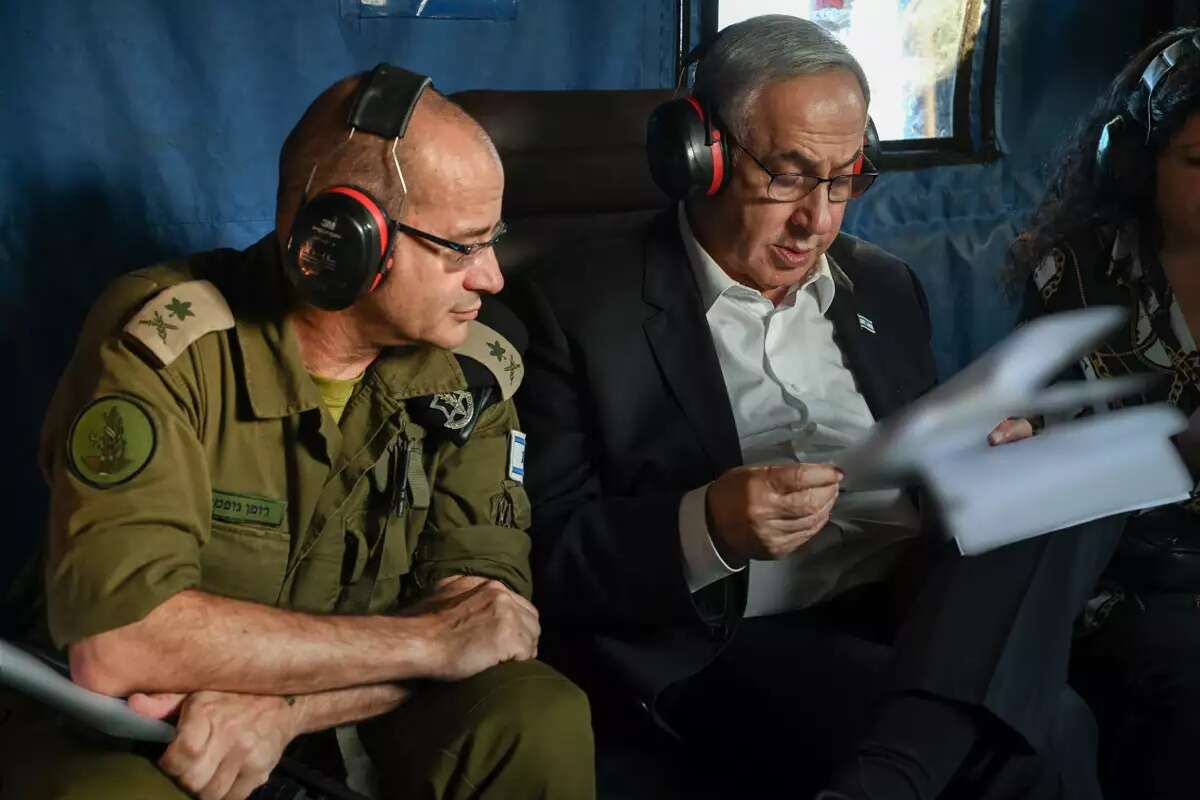
The first meeting between Netanyahu and Gofman lasted about 20 minutes, a short time by the prime minister's standards. Netanyahu, who tends to prolong meetings of this kind, ended it dissatisfied. A person who spoke with him afterward says the prime minister was mainly troubled by the fact that Gofman did not speak English.
But a few days later, Gofman found himself again at the Prime Minister's Office for a working meeting on a completely different matter. The chief of staff, Tzachi Braverman, happened to see him there. "Why don't you go in again," Braverman told Gofman. "Now is a good time."
It was, indeed, good timing. When Gofman was brought into Netanyahu's room, he found Netanyahu's wife Sara inside as well. About 15 minutes later, Sara left the room and left the two men alone. A few days later, Channel 14 reported that Gofman had been chosen for the military secretary post. A person who was near him when he received the news says Gofman was surprised. "Roman was in shock that he got the job," he says.
"No privilege"
Why did Netanyahu choose Gofman as his military secretary? According to a person who knows both men well, Gofman's personality fit Netanyahu like a glove. "On the one hand, Gofman is a kicking horse, and on the other he's very obedient," he explains. "Wild, but the kind who bows his head to authority. Even if he knows how to voice an opinion and argue, when he gets an order, in the end he carries it out."
This week, Army Radio reported that Gofman cooperated with Netanyahu in collecting classified documents that the prime minister used to craft his response to the state comptroller, in which he attacked the IDF and the Shin Bet head-on. "The military secretary is supposed, on the one hand, to represent the entire security community, and on the other to serve the prime minister," says a security official who worked with Gofman as military secretary. "From my interface with him, Gofman tends to prefer the prime minister's needs more than the interests of the security community."
Today it can be said with certainty that Netanyahu was pleased with his new military secretary. In December 2025, he announced he had chosen to appoint Gofman, a man who grew up in the Armored Corps, served in only one role as a major general and never commanded an intelligence unit, as the next head of the Mossad.
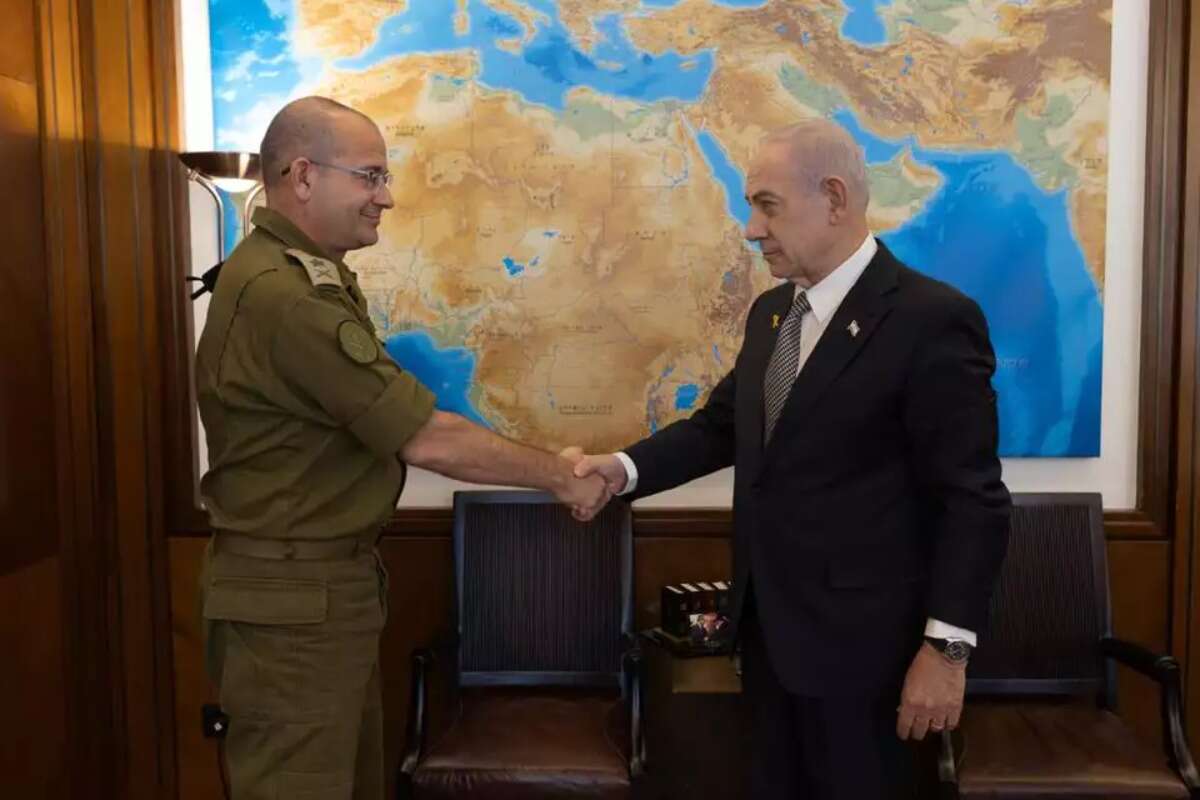
The announcement, seen as a vote of no confidence in the Mossad's senior leadership, shook the organization and led several department heads to consider their future. Two sources who recently spoke with current Mossad chief David Barnea say Barnea expressed concern to them about the organization's future. "We're at war, with fronts spread out," one of them explains. "We have no privilege to take someone with no experience in managing and processing intelligence, including the most advanced technological systems, and put him at the top of the system."
On the other hand, several people who worked closely with Gofman argue the appointment is appropriate. "A thorough, deep and brave person in how he acts and how he thinks," says a former senior official in the Military Intelligence Directorate who knows Gofman well. "An excellent officer who will be an excellent Mossad chief," another security source adds. "In all my years in the defense establishment I've never encountered abilities like Roman's. He starts working at 5 a.m. and finishes at 1 a.m., and repeats. With any other officer parachuted like this into heading the Mossad I'd raise an eyebrow, but Roman is an autodidact. I have not the slightest doubt he will sit for weeks and read every page, every intelligence report and every study he can get his hands on, in order to excel."
In recent weeks we have spoken with dozens of people who know Gofman, from his youth as a new immigrant in Ashdod, through his military service and up to his current role as the prime minister's military secretary. The result is a profile of a combative, creative and hardworking officer, but also a reckless man whose daring sometimes disrupts his professional judgment. It also emerges that Gofman was almost dismissed from the National Security College, and that recently he considered leaving the military for a role in the police, after concluding he had little chance of advancing in the IDF command ladder. Now, paradoxically, he is a step away from one of the most important jobs in Israel's security system.
You can learn about Gofman's character by watching the short video documenting his wounding on October 7. Gofman, then a brigadier general who commanded the National Ground Forces Training Center, drove on his own initiative from his home in Ashdod to the south and at a certain point reached the Shaar Hanegev junction, which was already clearly in the hands of terrorists. In the video you can see how, with courage worthy of appreciation, he entered the junction alone and fought a very brief battle, during which he managed to wound two terrorists.
But within seconds, Gofman himself took a bullet in the leg, after finding himself at a disadvantage and trying, unsuccessfully, to hide behind a thin road sign pole. Instead of managing the combat zone, the most senior commander on the scene was wounded and the force had to deal with evacuating him. "All credit to him for going south and getting there very quickly," says a former senior infantry officer, "but when he decides to enter a kill zone without understanding the situation picture, that's a critical mistake stemming from recklessness. In short, classic Roman."
Too much independence
Gofman recovered quickly from his October 7 wound. Afterward he served for several months as chief of staff to the Coordinator of Government Activities in the Territories, and he was already formally appointed to his next post as a division head in the Planning Directorate. Then Netanyahu's decision came and upended the plan. From the start, the appointment as military secretary, which requires the IDF chief of staff's approval, did not sit well with the chief of staff at the time, Herzi Halevi. As reported in Israel Hayom, Halevi did not actively oppose Gofman's appointment, but he did not push for it either.
Later, Halevi also remained dissatisfied. In the chief of staff's eyes, Gofman showed too much independence and was perceived as someone serving Netanyahu's agenda at the expense of the IDF's. "As military secretary, Gofman often saw himself as someone providing the prime minister with a second opinion, as a substitute for the chief of staff," says a former member of the IDF General Staff forum.
"Sometimes it sounds like Gofman is saying what Netanyahu wants to hear, or that Netanyahu uses Gofman to say, 'Look, there are other opinions in the army.'"
One example occurred in spring 2024, immediately after Gofman entered the role, when the cabinet discussed what became known as the "Biden outline" for releasing hostages in exchange for ending the war. Then-Defense Minister Yoav Gallant, Chief of Staff Halevi and the head of the hostages directorate Maj. Gen. Nitzan Alon supported advancing the outline together with the Shin Bet, while Netanyahu opposed it and Mossad chief Barnea was cautious.
"Netanyahu found himself in an inferior position opposite the defense establishment, which was almost unified on the issue and opposed his stance," says a former security source who was in the know at the time. "To balance the picture, Netanyahu held 'security consultations,' but because he knew what the chief of staff and the Shin Bet position would be, they were not invited to those consultations. The most senior security figure in the room was Gofman, who provided Netanyahu with the supposedly military position that supported Netanyahu's stance. Netanyahu simply played divide and rule, and Gofman chose a side. He made the switch pretty quickly."
On the other hand, a former senior officer in Military Intelligence says Military Secretary Gofman played a central role in Netanyahu's successful decision-making process that led to the killing of Hassan Nasrallah and Operation RIsing Lion. "Roman had enormous influence on these operations," he says. "He knew how to bring Netanyahu to the right visits, in the right units and at the right time."

For example, the final decision to kill Nasrallah was made while Netanyahu was visiting Unit 8200, a visit Gofman arranged on his own initiative. "There Netanyahu heard directly from intelligence personnel that the window for the strike was about to close, after Nasrallah's advisers urged him to go underground," says the former senior intelligence officer. "Netanyahu listened and was convinced during that visit that it was time to act. Even during the dilemmas ahead of the strike in Iran, Gofman knew how to bring Netanyahu where he needed to be so he would receive information firsthand."
The trust Netanyahu placed in Gofman helped him, within just a few months, become Netanyahu's personal envoy to Moscow and liaison to Russian President Vladimir Putin, in an unusual arrangement. Sources in the defense establishment argued at the time that Gofman was receiving more and more authority from Netanyahu and was effectively functioning even as head of the National Security Council. They still did not imagine that one day Gofman would also be appointed head of the Mossad.
"Gofman is a gray figure, without an intelligence background, but also a loyal confidant who owes his career to Netanyahu. Netanyahu knows that whatever happens between him and Gofman from now on, Gofman will take with him to the grave," says a former senior Mossad official who had worked opposite both men. "At the Mossad we always laughed at Arab states, where intelligence chiefs were appointed based on loyalty. We said we're not like that. Gofman's appointment changed that. It's a blow to the Mossad's ethos."
"Make them fight"
As of this writing, Gofman's formal appointment as Mossad chief still requires approval from the Grunis Committee for senior appointments. Recently it was reported that the committee decided to examine more deeply an event that clouds Gofman's past from his time as a divisional commander. This is a sprawling security affair that we will try to put in order within the constraints of the gag orders surrounding it.
Around May 2022, the defense establishment began noticing that secret information from Military Intelligence was leaking to a popular Hebrew-language Telegram channel. "We went crazy seeing things go up on Telegram that only a few people knew, and it exposed forces and endangered lives," says a senior Military Intelligence official from that period. After joint discussions involving the information security unit, the Shin Bet and the police, it was decided to arrest three suspects in the leaks: a reservist and a regular-service soldier in Military Intelligence, and a 17-year-old boy from Ashkelon named Uri Elmakayes.
In their Shin Bet interrogation, it emerged that the three had set up a shared Telegram group through which the two intelligence personnel passed secret information to Elmakayes. He, in turn, published the information on a Telegram channel he operated under a pseudonym. The Military Intelligence soldier has since been convicted of disclosing a secret, while the reservist's trial is still ongoing.

During the Shin Bet interrogation of Elmakayes in the serious affair, which lasted 44 long days and included sleep deprivation and denial of a meeting with a lawyer, he claimed that alongside the secret information he received from the reservist and the Military Intelligence soldier, additional material he published on Telegram was sent to him by an intelligence officer in Division 210. Division 210 is responsible for the Golan border area and at the time was commanded by Gofman. According to Elmakayes, this was part of a divisional influence operation meant to convey messages to actors on the Syrian side of the Golan through the Telegram network.
Elmakayes insisted that the messages between him and the intelligence personnel, proving his claims, were on his phone. But the phone was never opened by Shin Bet and police investigators.
Still, in light of the claims that arose in the interrogation, the IDF decided to conduct an internal review led by Brig. Gen. G., head of the activation division in Military Intelligence. G. called Gofman by phone, but Gofman told him he did not know a boy named Elmakayes and certainly had not used him for influence operations. Following that, the IDF issued a statement saying: "In a thorough review among authorized IDF personnel involved in operational shaping, influence and deception processes, no evidence was found that the Telegram channels relevant to the investigation were part of an influence or deception act."
After the IDF's denial, based on Gofman's blanket disavowal of the affair, an indictment was filed against Elmakayes. He was later released to house arrest, where he remained for about a year and a half. It should be emphasized that the indictment against Elmakayes related to leaking the secret information he received from the reservist and the Military Intelligence soldier, with no connection to the events involving Division 210.
But while the teenager waited under house arrest for his trial to begin, the IDF discovered there was, in fact, a link between Elmakayes and Gofman. A deeper review in Division 210 found that Gofman had initiated an influence operation in which he approved his subordinate intelligence officers passing non-classified information to the operator of a Hebrew-language Telegram channel that was popular among residents of the Syrian Golan. Gofman claimed he did not know the channel's operator was Uri Elmakayes.
It also emerged that Elmakayes' activation was only part of a broader intelligence effort Gofman ran in the division. "Gofman constantly pushed to influence the population on the other side," says a former senior Military Intelligence official. "For example, to expose al-Qaida and Islamic State people to villagers, to make them fight one another." But in some of these cases, Gofman acted without obtaining the required approvals and without coordination with Military Intelligence. "You expect a division commander to carry out influence operations, but with coordination and approval," says the former senior official, "because when you operate vis-a-vis a civilian population, it has implications far beyond the division."
After Gofman's unauthorized activity was exposed, he was summoned to the office of the then-northern command chief and received a command reprimand. But what Gofman, and others in the IDF, "forgot" to do was to update the lawyers for Elmakayes, who was still under arrest waiting for his trial. Only much later, when the lawyers received Elmakayes' cellphone and opened it, they discovered that the teenager's claims were true: he had indeed been activated by Division 210 intelligence officers.
As a result, the lawyers approached the prosecution, which apparently, due to the investigative failures, decided in an extremely unusual step to cancel the indictment against Elmakayes. In effect, it can be said that thanks to the irregular conduct of Gofman's managers, Elmakayes was saved from a serious indictment.
In any case, Elmakayes and his lawyers have very serious claims against Gofman. They argue he could have confessed earlier to his ties with Elmakayes but chose to conceal the truth while the teenager remained in Shin Bet interrogation and then in custody. These days, the teenager is pursuing a civil case against Gofman, and his lawyers have also sent the Grunis Committee a statement expressing their opposition to appointing him as Mossad chief. "We believe the affair of activating the minor whom we represent constitutes a black stain," say the lawyers, Orit Chayon and Din Kochavi, this week. "Abandoning the minor to Shin Bet interrogations and leaving him in prolonged custody constitute a moral and ethical injury and do not allow trust in Gofman. We hope the Grunis Committee will reach the only required conclusion, which is disqualifying the appointment."
"Because he's creative"
Maj. Gen. Roman Gofman, 50, married and a father of three daughters, was born in the provincial city of Mazyr in southern Belarus, not far from the border with Ukraine. His mother was a teacher. His father, Vladislav, worked as a doctor at the local hospital, specialized in anesthesiology and later became deputy director of a hospital in Russia. In 1990, after the family immigrated to Israel, the father worked as a security guard. Only a year later did he begin working at Assaf Harofeh Hospital, where until recently he managed the recovery unit and respiratory intensive care.
Gofman, a skinny, bespectacled boy, struggled to find his place in Ashdod, where the family settled. "To get to school Roman had to cross a street where a few 'arsim' lived who harassed new immigrants," says someone who knew him. "Roman refused to take a detour. He would walk through the arsim street, even if it meant getting beaten." At some point he learned boxing, mainly to defend himself, and as a teenager became Israel's runner-up in boxing in his weight category.
He attended high school at ORT Officers of the Sea Ashdod, in an electrical studies track. He is remembered as a thorough student, exceptionally meticulous, but also an opinionated youth who challenged his teachers frequently, traits that would carry into his military career. It seems he understood early that the most efficient way to integrate into Israeli society was through combat service. In a photo from high school, he appears with a close-cropped Marines haircut and a cut-off shirt. Friends said he trained a great deal ahead of enlistment, and on stormy winter days he would go to the beach, enter the water and fight the waves. In the school yearbook, he was described briefly: "This guy is really a serious tool, during breaks he trains regularly, one punch of his and you're in hospital for a week."
Because of his glasses, Gofman was not accepted to an elite unit and enlisted in the Armored Corps. There he found not only personal purpose but also a collective identity. "As a commander in the army I received my Zionist and Israeli identity," he said in a media interview, revealing that only in the army did he first learn the words of the national anthem. "It was a vacuum I carried since immigration."
"A man without pose"
Gofman excelled as an armored combat officer, rose through the ranks, and in 2011 was appointed battalion commander in the 7th Armored Brigade. His combative yet reckless nature surfaced at least once in that role. While holding a sector in the north, he was called to chase a shepherd who crossed the border. "Gofman started chasing him, and at some point had to cross a stream," says a former officer. "He went into the water with his radio operator, with all their gear, and the radio operator almost drowned. It ended with having to rescue the radio operator, and the shepherd got away."
Gofman's first steps outside the Armored Corps came when he commanded the Ephraim Brigade, which covers the Gush Etzion area. There he built his image as a creative officer with an open, original mind, an image he still clings to today. One way he did this was by changing the brigade's approach to the local population. "We worked to significantly expand the circle of interlocutors and to become directly familiar with the terrain through tours in civilian clothing and fascinating collection interrogations with terrorists in prisons," Gofman wrote in an academic article published at the end of his term, titled "From Security Routine to Governance." "We searched for answers as to why one day a Palestinian youth becomes a terrorist."
An intelligence officer who worked opposite Gofman at the time says, "He had a positive influence on the sector, not only in the military aspect but also in the work he did with the Palestinian population, out of an understanding that influencing them would lower the level of terrorism." He says Gofman also worked extensively with the Jewish population in Gush Etzion, which appreciated him greatly as a brigade commander.
Later, too, Gofman would be seen as a prolific and creative writer who published several original academic articles. Reading these pieces shows fluent, clear writing, supported by footnotes and full of quotations from songs and classical sources. An article he published in 2015 titled "Toward a Third Lebanon War," for example, opens with a long quote from the Babylonian Talmud.
But not everyone was convinced by Gofman's creative momentum. Two former members of the IDF General Staff forum whom we spoke with describe him as "over-smart." "The problem with Gofman is that he tries too hard to be original," says one. "You can take any bizarre idea of Gofman's and say, 'Yes, it's because he's creative,'" says the other. "There's a tendency to glorify his originality, but it's nonsense. Everything he does gets spun as 'creativity,' but it's not really there."
Not everyone agrees. Others describe him as someone who "always provided angles you don't get from other officers in the IDF, who all speak in the same voice." The peak moment in that sense, which also brought Gofman considerable fame, took place at a senior command conference in the IDF when he was commander of the 7th Armored Brigade.
Gofman, then only a colonel, went up on stage and lashed out at everyone present, including then-Chief of Staff Gadi Eizenkot, with blunt words. "A pattern is developing here, and its essence is avoiding the use of ground forces," he said in his rolling, familiar R. "We are ready and we want to fight, but you are not deploying us." The dramatic scene, documented in the film "Eizenkot" on Kan 11, has been preserved as a prophecy that foresaw the failures of October 7.
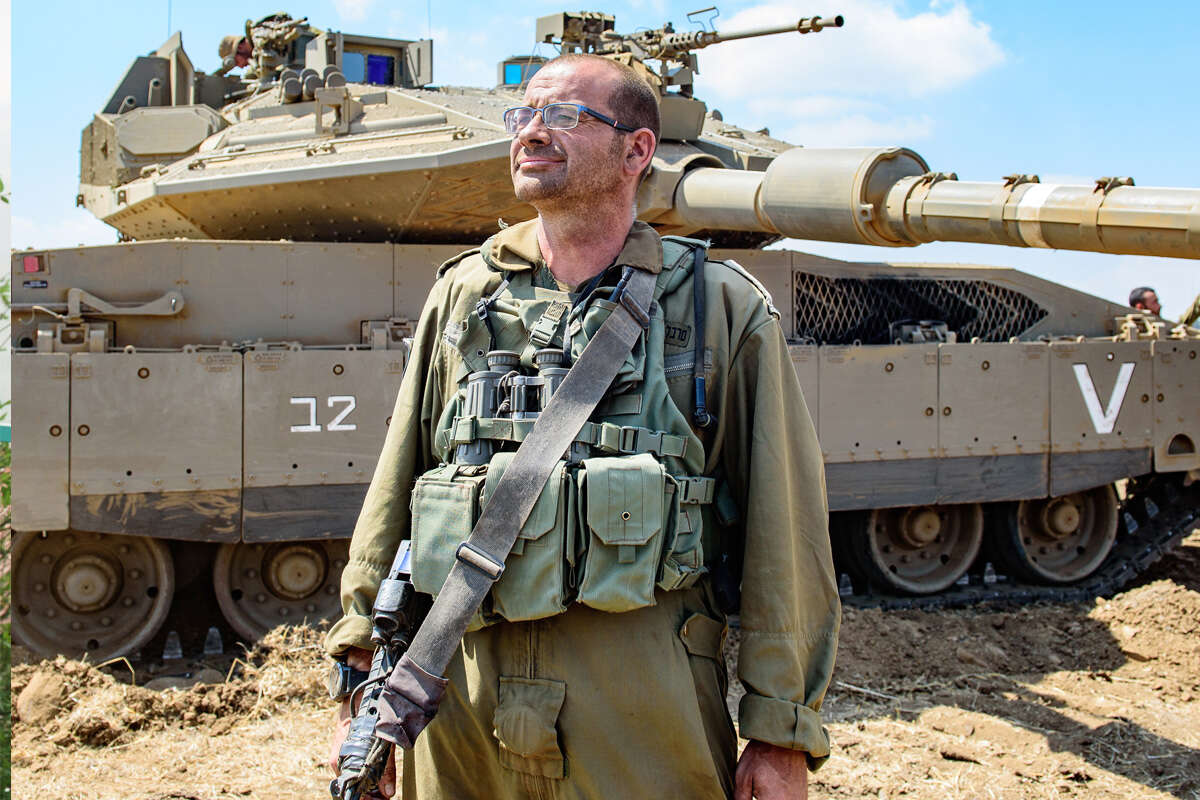
After finishing his command of the 7th Brigade, Gofman began studies at the National Security College. Two sources familiar with the details reveal that during his studies there, the professional staff considered dismissing him due to "behavior not appropriate for a senior officer," as one puts it. Gofman nonetheless completed the program, was appointed a divisional commander and later commander of the National Ground Forces Training Center. According to a former officer who knows him closely, "At that stage his career got a bit stuck. He didn't see himself advancing to the rank of major general." At some point, it now emerges, Gofman even considered transferring to serve as a police commander and raised with various people the possibility that he would discuss the matter with National Security Minister Itamar Ben-Gvir.
October 7 changed everything. After being wounded, Gofman looked for where he could contribute. After a chance meeting with the Coordinator of Government Activities in the Territories commander at the time, Maj. Gen. Ghassan Alian, Gofman joined him as chief of staff. "When he entered the role, he sat down and read dozens of books," says a source who was close to him at the time. "He studied day and night."
"Gofman is the most thoughtful, initiative-taking and attentive officer I met during the war," says another officer who worked closely with him in the Coordinator of Government Activities in the Territories. "A man without pose, without honor-guard manners, who truly wants to hear the professionals and the field people. To deal with the civilian issue in the Strip, he read things the Americans did in Mosul and the Russians did in Syria, and when he felt stuck he went to speak with people outside the system who brought him ideas." One of those people, we have learned, is Prof. David Passig, who specializes in futures research and trend forecasting.
A "dialysis" process
After joining the Coordinator of Government Activities in the Territories, Gofman participated in a thinking forum that included, among others, two reserve intelligence officers, Liran Tankman and Yotam Hacohen. In those days, the two developed ideas for what they called "the civilian campaign against Hamas." Hamas is a terrorist organization. One of their ideas can be likened to a "dialysis" process: Tankman and Hacohen proposed evacuating areas in Gaza of Palestinian civilians, clearing them of terrorist infrastructure, and then returning a "screened" population that would benefit from significant humanitarian aid. In this way, they hoped to sever Hamas from its main oxygen pipeline, the Gazan population.
When Gofman, in his new role, heard about the idea, he seized on it eagerly. For long hours he sat with Tankman and Hacohen's thinking forum at the Coordinator's headquarters on the ninth floor of the Defense Ministry building in the Kirya complex in Tel Aviv, to refine the initiative down to its smallest details.
The "dialysis" idea continued to circulate in IDF corridors for several months but was not implemented. Only in early 2025 was it decided to adopt one of its offshoots and establish the Gaza Humanitarian Foundation, through which Israel would distribute humanitarian aid to Gaza's population while bypassing other countries and international organizations. Gofman, by then the prime minister's military secretary and someone familiar with the people behind the idea, played a central role in establishing the foundation and pushed for it. An investigation published in Haaretz claimed he did so behind the backs of the IDF and the Defense Ministry.
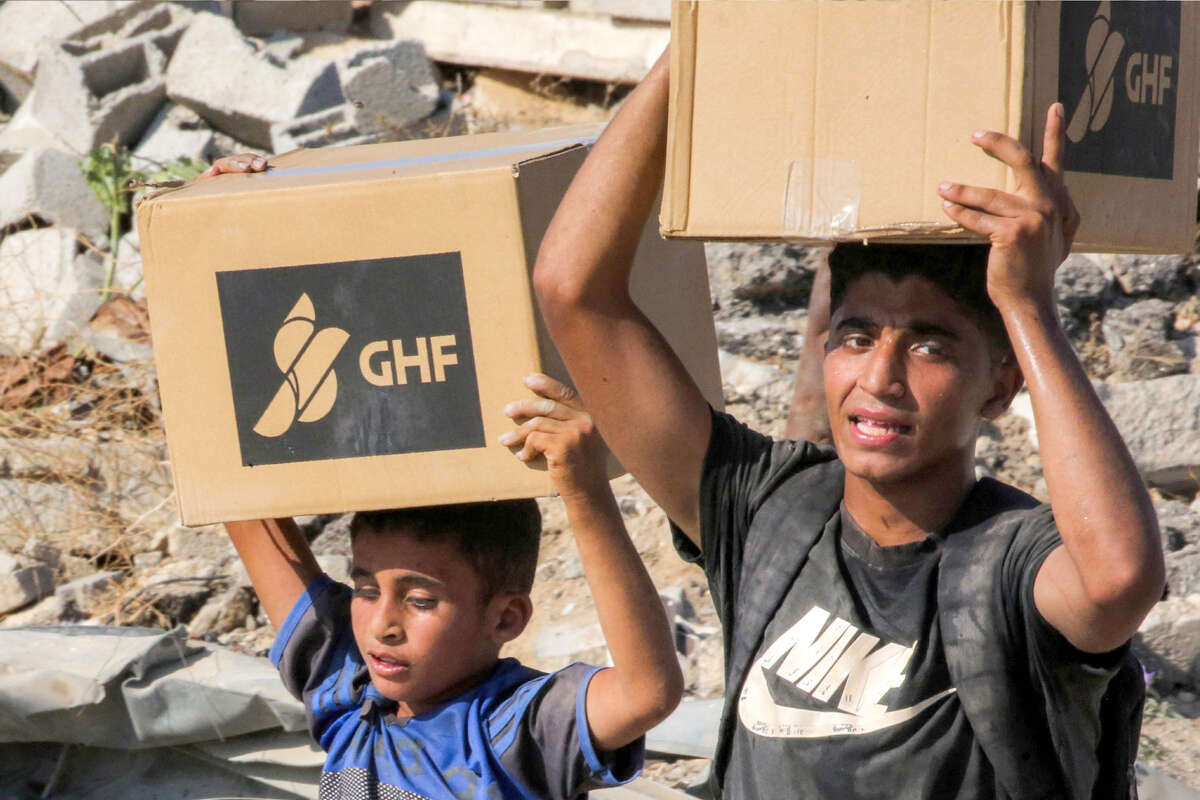
"In the case of the Gaza Humanitarian Foundation, as happened in the Uri Elmakayes affair, once Gofman gained a position of power he did many things without staff work, without involving professional bodies and without thinking things through," says a person who once commanded him. "It's a method that is very convenient for Netanyahu in certain cases, as we saw, for example, in the submarine affair."
Israel's humanitarian aid project, the Gaza Humanitarian Foundation, will not be remembered as a great success. The initiative failed to implement IDF policy in areas it had taken over and drew harsh international criticism.
"The Gaza Humanitarian Foundation project, like the Uri Elmakayes affair, are two events that sit in the Mossad's vicinity," says a veteran intelligence figure who knows the Prime Minister's Office from the inside as well. "This is covert, sensitive activity carried out beyond the border and closely tied to diplomacy and international sensitivities. In that arena, Gofman has proven at least twice that he behaves like a bull in a china shop. I hope he learned the lesson and that as Mossad chief he will act differently."
Responses
The Prime Minister's Office said: "The claim regarding the presence or involvement of the prime minister's wife in the process of appointing Maj. Gen. Gofman as military secretary is an absolute lie. We firmly reject the smears raised by anonymous sources against Maj. Gen. Gofman, a highly decorated, bold and creative officer who carries out his duties in a manner worthy of praise for Israel's security. The prime minister is confident he will do the same as the next head of the Mossad."
The IDF Spokesperson chose not to respond.


