Trump signaled confidence that negotiations with the Islamic Republic of Iran would succeed, while making clear that Tehran would face serious consequences if they collapse.
"I think the negotiations will succeed, and if they don't, it will be a very bad day for Iran," Trump said, confirming that an additional aircraft carrier is on its way to the Middle East. He added: "Regime change in Iran? It seems like that could be best thing that could happen."
The president delivered a dual message: hope for a new deal limiting Iran's nuclear program and ballistic missile capabilities, alongside an explicit threat of military action.

"If we don't have a deal, we'll need it. If we have a deal, it will leave very quickly. We already have one that's arrived. If we need it, we'll be ready with very great force," Trump said, referring to the second aircraft carrier.
Asked who might replace Iran's current regime, Trump declined to elaborate. "I don't want to talk about that, but there are people," he said, leaving the matter deliberately vague.
Pentagon ramps up preparations
Behind the scenes, the Pentagon is completing extensive preparations in case of a confrontation. According to a report in The New York Times, when Trump threatened last month to strike Iran, the US military was not fully prepared. Tens of thousands of American troops in the region reportedly lacked sufficient air defense systems, and the fighter jets required for a large-scale operation were not yet deployed to the Middle East. Senior defense officials persuaded the president to wait until both offensive and defensive capabilities were reinforced.
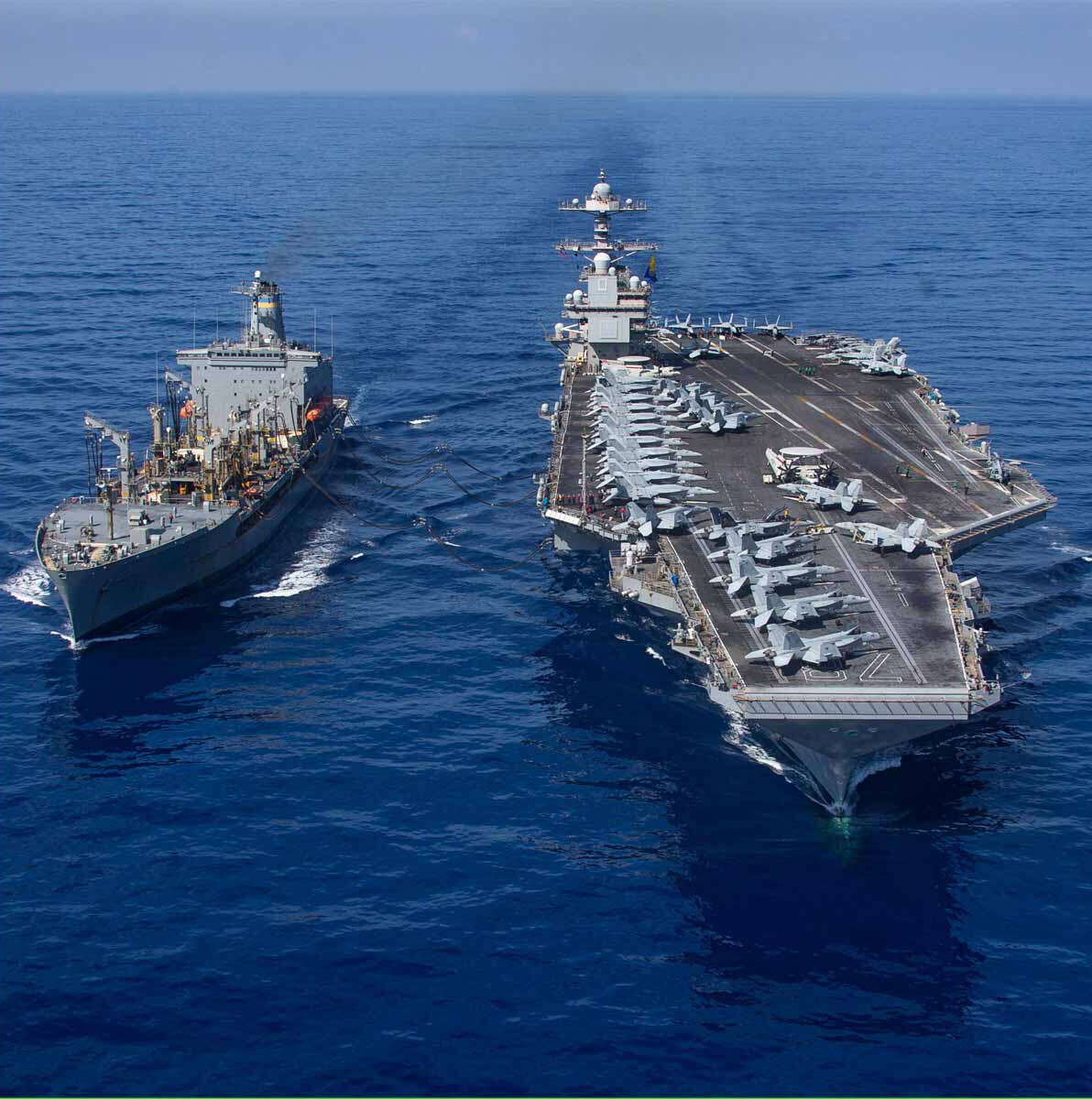
Since then, what officials describe as an actual armada has taken shape. The aircraft carrier USS Abraham Lincoln is at the center of a naval strike group that includes guided missile destroyers capable of intercepting ballistic missiles, submarines able to launch up to 154 Tomahawk cruise missiles, and advanced Patriot and THAAD missile defense systems.
Now the USS Gerald R. Ford is also heading from the eastern Caribbean to the Middle East as part of Trump's pressure on Tehran.
In addition, B-2 stealth bombers and other long-range bombers have been placed on heightened alert in the US, alongside F-35 stealth fighter jets and other strike aircraft already in the region. Military officials stressed that alongside offensive capabilities, significant emphasis is being placed on defense, amid assessments that Iran would retaliate in the event of an attack.
Reference to past strike
Trump also revisited Operation Midnight Hammer, which was carried out last summer against Iranian nuclear facilities. He described receiving word at 1 a.m., "with no moon," that B-2 bombers had entered Iranian airspace.
"Iran's nuclear program was destroyed. Every bomb hit its target," he said, adding that one strike penetrated through a ventilation shaft. "I don't think they'll be building more ventilation shafts. They wanted a little air," he quipped.

According to Trump, the attack led to the "total destruction of Iran's nuclear capabilities," and he does not believe Tehran will be able to rebuild similar facilities. He said he later met the B-2 pilots in the Oval Office and awarded them medals. "I asked if they liked doing things like that. They said they couldn't wait," he recounted.
Senior administration officials stressed that Trump has not yet made a final decision on further military action and is, for now, insisting on continuing diplomatic contacts.
However, according to a report in the Daily Mail, a senior administration source said Netanyahu's meeting with Trump contributed to the president's tougher stance on Iran.
"Netanyahu basically said that Iran is playing games. You don't want to be played. Trump listened," the source said.
The result is a situation in which, even as diplomats continue talking, the US military is preparing for the possibility of war, and Trump is sending Tehran a clear message: a deal is preferable, but if it fails, the US is ready for large-scale action.