


Everyone owes some soul-searching for their part before October 7. My own reckoning is a column I wrote in 2018 dismissing the complaints about fields near Gaza being burned by incendiary kites. I mistakenly believed the kites were a pathetic remnant of Hamas's plans to destroy us all, and not worth getting excited about. I failed to understand that they were a warning sign: that no wall is insurmountable with a bit of creativity, and that where fields are burned, eventually command centers and homes will burn.
Since then, we have all developed an allergy to "containment" and to anything less than total victory.
With those caveats, here is a debate now unfolding at the top of Israel's security and political establishment regarding Gaza: what is preferable, the current situation in the Strip, or renewing the war until Hamas is destroyed?
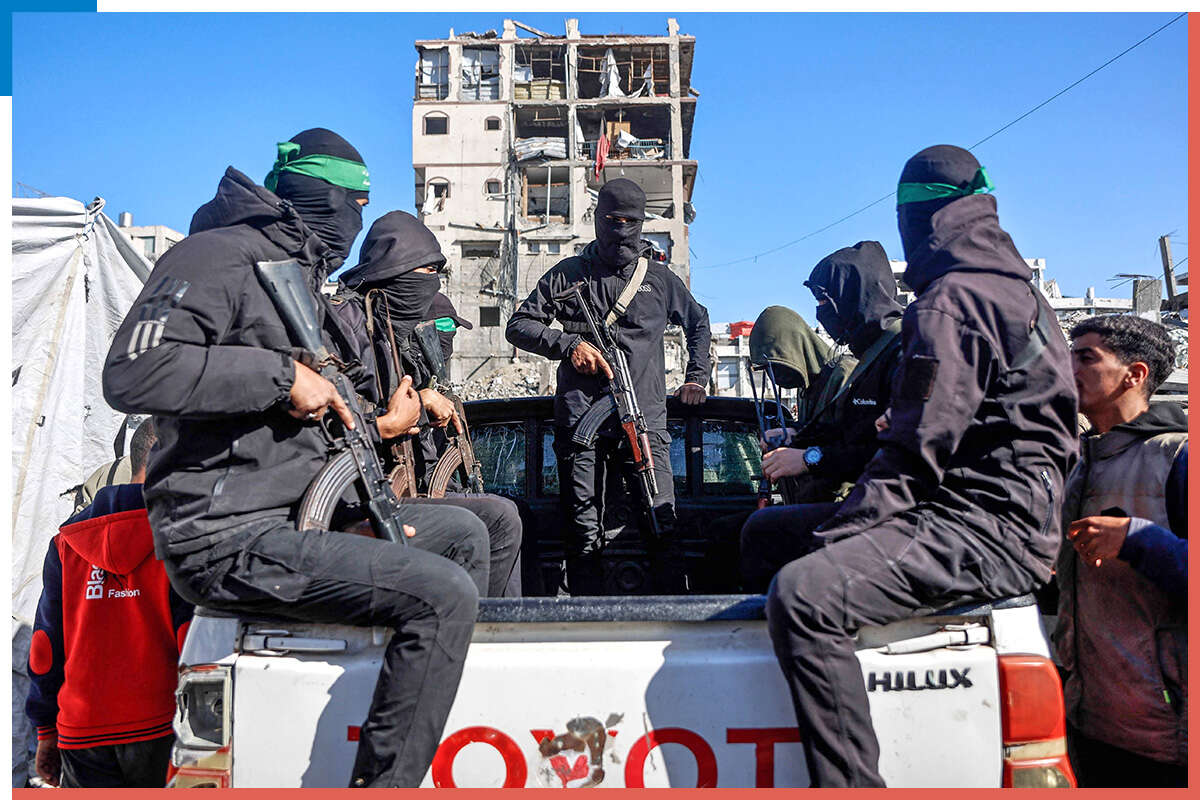
The terror organization still controls Gaza's interior, reorganizes its ranks, and collects money from taxes imposed on "humanitarian aid", or more simply, goods ranging from iPhone 17s to premium coffee beans. Weapons stockpiled in the first campaign will be used to massacre Israelis long before a third.
So, ostensibly, there is no question.
But in fact there is: as long as Israel refuses to permanently occupy the Strip, a military operation has no way to deprive Hamas of its center of gravity, small arms. Most of them would flee along with the population from combat zones. Dismantling all the tunnels would take years. The IDF has been in Rafah for nearly two years and tunnels are still being discovered.
The army, and several very senior ministers, therefore believe it is preferable for Israel to remain permanently in 58% of the Strip and continue suffocating Hamas, rather than enter a war that would damage legitimacy and still fail to achieve the required result.
As for rearmament, that is the main dispute. Reservists in the field claim it is happening, including tunnel rehabilitation. The leadership believes the reports are greatly exaggerated. After all, neither cement nor iron, the primary materials for tunnels and rockets, are entering the Strip and will not as long as Hamas remains unreformed.
The primary objective is to increase the pace of strikes to keep Hamas on the defensive, without looking for excuses to eliminate the perpetrators of the massacre.
In short: is most of the Strip without Hamas disarmament preferable, or Hamas disarmament without most of the Strip?
Catch 61
Four months have passed since the return of the hostages and the declaration of the end of the war in Gaza. Eighty-six polls have been published since then. All but one show that the "change bloc" does not have 61 seats, the majority required to form a stable government without rotation with Netanyahu and without favors from Ra'am chairman Mansour Abbas.
As many party leaders as there are, so too are the answers to the question: "How will you form a coalition?" Gantz proposes unity; Golan proposes a government with Abbas. You already know Eisenkot's "58-plan." Liberman repeats like a mantra the number "63," hoping somehow the bloc will reach it.
And Bennett? Here the answer splits in two. One part hints that Religious Zionism could join such a government, making Abbas unnecessary. The only problem is that the same thing was said after the 2021 election, and Smotrich, unfortunately, did not connect to the idea. The second part is a kind of parity unity government. Bennett has said there is no mandate to sit with the Arabs, but has not made a similar commitment regarding Likud. That is a substantive shift: like Gantz, it implies a government with Netanyahu. Not as a fifth wheel, as Blue and White once proposed, but like in a driving lesson, two steering wheels in one car.
The clearest evidence that the change bloc has internalized the new electoral reality is the flood of budget-heavy initiatives in the Arab sector: a "day of disruption" (one really wonders where the idea of blocking the Ayalon to force change came from) and massive voter-mobilization campaigns now being built for the election.
If the goal is to achieve 61 Zionist votes, massive Arab turnout is a catastrophe. If the goal is to block Netanyahu from reaching 61, encouraging turnout in the Arab sector is the order of the day.
The reestablishment of the Joint List was not Bennett's initiative, quite the opposite. But the assumption is that this many-car train has already left the station, and there is no point fighting it.
The next test will nevertheless come: what will Netanyahu and his opponents do when a proposal is brought to disqualify Balad from running for the Knesset? This is a party with a rich record of support for terrorism or partnership in it by its senior members. Disqualifying it could reduce Arab willingness to vote. In the last election, neither Likud nor Yesh Atid took a clear stand: Netanyahu wanted Balad to waste votes; Lapid feared angering Arab voters. The fate of the fanatic faction now depends on the polling numbers toward the end of the summer.
Who's afraid of the ballot box?
The Haredim looked toward elections, and then lowered their gaze. One had to reread again and again the briefing by a "senior Haredi figure" (said to be MK Moshe Gafni): "At present, the Haredi factions are seriously considering accepting most of the demands of the legal advisers, so that sanctions would take effect immediately, apply until age 29, and the enlistment targets would be higher."
The second option is to pass an exemption law without the support of the legal advisers, even though the High Court would immediately issue an injunction against it.
"The chances that Rabbi Landow will instruct us to go to elections are very low," ruled the senior source from Bnei Brak.
Wait, this is confusing. Either total surrender on the most decisive issue for the Haredim, or all-out war to the end. But elections? No.
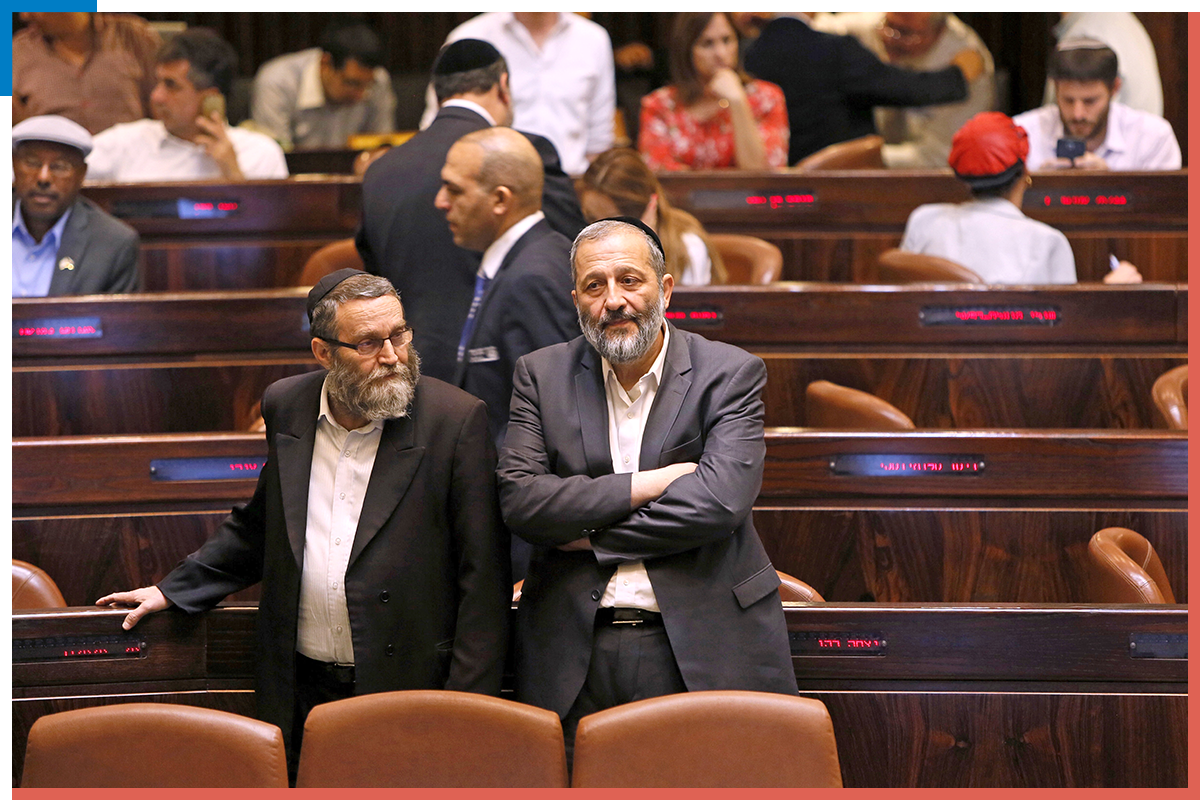
In short, after three years of smoke screens, threats, crises, ultimatums, deadlines and near-signings of divorce writs, it turns out, astonishingly, that it was all nothing. Who would have believed it, aside from everyone?
There are two reasons for this. First, Shas and Degel HaTorah understand very well that the party responsible for the current situation is the High Court, not the coalition. So what would revenge against the coalition achieve? Second, leaving the government would be an irrational move that would almost certainly lead to the opposition for the foreseeable future. No better government would arise, only worse.
To the credit of the Gur Hasidic faction, they understood this already a year ago. They chose to leave Netanyahu's bloc; Deri and Gafni chose to stay, and the rest has been background noise. Now the talk is of symbolic punishment, moving the election from October to September. Even the sanctions the Haredim propose for draft-dodgers are less ridiculous.
The main goal of passing a draft law is no longer to regulate the status of yeshiva students, but to return the Haredi parties to the coalition ahead of elections whose prospects of victory do not look especially promising. If there are several months of a transitional government, and even more so if Israel returns to repeated election cycles, Shas and United Torah Judaism ministers want to be there when it happens.


