


Iranian Foreign Minister Abbas Araghchi claimed last week that an Israel Hayom report on the continued executions in Iran is a fabrication.
Now, however, it has emerged that in the past two weeks alone, hundreds of demonstrators arrested during last month's protests in the Islamic Republic of Iran have been sentenced to death in expedited proceedings. According to information obtained by Israel Hayom, most of these trials were conducted online, in rapid fashion, with almost no opportunity for the accused to respond or mount a defense. The cases were heard before special tribunals established specifically for this purpose.
Araghchi, who is scheduled to meet tomorrow with US envoys Steve Witkoff and Jared Kushner, wrote in a post on X that no one had been tried and denied that extrajudicial executions had taken place, contrary to what was reported in Israel Hayom. The information, provided by Iranian sources and human rights organizations monitoring developments in Iran, states that beyond the tens of thousands of protesters allegedly killed during the unrest and later in hospitals while wounded, thousands more were reportedly killed while in detention, without trial, after having been seen taken into custody alive.

A Tehran resident involved in documenting the protests and compiling data told Israel Hayom that, according to figures in his possession, the families of more than 3,000 detainees received notices that their relatives had died. Many were required to pay ransom in order to retrieve the bodies.
"These are not isolated detainees who died from beatings or torture," he said. "This is a directive from above as part of a policy of terror aimed at crushing the protest movement, while circumventing promises made to the Americans that there would be no executions."
These reports contradict assurances given by Araghchi and Iranian President Masoud Pezeshkian to US officials, assurances that influenced Washington's decision to refrain from launching a strike last month.

Economic pressure
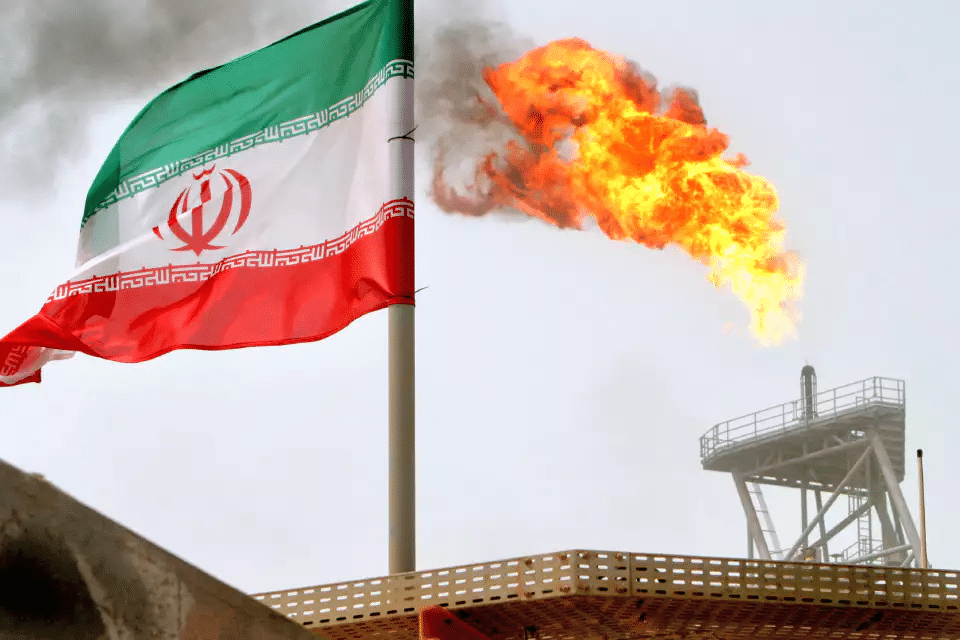
Meanwhile, growing economic pressure and sanctions appear to be taking a toll on Iran. Oil exports, most of which go to China, are plunging. According to data published by Kpler, crude oil exports from Iran's Persian Gulf terminals fell last month to below 1.39 million barrels per day in January, compared to nearly 1.8 million barrels per day in the same month last year, a drop of more than 25%.
The decline continues a steady downward trend since the summer. Data on oil unloaded at Chinese ports showed a drop to just over 1.1 million barrels per day, compared to 1.4 million in 2025. Another notable development is the difficulty Iran faces in selling additional crude stored aboard "shadow fleet" tankers at sea. In mid-2025, Iran was storing some 65 million barrels in offshore tankers; that figure reached 170 million barrels last month. Storage costs amount to tens of millions of dollars per month and significantly cut into Iran's oil revenues.
The difficulty in marketing its oil has forced Tehran to offer much steeper discounts to maintain sales. Iranian crude is now reportedly being sold at prices 20% to 30% below the global benchmark price per barrel.
The economic pressure was a central topic in recent meetings between Prime Minister Benjamin Netanyahu and President Donald Trump. Following their meeting at Mar-a-Lago in December, Israel Hayom reported that the two had agreed to intensify pressure and sanctions.
President Trump subsequently signed an executive order imposing 25% tariffs on Iran's trading partners, a move that could further deter companies and countries from dealing in Iranian oil. Iran's deepening economic crisis, driven in part by falling oil revenues, is among the primary factors behind its desire to reach an agreement with the US to ease sanctions.
A US official familiar with the matter said, "It is quite astonishing that despite Iran's economic dead end, it continues to haggle over the nuclear issue and refuses to discuss other matters as though it still holds countless bargaining chips. It has almost none, aside from the military threat to its neighbors and to American interests in the region. This rigidity in negotiations leads to the assessment that Iran's leadership is operating on a fundamentally flawed appraisal bordering on illusion."
Talks set to open in Geneva will clarify whether Iran still maintains its negotiating position that it will continue uranium enrichment on its own soil and will not discuss other issues, including its missile program and support for regional terrorist organizations, until some sanctions are lifted.
The Iranian position previously presented to US officials focused on discussions and understandings regarding the nuclear issue, including close supervision of all facilities in Iran. That was the focus of Araghchi's meeting with Rafael Grossi, director general of the International Atomic Energy Agency. Within that framework, Iran has demanded confidence-building steps and de-escalatory measures, including the withdrawal of some US forces and the removal of certain sanctions. Only if and when such an agreement is reached, Tehran says, would it be prepared to address other issues.
Israel Hayom has reported that the renewal of negotiations was made possible by an Iranian promise to discuss all issues, a commitment that was reportedly violated at the first meeting in Oman.


