Internal discussions across the US administration have produced a broad consensus that Iranian President Masoud Pezeshkian and Foreign Minister Abbas Araghchi have exhausted the leeway granted to them by Supreme Leader Ayatollah Ali Khamenei in presenting a proposal for agreed principles on the Islamic Republic's nuclear program. Officials in Washington believe there is no realistic prospect that Iran will meet core American demands in the negotiations.
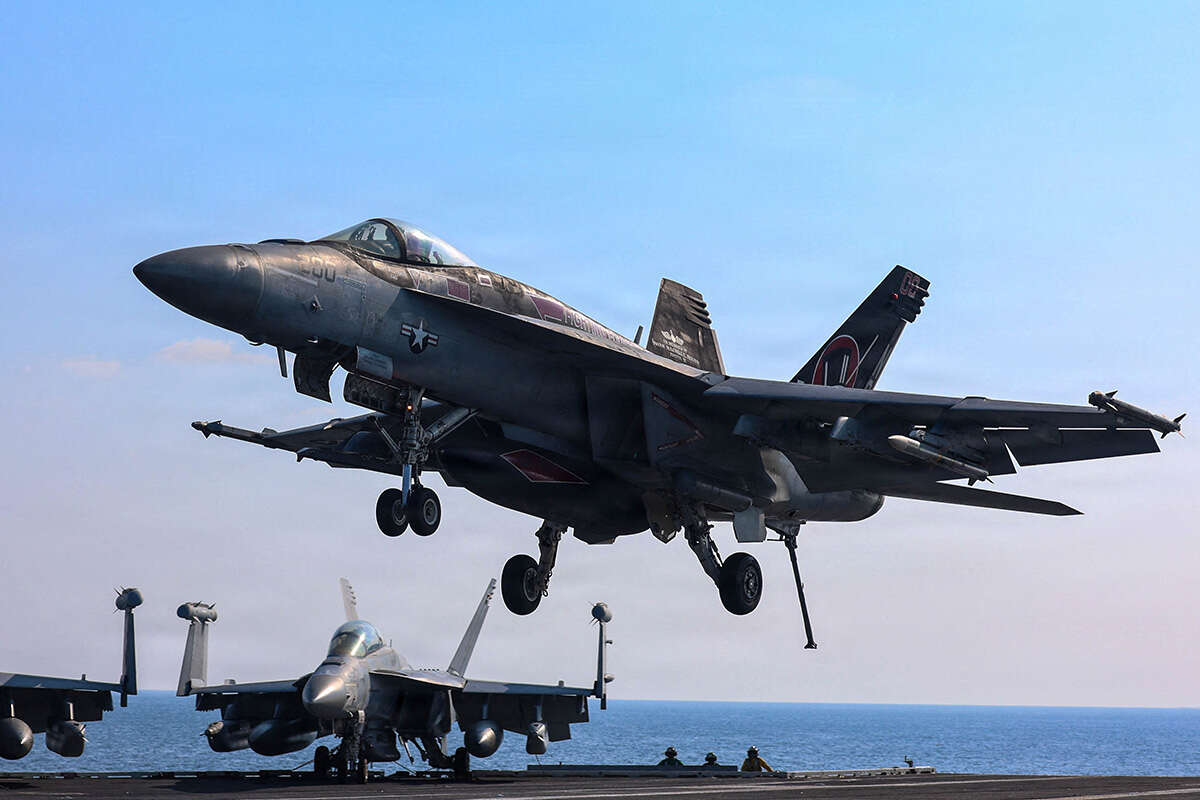
Against that backdrop, the US has continued reinforcing its military posture in the Mediterranean Sea, the Indian Ocean and the Persian Gulf. The aircraft carrier USS Gerald R. Ford is moving closer to the region, and the military threat facing Iran is described as more tangible than at any previous stage.
In Jerusalem, officials estimate that the window for reaching a deal is closing and that a decisive moment may be approaching within days or weeks.

According to a US administration source, special envoys Steve Witkoff and Jared Kushner presented Iran's proposal to President Donald Trump, Vice President JD Vance, Secretary of State Marco Rubio and War Secretary Pete Hegseth, along with their own assessments. They concluded that the chances of securing a reasonable deal with Iran are diminishing.
Unofficial messages reflecting that assessment have reportedly been conveyed to Tehran both directly and through mediators including Turkey, Qatar and Oman. The messages contain what one source described as an unmistakable warning that failure by Iran's leadership to provide satisfactory answers to US demands and questions would carry severe consequences.
The source added that repeated threats by senior Iranian officials, including Khamenei himself, directed at the US and its leadership in what were described as provocative and at times personal terms, reinforce the impression in Washington that the Islamist regime is not genuinely seeking compromise.
Iran's proposal reportedly included an agreement to remove part of its stockpile of enriched uranium from its territory and place it under the custody of a third country, with Russia suggested as a preferred destination. As for the remainder of the material, Tehran claimed it was buried under rubble following bombings during the recent war with Israel.

On uranium enrichment, Iran proposed a temporary suspension, followed by the construction of a regional enrichment facility on its soil under international supervision. The facility, according to Tehran, would supply enriched uranium for civilian purposes to countries in the region.
Iranian Foreign Minister Araghchi also suggested launching a trilateral round of talks with representatives of the International Atomic Energy Agency to determine the scope of oversight for Iran's nuclear facilities, while pledging to grant inspectors access to all sites at any time.
In return, Iran demanded a phased lifting of sanctions in line with progress in the talks, but with an immediate initial step "to demonstrate seriousness and build mutual trust."
On other contentious issues, Iran offered only indirect responses to US demands that its ballistic missile program and support for its proxy terrorist organizations, chiefly Hezbollah, be addressed. Iranian officials expressed general willingness to discuss matters "that concern our Arab neighbors" within the framework of a regional conference to be convened after a nuclear deal is reached.
According to Tehran, these are issues between Iran and neighboring states and therefore should be addressed by those countries themselves rather than by the US acting on their behalf.
The issue of domestic repression was barely discussed. Iran rejected a proposal to allow an international delegation to visit and examine allegations of massacres of protesters and executions. It was recently reported that Iran misled American officials after promising there would be no executions. In practice, hundreds and possibly thousands were executed following their arrest, most without trial and some after expedited proceedings conducted via video conference. Testimonies and evidence of these actions are now beginning to emerge from inside Iran.
During the discussions, Araghchi also raised the idea of a broad regional economic arrangement with significant American involvement, alluding to Trump's large-scale economic initiatives often described as a "mega deal" and the "Deal of the Century."
Israel has received a general briefing on the Iranian proposal and was told that the US is examining it carefully, and will not allow Iran to stall for time. Israeli officials reiterate that while a decision point appears near, Israel must remain aligned with US policy, allow Washington to fully pursue negotiations, help rebuild a regional coalition, and provide full intelligence backing.