


As the final pieces of the US military buildup all fall into place in the Middle East, it appears increasingly clear that, from a purely military standpoint, Iran is not a rival capable of genuinely challenging the US. That said, Tehran should not be underestimated. As demonstrated in limited confrontations in the past, particularly in the missile front, Iran possesses significant asymmetric capabilities: a substantial ballistic arsenal and a broad network of regional proxies.
Yet even before addressing the tactical questions of how an attack would be carried out, it is essential to define its objectives realistically. What strategic shift could military action against the Islamic Republic of Iran achieve? To answer that, it is necessary to examine the main courses of action reportedly under consideration by President Donald Trump and his administration.
A campaign to change the regime
According to reports, the US military has prepared for "weeks" of sustained operations against Iran, suggesting that the administration may be seriously weighing a move aimed at deep political change. Such a goal is inherently difficult to achieve, certainly by military force alone. Senior US officials have publicly distanced themselves from it. Vice President JD Vance, for example, has said that such a mission is "up to the Iranian people" if they choose to pursue it.

There are significant obstacles. Iran does not have a unified and capable opposition ready to step in and fill a vacuum. At the very least, none has emerged publicly, and any early signs may have been suppressed in recent protests, including political arrests targeting reformist figures within the regime's own support base. Moreover, achieving regime change would almost certainly require ground forces and a prolonged effort, a scenario with little appetite among the American public and political establishment, still mindful of the bloody decades in Iraq and Afghanistan.
Destabilizing the regime from within
The current tensions began amid a wave of protests against the Iranian regime. One possible rationale for military action, therefore, would be to intensify internal pressure in a way that weakens the leadership and brings its opponents closer to a tipping point.
This option also faces serious challenges. The Iranian leadership, particularly the Islamic Revolutionary Guard Corps, has no escape plan comparable to the one that stood before former Syrian President Bashar Assad or other dictators. That means it is likely to respond to any internal unrest with maximum force, as seen recently in the killing of thousands of protesters in January.

Even if such pressure were to succeed, the most probable outcome would not necessarily be a transition to democracy but rather internal chaos that could push Iran toward civil war, with severe regional and global repercussions. If Washington were to pursue this path, it would need a coherent plan to move quickly from chaos to stability in order to safeguard its own interests and those of its allies in the region.
Striking nuclear facilities
Administration officials have repeatedly stressed that the overriding objective is to prevent the ayatollah regime from obtaining nuclear weapons. One possibility, therefore, is that any attack, similar to the one carried out in June, would focus on nuclear infrastructure and sites, to the extent that they remain intact or have been restored since the 12-day war.

Here, too, a fundamental problem emerges. Airstrikes cannot erase scientific knowledge or human capital, and no one can guarantee that all stockpiles of enriched uranium accumulated by Iran over the years can be located and destroyed. As seen after the June war and in satellite imagery circulating since, if Tehran survives such an assault, it may move to rebuild the project with greater determination and fewer self-imposed restraints born of its reluctance to trigger open military confrontation.
Destroying Iran's missile project
Iran's missile force is the central pillar of its retaliatory and defensive capabilities. The Islamic Republic has invested its best resources on this front, viewing it as the backbone of deterrence against conventionally superior militaries. A broad campaign could severely damage missile stockpiles and production infrastructure, removing, at least temporarily, this significant threat.
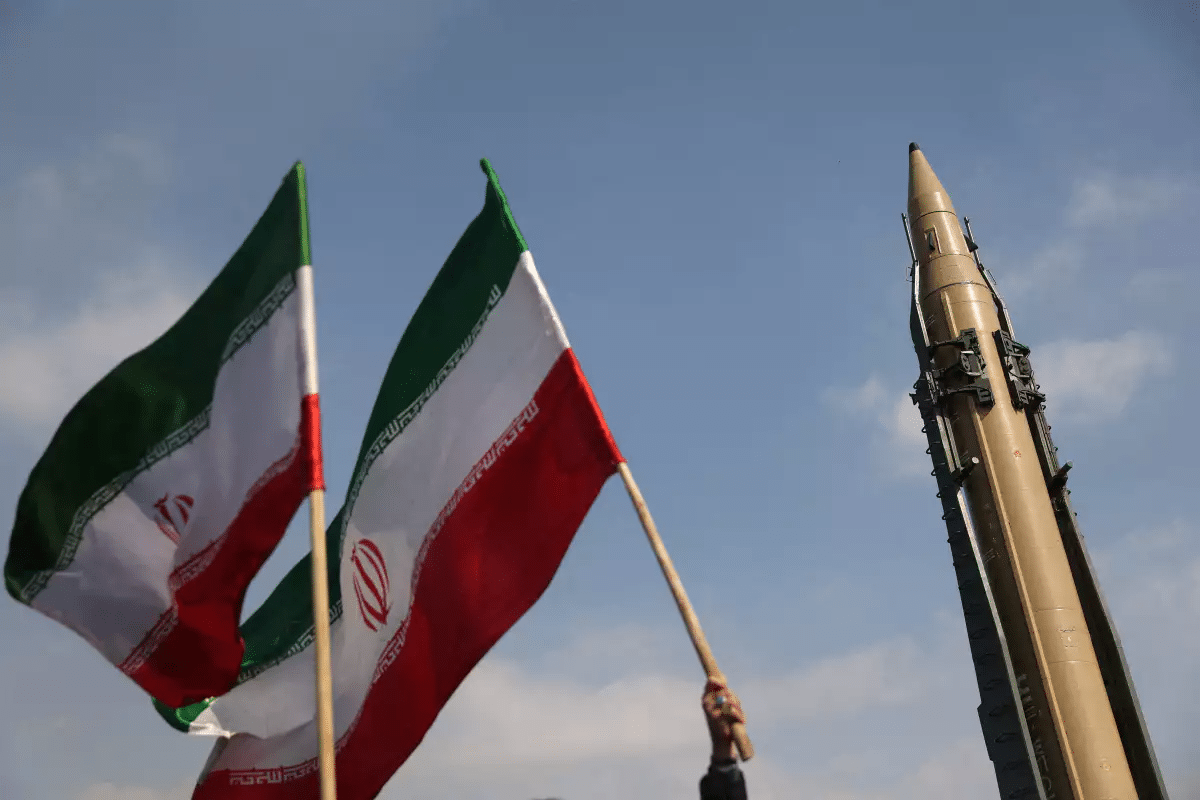
But even after heavy losses, Tehran would likely prioritize the rapid restoration of these capabilities. The result could be only a temporary setback rather than permanent elimination. The difficulty of dismantling a ballistic project has also been demonstrated in Israeli and US operations against the Houthis, whose capabilities are deeply rooted in Iranian support.
Forcing negotiations on favorable terms
Trump's preferred option may not be war but a deal. The president has expressed this repeatedly, and the direct talks held in recent weeks between Washington and Tehran suggest that this channel remains open. The logic is that sufficient military pressure would compel Tehran to accept more favorable terms than those it previously rejected.

Past confrontations indicate that Iran's leadership may choose to absorb a blow rather than capitulate, which it views as an existential danger in light of internal pressure. The regime could calculate that time is on its side and that as a conflict drags on, political pressure on Washington to wind it down will intensify, as occurred in the campaign against the Iran-backed Houthis that Trump launched and ended within months without tangible gains.
Eliminating Supreme Leader Ali Khamenei
Ali Khamenei is indeed the central figure in Iran's ruling system. To some extent, his steadfast refusal to accept certain conditions in negotiations with the US can be seen as a key catalyst behind the erosion of stability within the ayatollah regime.
Yet so-called decapitation strikes often produce unpredictable results. Iran's political system is institutional, not solely personal. There is no guarantee that removing Khamenei would moderate Iranian policy; it could just as easily radicalize it. Such a move could trigger a fierce response from Iran and its regional proxies, given the senior ayatollah's religious stature, and draw the US into a far broader confrontation than originally intended.

America's military superiority in a direct clash is not in doubt. But military superiority does not automatically translate into strategic advantage, and that is precisely the dilemma. For the first time in decades, the US faces the prospect of direct war with a state actor rather than a proxy conflict. That demands leaders who define in advance what they are seeking to achieve.
Of all the options outlined above, none is simple, and each carries consequences that Washington may not be fully prepared to manage. Before embarking on any course of action, decision-makers must answer one fundamental question: What does success look like, and at what price?


