


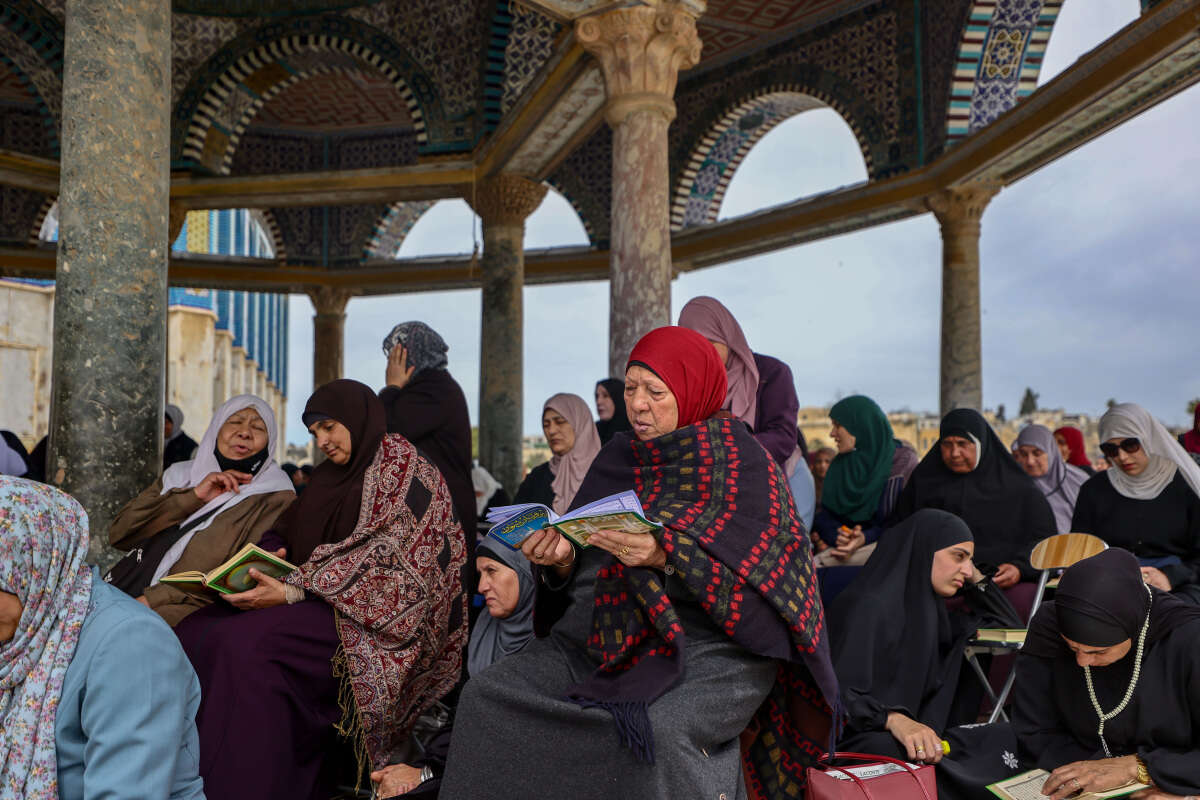
Ramadan, which began in recent days, is the ninth month of the Islamic lunar calendar and the holiest in Islam. Its central commandment is fasting, one of the Five Pillars of Islam. The obligation is anchored in the Quran: "O you who have believed, decreed upon you is fasting as it was decreed upon those before you, that you may become righteous" (Surah al-Baqarah, 2:183).
The phrase "that you may become righteous" refers not only to fear of God in the conventional sense, but to taqwa, a concept denoting heightened religious consciousness achieved through self-restraint and strict bodily discipline. Throughout the month, believers abstain from food and drink during daylight hours and break their fast at night, sometimes in lavish fashion. Thus emerges a paradox: Ramadan, which begins with restraint, discipline and inward reflection, often turns into a culinary celebration and a period of unrestrained public festivity.
Alone, in the dark, in modesty
A study conducted in a village in Java, Indonesia, the world's largest Muslim-majority country, offers a key to understanding this paradox through the concept of nafsu. Linguistically related to the Hebrew word nefesh, nafsu refers to human appetite and desire, especially the biological drive to eat and survive. It is understood as a vital and necessary force, yet one that can undermine social order if not properly restrained. Eating, as a daily acknowledgment of this instinct, is therefore expected to remain private and discreet. In ordinary times, villagers prefer to eat alone and in silence, concealing from the community their surrender to this basic biological urge.
During Ramadan, however, the dynamic is reversed. In the very month devoted to restraining the nafsu, food shifts from a private act to a collective, public and celebratory event. The local explanation lies in the belief that daytime fasting domesticates desire. The believer, having imposed total self-denial, proves to himself and to the community that he is master of his body rather than slave to his impulses. As a result, the evening meal that breaks the fast, known in the Middle East as iftar and in Indonesia as buka puasa, becomes safe and sanctified. Eating is no longer seen as surrender to a wild instinct but as obedience to divine command.
In this understanding, the laden table is tangible proof of spirit triumphing over matter, not a display of gluttony. Eating changes its meaning: from a point of vulnerability in daily life to a source of pride during Ramadan.
Fried chicken for the ancestors
The transition from daytime austerity to nighttime abundance has also produced an elaborate system of food exchanges and social solidarity. Toward the end of Ramadan, households in the Javanese village enter a frenzy of baking traditional dishes, cakes and pastries, which are generously distributed among neighbors, friends and relatives. These are not mere gestures of goodwill but part of a complex web of reciprocal obligations that generate significant social cohesion. According to belief, anyone who provides food to those fasting earns pahala, spiritual merit for good deeds.
A parallel moral economy emerges in which the currency is not money but blessings. The value of each dish lies in the social recognition it enables its maker to accumulate. Food becomes an ambassador of religious devotion, and every plate passed between homes weaves another thread in the communal safety net that Ramadan helps renew.
In this Indonesian village, Ramadan opens with the "mongan" ceremony, a festive meal held on the eve of the fast. Alongside traditional dishes such as fried chicken, rice cooked in coconut milk and spices, and special crackers prepared for the season, the meal includes porridge in symbolic colors, fruit and burning incense. These offerings are intended not only for the living participants but also, symbolically, for the ancestors invited to attend.
This local tradition, intertwined with Islamic belief, forges a link between material abundance and the world of the dead. The presence of ancestors at the feast underscores that Ramadan, beyond being a month of purification, is also an event of cosmic continuity. Food serves as a channel of communication between realms: through a full plate, the living inform the dead of their intention to enter a period of restraint and sanctity. Here too lies an apparent contradiction, as the month of inward withdrawal and bodily limitation begins with generous hospitality extended even to the spirit world.
Extremism has no limits
In the modern era, however, an additional paradox has cast a heavy shadow over Ramadan's spiritual glow. While for the vast majority of Muslims the month remains a time of inner peace, communal kindness and renewal, radical groups have imposed their own interpretation of religious devotion, transforming it into an ideology of confrontation.
For jihadist forces, self-restraint and bodily discipline are coupled with intensifying violent struggle against ideological adversaries. In these radical narratives, Ramadan is rebranded as a month of historic victories and martial heroism. The result is that this sensitive period becomes fertile ground for terrorism, directed both at rival Muslim groups and at followers of other faiths.
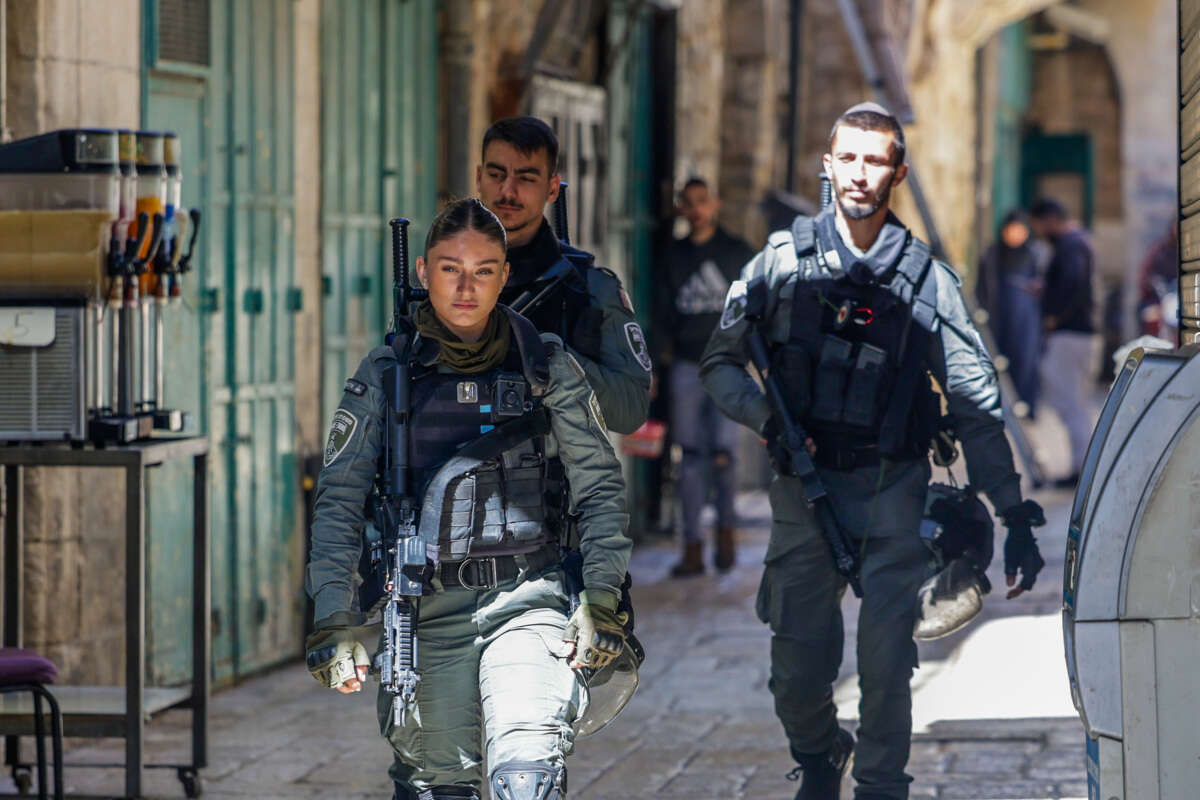
In Israel, the phenomenon is well known. Ramadan has often become a flashpoint for escalation and violence. Religious fervor and fasting are harnessed to entirely earthly political aims. In recent years, each Ramadan has seen dozens of terrorist attacks, including car-rammings and rocket fire by terrorist organizations such as Hamas and Hezbollah, resulting in the deaths and injuries of many Israelis.
The paradox of abundance and restraint in Ramadan illustrates how food and its uses form a language through which believers define identity. The overflowing table does not contradict the Quranic injunction "that you may become righteous"; it completes it. In many human cultures, abundance gains meaning precisely when a person is capable of temporarily renouncing it.
Standing between hunger and satiety, between desire and sanctity, one chooses not only what to eat but who to be. The full plate at day's end testifies to the capacity to transcend biological needs in pursuit of meaning beyond the material. Yet it also serves as a reminder that the forces of sanctity, like the forces of desire, can always be swept in directions that are difficult to foresee.
Still, one may hope for a peaceful month, rich in good food, health and community. To those observing, Ramadan Karim.


