


A planned far-left protest against the Buchenwald concentration camp memorial on the anniversary of its liberation has sparked outrage across Germany, with officials denouncing the move as an affront to the memory of Holocaust victims.
According to a report in the German Bild, citing Switzerland's Neue Zürcher Zeitung, radical organizations are calling for demonstrations on April 11, the day the camp was liberated in 1945. The groups accuse the memorial's management of "spreading Israeli propaganda" and of not being "hostile enough toward Israel."
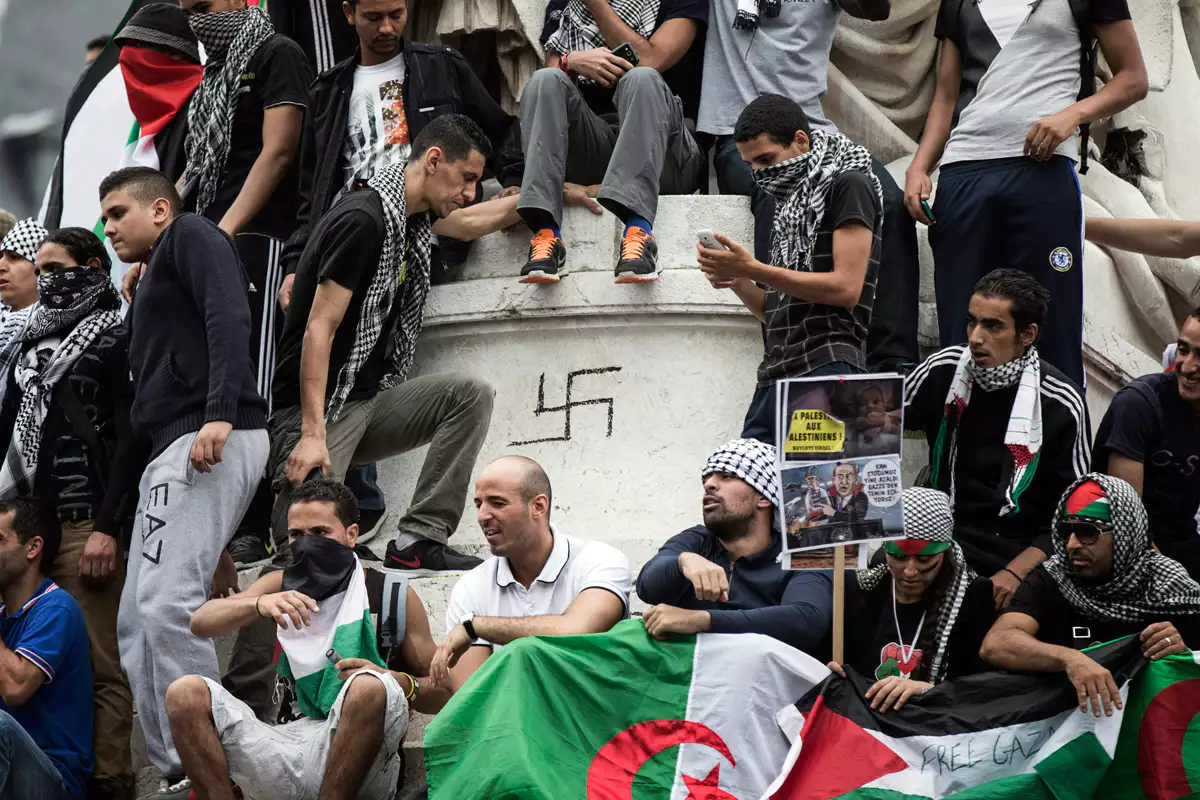
The protest is being organized under the slogan "Keffiyehs in Buchenwald." Among those involved are the student wing of Germany's Left Party (Die Linke), the anti-Israel group Jewish Voice for a Just Peace in the Middle East and the German Communist Party (DKP).

In statements published by the organizers, the Buchenwald memorial site is accused of promoting "historical revisionism and genocide denial" and of serving as a vehicle for advancing an alleged "Israeli narrative."
The controversy follows an incident last year in which a woman seeking to stage a protest at the site while wearing a keffiyeh, a scarf widely associated with Palestinian nationalism, was denied entry. A German court later upheld the decision. The protest organizers claim the memorial's management is effectively criminalizing pro-Palestinian activists.
According to the report, one of the leading activists behind the campaign belongs to a communist organization that previously expressed public support for the October 7 massacre carried out by Hamas. In a statement issued after the attack, the group described it as a "legitimate uprising by all means necessary."
The remarks triggered widespread public anger in Germany, particularly given Buchenwald's central place in the country's culture of remembrance. Tens of thousands of Jews were murdered at the camp during the Holocaust, making it one of the most significant symbols of Nazi atrocities.
Felix Klein, the German government's commissioner for combating antisemitism, sharply condemned the initiative, calling it "a new low in the reversal of roles between victim and perpetrator." He described the planned demonstration as "a frontal assault on the dignity of commemoration and on the memory of the victims of the Holocaust."
The Buchenwald Memorial Foundation also voiced concern over what it called an attempt "to exploit the memory of the camp for contemporary political purposes," stressing that the site is committed to preserving historical memory and opposing all forms of antisemitism or incitement.


