


Indian Prime Minister Narendra Modi landed in Israel on Wednesday for a 26-hour official visit, during which he is set to address the Knesset and sign a series of security, economic and diplomatic agreements with Prime Minister Benjamin Netanyahu.
A minor glitch marked Modi's arrival when his plane stopped several meters short of the red carpet and the stairs were repositioned to the rear door to allow him to disembark.
Modi was welcomed with an honor guard and is scheduled to head to the Knesset, where he will be received by Knesset Speaker Amir Ohana. As part of the ceremony, he will lay a wreath at the memorial monument, sign the guest book and convene in the speaker's office with Netanyahu. At 5 p.m., he is due to deliver an address to the Knesset plenum.
At Netanyahu's invitation, Modi is making another visit to Israel following his previous trip in 2017 and Netanyahu's reciprocal visit to India. The Prime Minister's Office emphasized the close personal relationship between the two leaders, saying their longstanding friendship has had a positive impact on ties between the two countries.
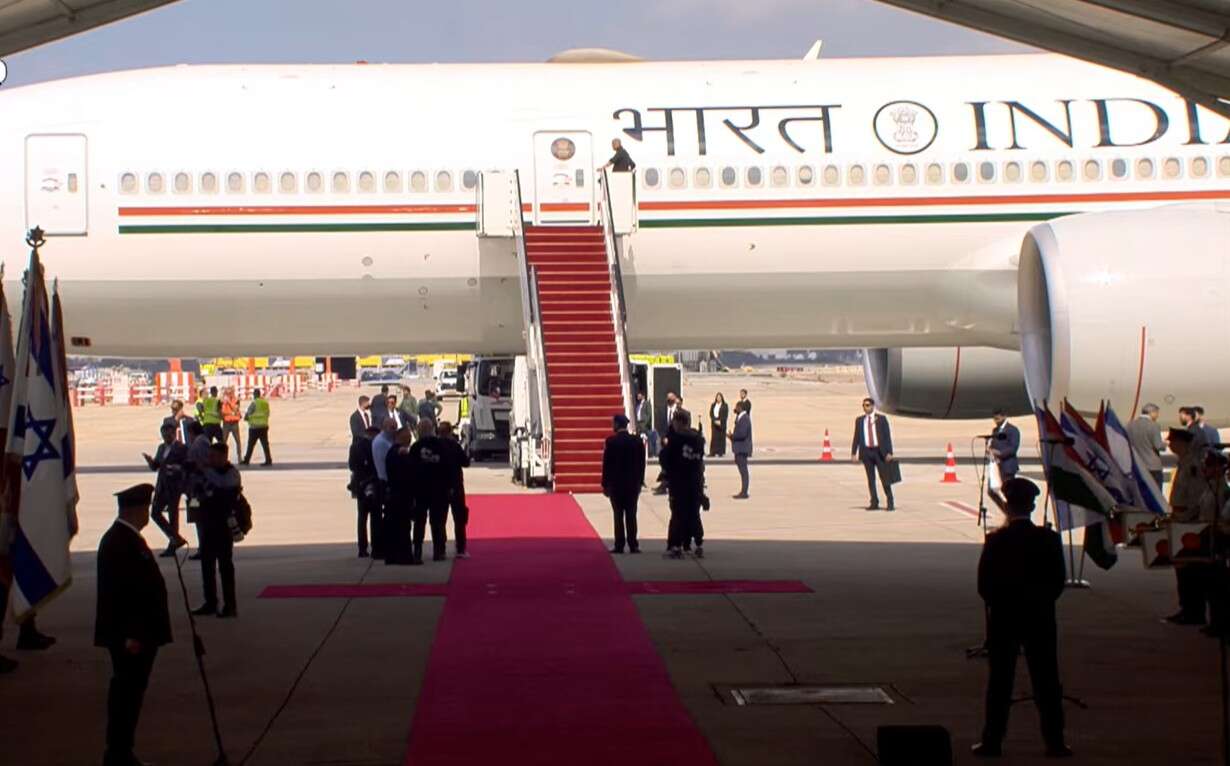
Netanyahu and his wife, Sara Netanyahu, welcomed Modi at Ben-Gurion Airport and are scheduled to hold a private meeting later in the day. After the speeches at the Knesset, the two leaders will attend an innovation event at the Waldorf Astoria hotel in Jerusalem. In the evening, Netanyahu and his wife will host Modi for a joint dinner.
On Thursday, the two leaders will visit Yad Vashem, Israel's official Holocaust memorial in Jerusalem, and later hold an expanded meeting at the King David Hotel. A ceremony for the exchange of agreements will follow, during which Israel and India are expected to sign a series of accords in the economic, security and diplomatic spheres. After the signing ceremony, the two leaders will deliver joint statements to the media. Modi is scheduled to depart Israel at 2:45 p.m.
Alongside preparations for the visit, political controversy erupted over Modi's anticipated address to the Knesset. After the government decided not to invite Supreme Court President Isaac Amit to the special session, opposition members threatened to boycott the speech.
Opposition leader Yair Lapid warned that "an enormous embarrassment will be caused to the Knesset," cautioning against a scenario in which the prime minister of a major country would stand before a partially empty plenum.


