


Iran 1. President Donald Trump's State of the Union address did little to resolve the central question: Will the United States ultimately strike Iran, or not? Nor did the third round of talks between Washington and Tehran, held in Geneva, provide clarity.
As the weekend approaches, events appear to be moving along two parallel tracks: preparations for a military strike and the preservation of an opening for negotiations that could yield an agreement.
Trump devoted most of the Iran portion of his speech to the nuclear issue. "They want a deal, but we haven't heard the key words – 'we will never have a nuclear weapon,'" he said.

If that were truly the bar he is setting, Tehran would have little difficulty clearing it. Iran has already signaled willingness to make certain concessions in its nuclear program and could easily dust off the old fatwa issued by Supreme Leader Ayatollah Ali Khamenei opposing nuclear weapons. In any case, the Islamic Republic has never had trouble lying when necessary. It could make a declaration now and reverse course in two months or two years, when Trump is nearing the end of his current term.
It is reasonable to assume Trump is not that naive. Within hours of his speech, Vice President J.D. Vance was quoted as saying that Iran is trying to reconstitute its nuclear weapons program. Secretary of State Marco Rubio qualified that assessment, saying Iran is not actively building a bomb but is laying the groundwork for a future capability.
In other words, if a justification for an attack is required, it is readily available.
Trump also highlighted two additional issues that deeply concern Israel: ballistic missiles and Iran's support for its regional proxies. He said Iran has developed missiles capable of reaching Europe and is seeking to develop missiles that could reach the US. A facility linked to that effort previously burned under mysterious circumstances, halting operations. He also called Iran "the world's number one state sponsor of terror."
Tehran has so far refused to discuss either the missile program or its backing of proxy organizations, and neither issue was included in the document it reportedly sent to Washington ahead of the Geneva talks.

From the administration's perspective, the ball is in Iran's court. If Tehran moves forward seriously, negotiations will continue and a strike may be postponed. If it continues to stall with empty proposals, it risks bringing war upon itself, possibly within hours or days.
Meanwhile, US military power is being assembled, partly around and on Israeli soil. The deployment of F-22 fighter jets to Ovda Air Base in southern Israel, along with refueling aircraft, the aircraft carrier USS Gerald Ford and other capabilities, is intended to signal that Washington stands shoulder to shoulder with Jerusalem, in defense and offense alike.
One need not be a military strategist to understand that an approach to Tehran from the west, via Israel, is easier than from the south through the Persian Gulf. Israel controls the skies over Syria and Iraq, and the Israeli Air Force has already paved and repeatedly traversed that corridor during the 12-day war in June. At that time, US bombers were initially expected to approach Iran from the east, via the Pacific and Southeast Asia, to strike nuclear facilities. In the end, however, they came from the west, via Europe, having concluded it was the safest and most open route.
As this weekend nears, the working assumption is that the likelihood of a strike far exceeds the chances of a deal.
What will happen in the end? Only Trump knows. When will it happen? Only Trump knows. On what scale? Only Trump knows. What is the strategic objective of a strike? Only Trump knows. How long would it last? Only Trump knows.
In fact, it is not clear that even Trump himself has firm answers to all these questions, as many depend on one another. In Israel, there is hope that Washington will act in the spirit of the famous line from the cult Israeli film Operation Grandma: "You start at your fastest, and gradually increase the speed." The problem is that Trump is unpredictable, and his ultimate objective remains unclear. Is he aiming for an opening blow that will force Tehran back to the table under better terms, or for regime change? And if it is the latter, is he prepared to go all the way and pay a painful price?
Iran 2. In Israel, by contrast, there are no question marks, only exclamation points. The country is not only prepared to fight Iran to the end, it is eager for it.
Across the political and security establishment, there is near unanimity that now is the time. There is a rare, perhaps one-time, window of opportunity to bring about a historic turning point in Iran, and as a result in the entire region, perhaps even globally. Is that assessment somewhat overstated? Possibly. Are there risks? Absolutely. But Israel appears ready to take them all, provided it believes the chance for meaningful change has been fully exhausted.
It is difficult to find anyone in Israel who believes a good agreement with Iran is achievable.
A good agreement, in Israeli terms, would permanently halt all nuclear activity under strict and continuous supervision; limit Iran's missile program to production volumes and ranges that do not threaten Israel, under a rigid monitoring mechanism that does not currently exist and would need to be invented; and completely end Tehran's support for its proxy organizations across the region.

Even if such a total capitulation agreement were somehow signed, few in Israel believe Iran would honor it. Many assume that the moment the immediate military threat recedes, Tehran would resume chipping away at restrictions. Without the nuclear program, the missile arsenal, the network of proxy organizations and the Islamic Revolutionary Guard Corps and Basij militia, there is no revolution and no regime.
And because the ultimate decision-maker in Tehran is an ailing man nearing 87, reportedly battling cancer, he is unlikely to want his legacy to be the total dismantling of everything he has believed in and worked toward in the latter half of his life.
Khamenei is not merely a leader; he is an Archimedean point. Removing him could trigger a big bang, akin to the elimination of the Night King in Game of Thrones, which led to the collapse of the White Walkers. Power in Iran radiates from him. Reports suggest he has appointed a successor in case he is assassinated, but it is doubtful that anyone in today's fractured, battered and fearful Iran could command the same consensus among centers of power or inspire the same awe among the public.
Khamenei is also a focal point for millions of Shiites across the region. On Wednesday, Lebanese media reported that Hezbollah would join a war only if Khamenei were eliminated. The reliability of that report is unclear, and it contains a logical flaw. If Hezbollah seeks to preserve Khamenei, its patron and guarantor, it would need to strike before any assassination, not after. Attacking once he is gone would only increase the likelihood that Israel would move to dismantle as much of Hezbollah itself as possible.
Such dilemmas confront nearly every actor in the region. They would be shelved if a deal is signed and would intensify if war erupts. As always, they will be shaped primarily by what the US does and says, and to a lesser extent by Israel's actions and rhetoric.
The range of possible scenarios is almost limitless: from a swift success to a protracted quagmire; from Israel initiating action and the US joining, to Washington striking first and then stepping back, leaving Israel to manage a long and complex campaign on its own.

Israel must also prepare for the possibility that such a campaign would exact a significant toll on the home front, the economy and foreign relations, and likely deepen international isolation amid rising oil prices and global instability.
These are prices Israel may be willing to pay, provided the objective is clear and achievable within a reasonable time frame. No one in Israel is prepared to guarantee that. War, after all, is the realm of the unknown. That uncertainty could further deepen internal divisions, especially with elections on the horizon.
Gaza. Trump also addressed Gaza in his speech. He reiterated that he has already ended eight wars since beginning his current term in the White House, including the one in Gaza, which he said is still ongoing "but at a low flame."
He went on to say that all the hostages had been returned from Gaza, both living and dead. "Nobody thought that was possible. Hamas worked alongside Israel. They dug and dug until they found all the bodies."
A colleague drew my attention to that remark, not only because of the symmetry Trump created between Israel and Hamas, but because of the credit he appeared to grant the terrorist organization for "digging and digging and finding all the bodies" of the very people it had murdered and buried.
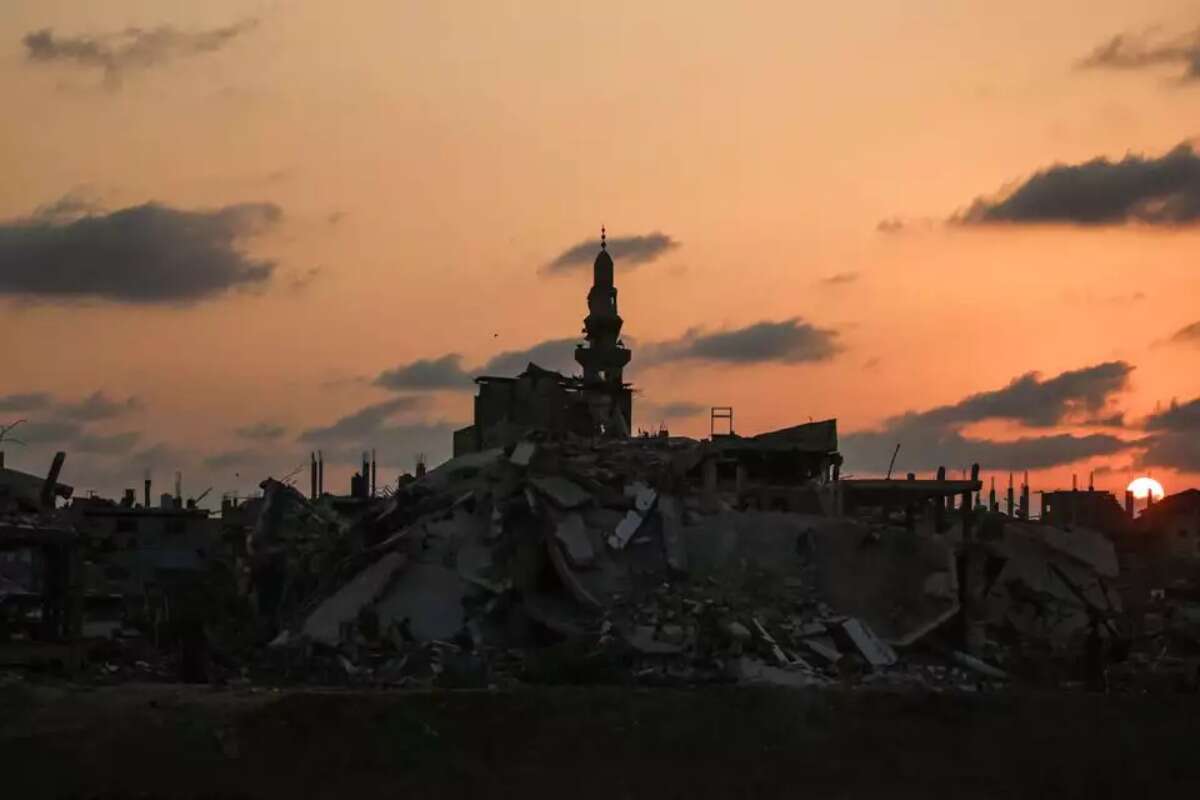
Hamas is unlikely to relinquish power quickly. Even if it is ultimately forced to transfer formal control to some alternative mechanism, it will seek to survive in other forms. Its preferred model would resemble Hezbollah's in Lebanon: it retains an armed force to pursue jihad, while someone else handles the day-to-day needs of Gaza's residents.
Israel will strongly oppose such an outcome and demand that any agreement, centered on the demilitarization of the Strip and the disarmament of Hamas, be fully implemented. It would take a generous measure of optimism, or naivete, or both, to believe that Indonesian or Kazakh soldiers, or a combination of the two, would accomplish what the Israel Defense Forces have been unable to achieve in two years of intense fighting.
For now, Israel is allowing Trump's plan to proceed without obstruction. That is the price it is required to pay for the return of the hostages and to maintain a united front with the Americans on Iran. Still, it is striking to see right-wing ministers, who boasted of torpedoing hostage deals and swore the war would not end until total victory, living with a reality in which Hamas remains in control of Gaza, Turkey and Hamas operate behind the scenes, and the Palestinian Authority functions in the Strip in an official and visible capacity. It turns out that those who said "everything is political" may have underestimated the power of opportunism.
Meanwhile, reconstruction efforts continue in the southern kibbutzim. Last Friday, I visited Kibbutz Kfar Aza, where construction is advancing on the new "Young Generation" neighborhood that will replace the original one, which became one of the most searing symbols of October 7. In that neighborhood, located along the kibbutz perimeter fence, 11 young residents were murdered, seven were kidnapped and every home was severely damaged.
In the coming days, Kfar Aza's residents will decide whether to preserve the neighborhood in its current location as part of memorializing the disaster, or to relocate several homes to an alternative site for commemoration and demolish the rest so as not to maintain what some call a "site of destruction" within the kibbutz.
The community's internal debate over memorialization stems from concern that the state may attempt to dictate how the events are commemorated. In the background is the charged dispute over efforts to omit the word "massacre" from proposed legislation on commemorating October 7, as well as the government's ongoing refusal to establish a state commission of inquiry into the disaster.
Kfar Aza's concerns are understandable. But there is another concern as well: if each community conducts its own memorial process in its own way, there may be no space left for a national commemoration, and the government may feel absolved of responsibility.
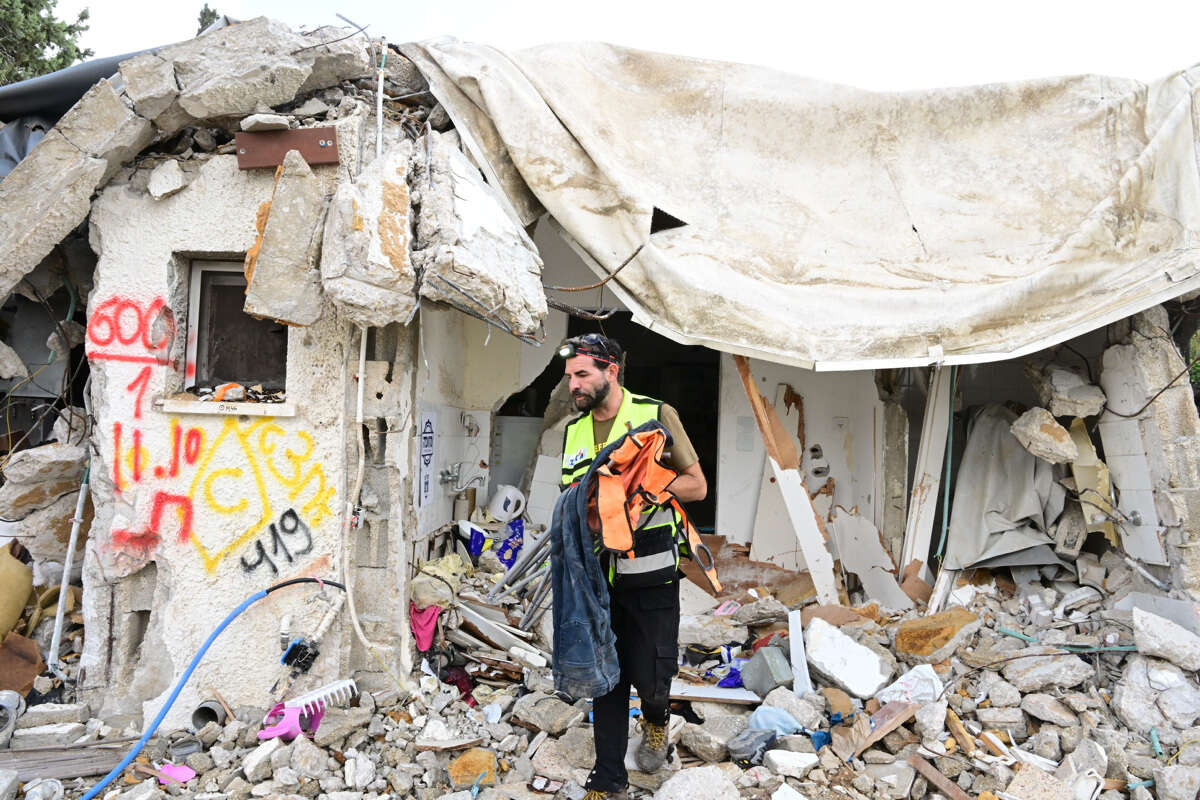
This issue extends far beyond the term of the government in office when the disaster occurred. If the State of Israel does not commemorate it properly, future generations will neither learn it properly nor remember it properly.
After Kfar Aza, I continued to the memorial site for those murdered at the Nova music festival. Crowds of visitors filled the area. Some came to see the blooming anemones and paused for a few minutes to honor the victims of October 7. Others, mainly foreigners, arrived specifically to pay their respects.
The friends who accompanied me, visiting for the first time, struggled to bear the emotional weight.
I recalled my first visit, less than two days after the massacre, when remnants of the party were still scattered around, along with burned-out cars, the bodies of the terrorists and, above all, the smell. The smell that no one who visited the Gaza border communities in the days after October 7 will ever forget.
None of that remains. And yet there is something about this understated memorial site, created by the Jewish National Fund, that delivers a powerful blow to the gut.
It is worth asking why the Education Ministry does not require every Israeli student to visit this site, as well as one of the affected kibbutzim, or Sderot or Ofakim, to see with their own eyes. Just as they travel to Poland to learn about the Holocaust.
To remember, and not to forget.


