


Iran's Supreme Leader Ayatollah Ali Khamenei was eliminatedon Saturday morning in an operation in central Tehran, according to an Israeli security source.
Several bodies were recovered from the site of the bombing at Khamenei's compound, the source said, including that of the Iranian dictator. As of now, Israel has refrained from issuing formal confirmation.
In the past, reports indicated that Khamenei had appointed three potential successors from among the senior Shiite clerics. At the same time, Ali Larijani is expected to play a significant role in any interim leadership arrangement.

Khamenei, 86, had headed the regime of the Islamic Republic of Iran since 1989, serving nearly 37 years as supreme leader. Before that, he served as Iran's president and as chairman of the Expediency Discernment Council under the founder of the Islamic Republic, Ayatollah Ruhollah Khomeini.
During his presidency in the 1980s, the Iran-Iraq War claimed the lives of approximately 1.25 million people. As supreme leader, Khamenei directed the creation and funding of terrorist organizations throughout the Middle East, including in Iraq, Syria, Lebanon and Yemen. Under his rule, tens of thousands of civilians were murdered through torture, executions and the suppression of protests.
Khamenei was also the central authority behind Iran's nuclear weapons program, despite repeated denials by the regime. On numerous occasions, he publicly emphasized his desire to see the State of Israel destroyed. During his tenure, Iran established significant influence in four Arab states: Yemen, Iraq, Syria and Lebanon. That influence weakened following the collapse of Syrian President Bashar Assad's regime and Hezbollah's defeat in Operation Northern Arrows.

For years, Khamenei led Iran's policy of supporting various Palestinian terrorist organizations, chiefly Hamas and Palestinian Islamic Jihad. Hamas leaders received substantial financial assistance from the regime and met with Khamenei and commanders of the Islamic Revolutionary Guard Corps. On the eve of the October 7 massacre, Hamas' leader in Gaza, Yahya Sinwar, decided to launch the terrorist attack without coordinating with the Iranian axis. Subsequently, Tehran remained on the sidelines, while then-Hezbollah Secretary-General Hassan Nasrallah opened what he described as a "limited" front in the north the following day.
Days of revolution
Khamenei was born in Mashhad in April 1939. Several months later, World War II broke out with Nazi Germany and the Soviet Union's invasion of Poland. He grew up in a clerical family; his father was of Azeri origin.
In the 1950s, he pursued religious studies in Najaf, Iraq, and in Qom, where he became acquainted with Ruhollah Khomeini, the future leader of the Islamic Revolution. He later became involved in political activity against the shah's regime, which led to arrests and exile.
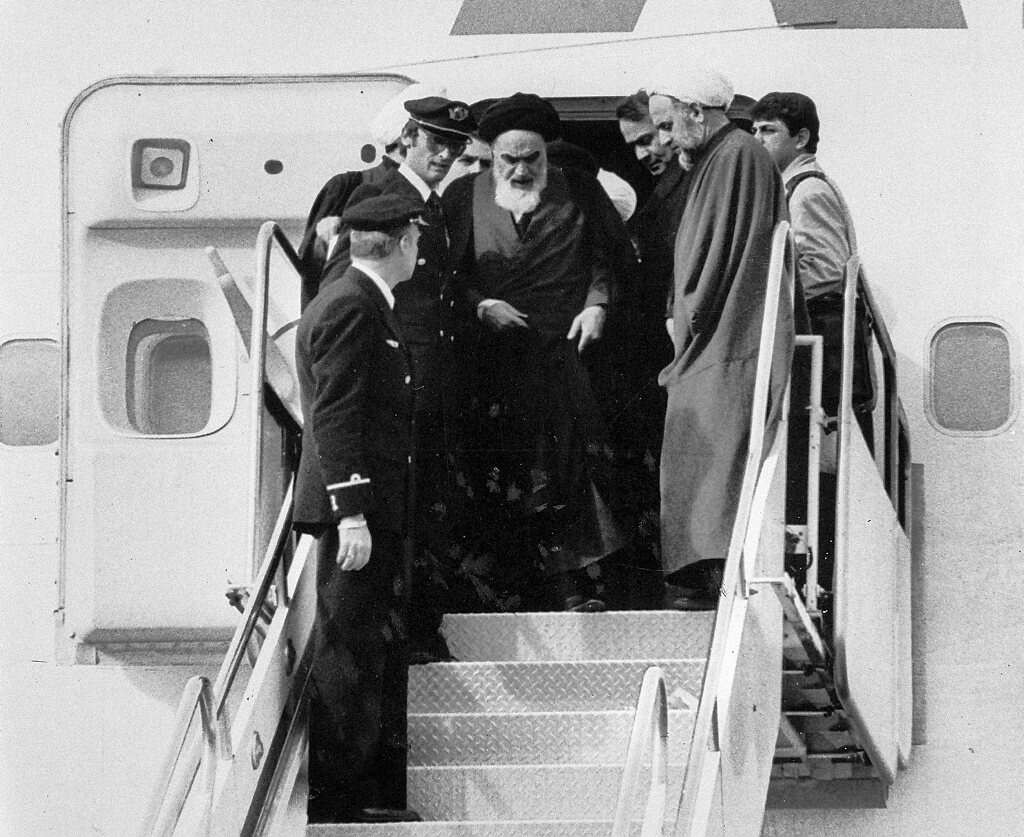
Following the 1979 Islamic Revolution, Khamenei became one of Khomeini's close associates and advanced through a series of positions. Initially he served as an imam at a mosque in Qom and later assumed more significant roles, including oversight of the Islamic Revolutionary Guard Corps. He was regarded as one of the figures who worked to sideline liberal factions within the revolution and strengthen the Islamists' grip on power.
After a series of attacks by the Shiite-communist organization Mujahideen-e-Khalq targeting senior regime officials, including the assassination of President Mohammad Ali Rajai, Khamenei emerged as a presidential candidate. He was among the few candidates approved by the Council of Experts. In June 1981, he survived an assassination attempt by the organization and was later elected by a large majority of voters.
Upon Khomeini's death in 1989, the Assembly of Experts convened to select the next supreme leader. Khamenei did not meet the religious threshold required for the title of marja taqlid, a high-ranking source of emulation in Shiite Islam. Nevertheless, the constitution was amended to allow a leader holding the rank of ayatollah. His religious rank was subsequently elevated.
Against this backdrop, it took Khamenei several years to consolidate his position, while then-President Akbar Hashemi Rafsanjani was widely considered the dominant figure within the regime.


