


The United States is intensifying efforts to build an opposition within Iran. According to intelligence sources talking with CNN, the American initiative is not limited to ethnic groups such as the Kurds and the Baloch. It is also focused on garnering support from within Iran's regular army, public figures, local leadership and even relatively moderate senior officials within the regime.
President Donald Trump himself hinted at the effort in an interview with Politico on Tuesday. Asked whether it was too late to consider working with figures in a new Iranian government, Trump replied: "No, it's not too late. Forty-nine were killed, don't forget, so it's pretty deep, right? New ones are emerging. A lot of people want the job. Some of them will be very good."
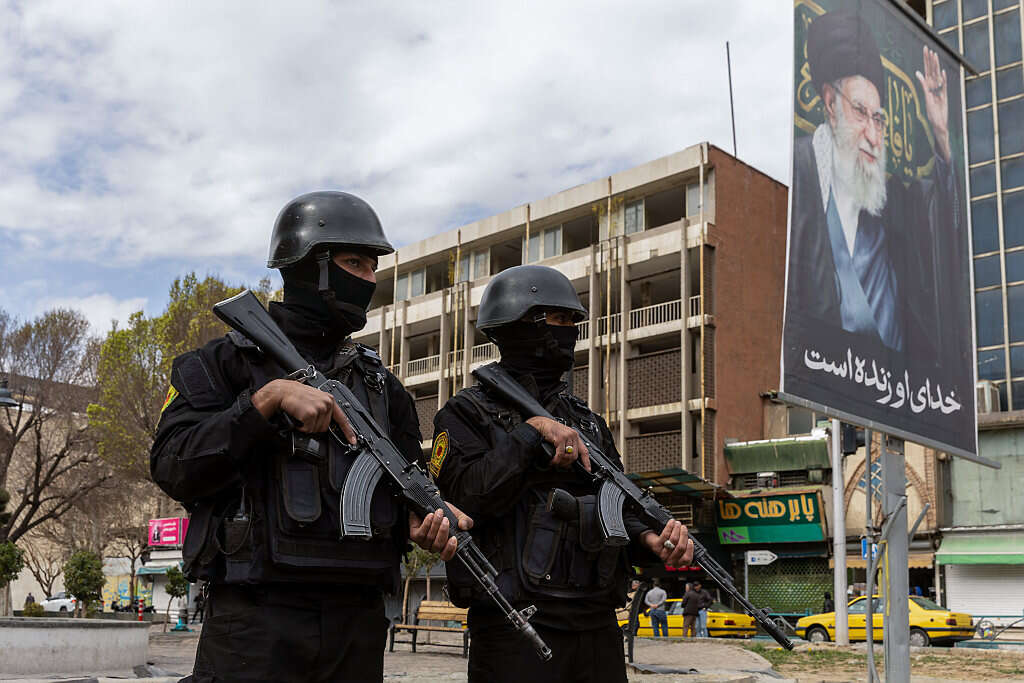
Iran's regime relies on two separate military arms: the regular army, tasked with defending the country's borders, and the Islamic Revolutionary Guard Corps, a parallel force established after the 1979 Islamic Revolution as a counterweight to the army, which at the time was considered loyal to the shah. The Revolutionary Guard answers directly to Supreme Leader rather than to the elected president and also controls the Basij militia, the regime's primary tool for suppressing protests. The hope among those backing the plan is that the regular army will prove more committed to Iran as a state and, in a moment of crisis, act against the ideological establishment led by Revolutionary Guard commanders and the clerical leadership.
Will minorities tip the balance?
As part of the contacts, US officials are holding talks with Kurdish leaders in northern Iran and Iraq, Baloch militia leaders in southeastern Iran and other opposition groups. According to the reports, the aim is to prepare these actors for a decisive day following the attrition of regime forces, particularly the Revolutionary Guard, when the desired change could take place. The US and Israel are seeking regime change, and the various groups are expected to join what is likely to become an internal confrontation, as the regime's many supporters are unlikely to surrender without a fight.
Intelligence assessments indicate that the process would take at least a week, even if strikes against Iran's leadership, especially the Revolutionary Guard, prove highly effective and most of the senior command is eliminated. Reports suggest that the Revolutionary Guard is preparing itself and affiliated units such as the Basij for that scenario, and the expectation is that the struggle would be fierce. One possibility is that peripheral provinces where separatist movements are strong could move ahead of schedule and seize cities and territory.
Among Iran's ethnic minorities, underground organizations with a long history and proven capability to strike at the ayatollah regime are active and have waged sustained guerrilla campaigns. In Iran's northwestern Kurdish region, several Kurdish rebel groups operate, most of them supported in one way or another by the autonomous Kurdish Regional Government in Iraq.
On February 22, five Iranian Kurdish parties, led by the Kurdistan Democratic Party of Iran, formed a joint coalition with the declared goal of overthrowing the Islamic regime. The coalition fields Peshmerga fighters trained in Iraq who are well acquainted with the mountainous terrain along the border between the two countries. During Operation Roaring Lion, several attacks were carried out against Iranian strongholds along the frontier, aimed at weakening Tehran's grip on the area and potentially paving the way for an armed Kurdish uprising.

Baloch and Arabs and fears of internal fragmentation
Another ethnic group engaged in ongoing unrest is the Baloch, a Sunni minority spread across Iran, Pakistan and Afghanistan that seeks self-determination and autonomy. In recent years, the Revolutionary Guard has conducted what is described as an unprecedented crackdown on the Baloch minority. The main organization active on the Iranian side is Jaish al-Adl, which merged in December 2025 with other groups into the "Popular Fighters Front" and declared a broad campaign against the regime.
The third ethnic minority in Iran with a history of armed resistance is the Arab population in the southern province of Khuzestan. Mostly Shiite and numbering more than 1.5 million people, the community has seen significant unrest. In 2022, large-scale protests erupted in the province against Tehran's rule, and exchanges of fire took place between Arab separatists and regime forces, resulting in several fatalities.
The idea of leveraging Iran's ethnic minorities, while practical given the presence of established resistance groups on the ground, is highly controversial within the broader Iranian opposition. Many regime opponents hold nationalist views and may find it difficult to cooperate with rebels whose demands for autonomy conflict with Iran's territorial integrity.
The expectation among proponents of the strategy is that in a scenario in which Iran is gripped by an existential internal struggle alongside external military and economic pressure, elected political leaders would act responsibly and, together with the regular army, stand against what critics describe as a "Masada mindset" led by the Revolutionary Guard. They would then seize control of the decision-making apparatus. Whatever the precise political constellation, it would represent a transitional stage toward a post-Islamic Republic Iran. The prevailing assessment is that a change in the regime must precede any substantive change by the regime itself.


