


Three leaders from Gulf states have each separately delivered a clear message to the US: any scenario for ending the war must ensure the elimination of the Iranian threat against them. According to diplomatic sources, the nearly identical messages warned that if the war ends before the regime is fully stripped of its offensive capabilities, it will only be a matter of time before Iran resumes its attacks and again threatens the global energy economy.
In that context, a Gulf Arab diplomat told Israel Hayom that Iran's attack on Gulf states is tangible proof that the end of the regime in Tehran is approaching. Speaking from the Gulf, the diplomat said Iran miscalculated in assuming that Gulf countries, which adopted a neutral policy before the war and even attempted to promote a diplomatic solution, would now pressure the US to end the conflict after coming under attack themselves.

"Why leave the risk?"
According to the diplomat, "Why would the GCC states (the Gulf Cooperation Council) want the war to end before defeating a regime that, at its first opportunity, fired hundreds of missiles at them indiscriminately? Why should we leave that risk hanging over us and over our most important economic interests, when it is clear that the missiles and drones will be directed at us in the next confrontation as well?"
According to figures published by the United Arab Emirates Defense Ministry, Iran launched nearly 250 missiles and close to 1,500 drones toward the Emirates, the overwhelming majority of which were intercepted by Emirati air defense systems. The country has absorbed more attacks than any other Gulf state, partly because it is identified with peace with Israel and is considered the Arab country with the closest ties to Israel.
At the same time, as a massive international financial hub, the UAE holds billions of dollars belonging to Iranian entities and individuals. Israel Hayom has learned that after the first Iranian attacks on the Emirates, a significant portion of those funds was frozen. Iranian Foreign Minister Abbas Araghchi quickly called his Emirati counterpart, Sheikh Abdullah bin Zayed, early last week and asked him to release the money.
Israel Hayom previously reported that Araghchi apologized for the attacks and said they were aimed only at US bases, a claim he also made to other Gulf foreign ministers. In a follow up call during the week, Araghchi told his Gulf counterparts that the instructions were to strike only American targets but added that not all units were following those directives.
The information points to the independent policy of Islamic Revolutionary Guard Corps personnel who control missile and drone units. These figures oppose attempts by Araghchi and Iranian President Masoud Pezeshkian to advance ceasefire negotiations, instead advocating continued fire and the use of all available means, believing that Israel and the US will eventually lose patience and initiate a ceasefire themselves under terms more favorable to Iran.
Returning to the Emirates: despite the hundreds of missiles and drones fired at Gulf states, particularly the UAE, these countries have been careful to avoid offensive steps against Iran and continue what appears to be a somewhat unusual policy of sitting on the fence.
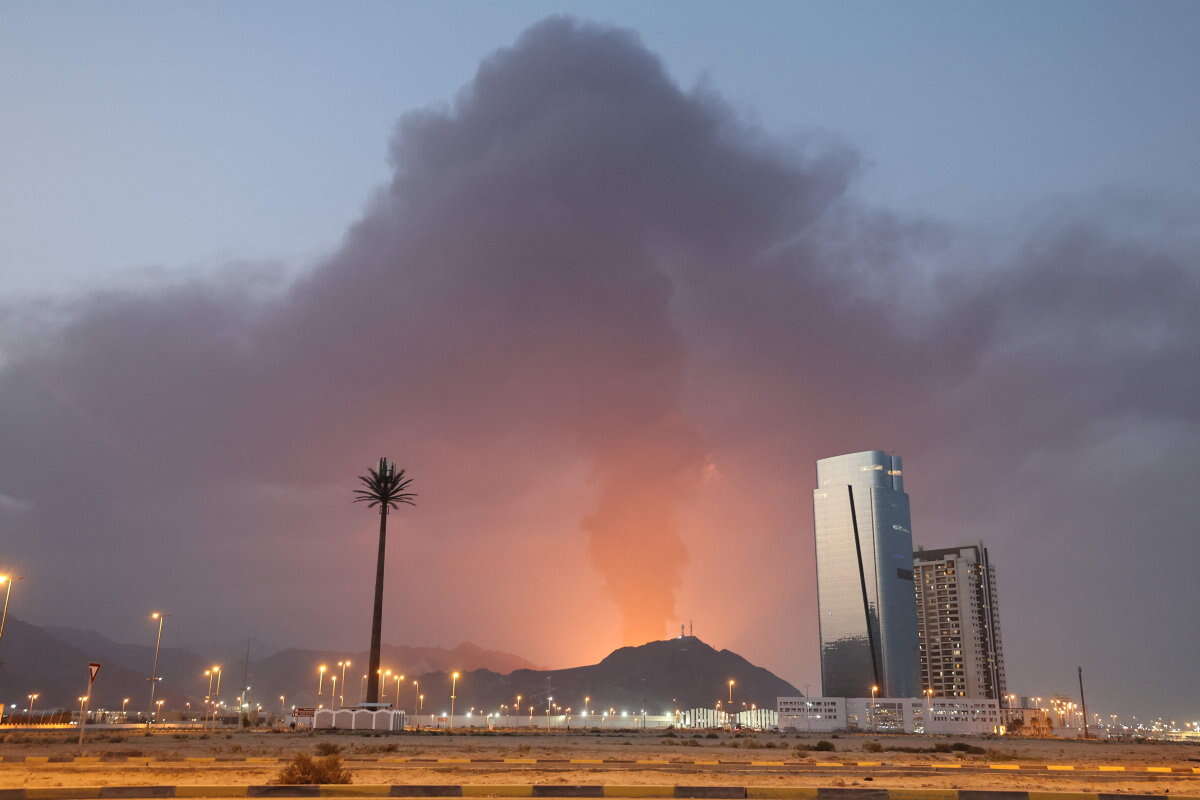
Restrained response
Yesterday, after what was apparently an incorrect report that the UAE had struck an Iranian desalination facility, Emirati officials quickly issued a denial while attempting to maintain ambiguity. Anwar Gargash, a senior Emirati adviser and a key figure in the country's foreign policy, said:
"The United Arab Emirates is acting in self defense in the face of Iranian aggression targeting its territory, its residents and its civilian infrastructure. Any defensive step the country takes will be public and clear and will not rely on journalistic leaks or narratives based on anonymous sources. Our goal is to stop this ongoing aggression against the UAE and the Arab Gulf states, not to be dragged into escalation."
The main reason for this policy of restraint stems from fears of escalation in Iranian attacks, particularly against oil facilities, wells, refineries, ports and tankers. These targets have already been attacked, but the concern is that if the UAE or any other Gulf state joins the US Israeli campaign against Iran, Tehran will remove all remaining restraints and attempt to literally set the Gulf ablaze.
The Americans prepared in advance for the oil problem and the potential impact on the global market. Steps taken so far include providing government financial backing for international tanker insurance, securing tankers passing through the Strait of Hormuz and systematically degrading the Iranian threat. These measures have resulted in only a limited rise in global oil prices. Assessments indicate that markets remain relatively optimistic about the war's impact on the energy sector and are therefore in a wait and see position without real panic.
In Washington, officials have received the Gulf messages and are preparing two main scenarios for the next stage. The current phase, described as the attrition stage, has not yet ended, but intelligence indicates significant damage to the organization of forces within the Revolutionary Guards and the Iranian military, along with the beginning of disintegration in some units.
Damage to missile launchers also continues, and estimates suggest that within days Iran's launch capability will fall to about 10% of what it was before the war. Even so, it is clear that the third stage, decisive victory, will be complex. As a result, the US administration is promoting a plan to end the war through ceasefire negotiations with elements of the regime willing to do so.

President Donald Trump has been speaking about this possibility for several days. Israel Hayom reported on outreach from Iran regarding negotiations, talks that hard line factions within the regime oppose. The US framework envisions significant weakening of those opposing forces, both militarily and economically, along with targeted killings of leaders of that faction. Once the Revolutionary Guards are weakened sufficiently, the plan would assist the moderate side in taking control and implementing a ceasefire under US terms.
Israeli officials are familiar with this plan but are highly skeptical of it and hold the same position as the Gulf states: the war should end only after the Iranian military threat has been completely removed.


