


Iran's Assembly of Experts officially announced Sunday that Mojtaba Khamenei has been chosen as Iran's new supreme leader, the third since the establishment of the Islamic Republic in 1979. The announcement comes about eight days after the elimination of his father, Supreme Leader Ali Khamenei.
At the same time, footage emerging from Iran captured citizens of the Islamic Republic chanting "Death to Mojtaba."
Tehran residents are already voicing their fury, chanting
"Death to Mojtaba" pic.twitter.com/wUO6jasJhT— Open Source Intel (@Osint613) March 8, 2026
The council said it convened an emergency session despite the fact that "secretariat offices were bombed, leading to the deaths of several staff members and security personnel." It said it acted "in accordance with its constitutional duties and internal regulations, without delaying the leadership selection process for even a moment," in order to ensure the country would "not fall into a leadership vacuum."
According to the statement, Mojtaba was elected by an overwhelming majority of the council's members.
At the end of the statement, the council thanked the members of the temporary leadership council that had been operating in recent days. It also called on the Iranian public, particularly members of the clergy and academia, "to honor their loyalty to the leadership and preserve unity."
The Revolutionary Guards' man
Mojtaba Khamenei, 56, the second son of the late supreme leader, is considered one of the most powerful figures in Iran despite never holding an official position. For more than 27 years he operated behind the scenes as his father's gatekeeper, and is known for his close ties to the Islamic Revolutionary Guard Corps and alleged involvement in engineering election results and suppressing protests.
According to foreign reports, his influence extended to nearly every sphere of state affairs, from media appointments to the conduct of universities, as well as decisions concerning the regional war against Israel and Iran's nuclear project.
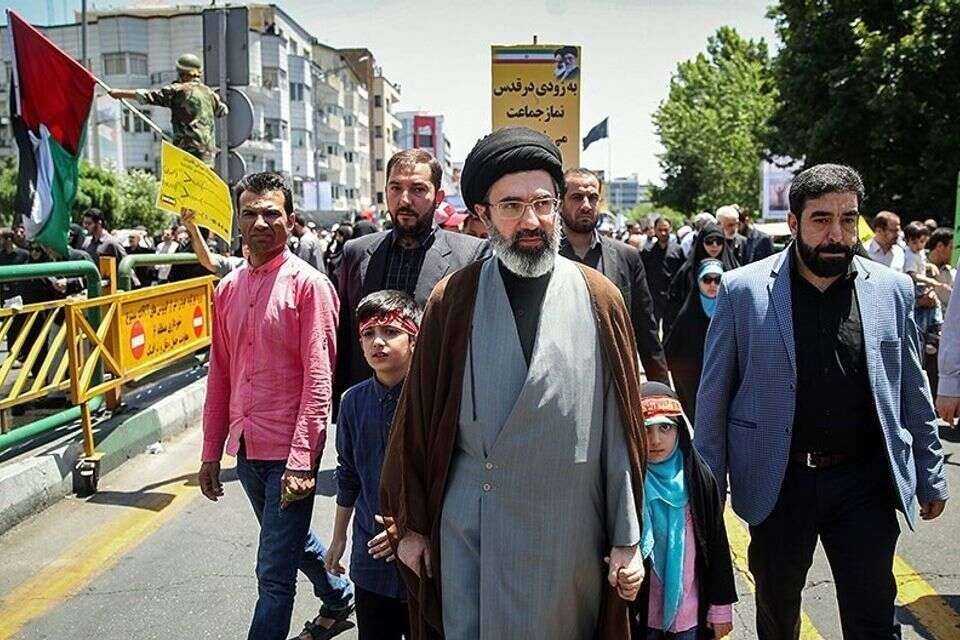
In 2019, the US Treasury Department imposed sanctions on him, alleging that he represented the supreme leader and was delegated authority despite not being elected or formally appointed to a government post. According to US officials, Mojtaba Khamenei worked in coordination with Quds Force commander Qassem Soleimani and with the Basij militia.
A Bloomberg investigation published in January 2026 exposed what it described as a secret financial network linked to him, including real estate holdings in London and Dubai and accounts managed through intermediaries in various countries.
His candidacy has long been controversial within Iran. Shiite tradition opposes dynastic succession, and the Islamic Republic itself was founded on the ruins of the shah's monarchy. In addition, Mojtaba Khamenei lacks the senior clerical rank typically required to lead the Islamic Republic, a shortcoming seen as significant compared to other potential candidates.
Khamenei himself had reportedly opposed the idea of his son succeeding him. According to a New York Times report, Mojtaba was not among the three candidates shortlisted by a committee appointed by Khamenei in the event of his assassination.


