


Lebanon.
During the night between Wednesday and Thursday, it seemed the die was cast. Israel had little choice but to significantly expand the campaign in Lebanon. Hezbollah's intensive and aggressive attacks on northern Israeli communities, which have also included fire toward central Israel, require more substantial measures against the organization, including the seizure of territory in southern Lebanon.
The Israel Defense Forces were not restrained in Lebanon even before this escalation. Hundreds of thousands of residents of southern Lebanon have been displaced northward. Hundreds of thousands more from the Dahiyeh district of Beirut have fled north and east. Altogether, Lebanon now has roughly one million internally displaced people, more than one sixth of the country's population.
In Dahiyeh alone, 30 residential towers were demolished over the past week. At the base of each building were hidden weapons, facilities for manufacturing arms, or both.
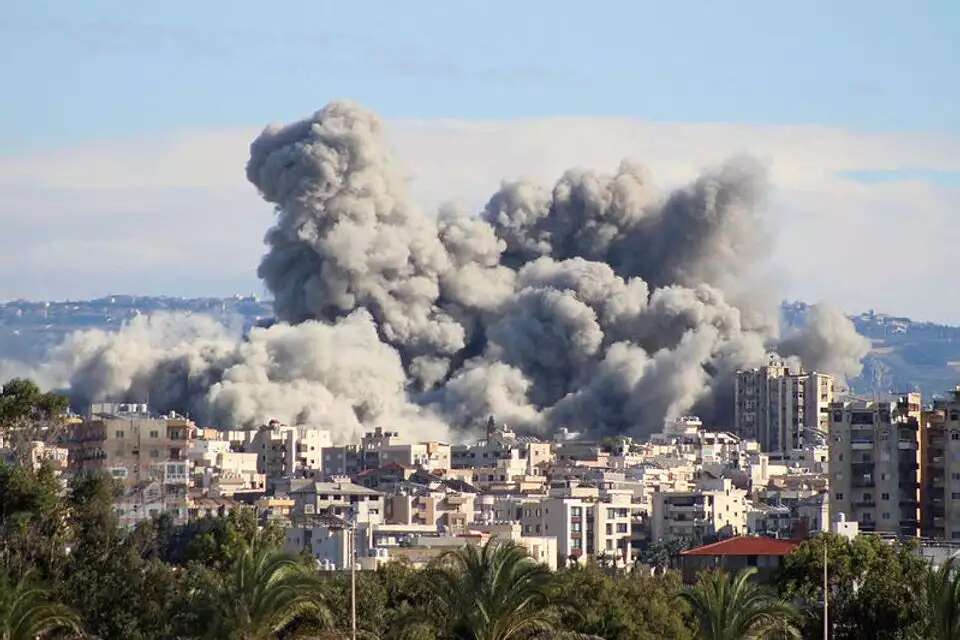
In the early days of the northern campaign, Israel apparently assumed, incorrectly, that Hezbollah had joined the war under Iranian pressure merely to fulfill an obligation and was simply waiting for it to end. It now appears that the organization needed time to regroup, and despite the heavy blows it has absorbed, it is putting up a fight.
The Israel Defense Forces have managed to maintain strong defenses. For now, interception rates of drones and missiles are close to 100%. No civilians have been killed in Israel's rear areas, and two soldiers were killed by anti-tank fire along the border. Nevertheless, daily life from Haifa northward has been disrupted more severely than in any other region of Israel.
This week, the Lebanese government attempted, with international assistance, to end the fighting. Lebanese President Joseph Aoun presented what appeared to be an attractive proposal: direct negotiations between the two countries. Aoun also reiterated his willingness to disarm Hezbollah, and some figures in Lebanon hinted at the possibility of future diplomatic relations between the countries.
It is possible Hezbollah felt pressured by these developments and resorted to the only method it knows to sabotage them: violence. It is also possible that Iranian pressure on the organization is greater than Israel estimated. Another possibility is that Hezbollah has lost the strategic judgment that characterized it during the era of its former leader Hassan Nasrallah.

In any case, the result is the same. Hezbollah has forced a war upon Israel, and Israel has decided to respond in kind. The conflict will unfold, as the cliché goes, in the air, at sea and on land, including forces such as the Golani Brigade and armored units redeployed from Gaza to take advantage of their capabilities and weaponry.
The instinctive response from Israel's perspective is understandable: we were attacked, so we will attack harder. Israel must push the threat away from its border, reduce it and degrade Hezbollah's capabilities. But that response must be backed by a plan with clear objectives.
Hezbollah will not be eliminated militarily, just as Hamas will not be eliminated militarily and Iran will not be eliminated militarily. Anyone who promises such outcomes is either lying or misleading.
Israel should maximize the military gains from this war while keeping a close eye on the diplomatic arena. The goal is not to control Lebanon but to reach a successful arrangement with the Lebanese government, which should have its own interest in weakening or dismantling Hezbollah.
The alternative is an open-ended war in Lebanon, similar to the one Israel maintained for 18 years, during which Hezbollah was formed and grew stronger.
Iran.
The Israel Defense Forces have achieved impressive results: strikes on launchers and missiles, destruction of air defense systems, the elimination of senior officials and attacks on government institutions and security agencies.
Cooperation with the United States has also been unprecedented. There has been daily coordination, division of operational sectors, intelligence sharing and mutual assistance and protection.
Israel's home front has also remained resilient. The public has largely followed instructions, shown solidarity and demonstrated the endurance necessary for a prolonged conflict.
Precisely because these areas can be marked as successes, attention must also be directed to the shortcomings. Israel entered the campaign with an objective that may be impossible to achieve: the overthrow of the Iranian regime.

The goal does not appear explicitly in official presentations, which speak of "creating the conditions for regime collapse," but it is evident in statements and briefings. Some officials have said it openly.
Nearly two weeks into the war, it is doubtful this goal is attainable. The hope had been that the elimination of Supreme Leader Ali Khamenei would serve as an Archimedean point leading to regime collapse. That did not happen.
The Islamic Revolutionary Guard Corps, despite suffering serious blows including the killing of senior commanders for the second time in less than a year, appears more stable than expected and still firmly holds power. The Guards have already appointed a successor, Mojtaba Khamenei, installed new commanders and tightened their control over all security bodies including the Basij militia, police forces and civilian institutions.

Nor has the Iranian public taken to the streets. Perhaps people fear the war itself, or perhaps they fear the security apparatus, whose tolerance is particularly low during wartime. The few reports emerging from Iran describe checkpoints on nearly every street corner, mass arrests and security forces quick to open fire.
Public protests may resume in the future. Or they may not. Building an entire strategy around that possibility, as Israel appears to have done, is problematic.
What remains is the goal of significantly weakening the regime. That means striking all its capabilities, especially weapons systems such as nuclear infrastructure, missiles and drones, as well as production facilities and centers of expertise including scientists, commanders and leaders.
Some of this damage can be repaired relatively quickly. Other damage will take longer to recover from. It is doubtful any of it will last "for generations," as Prime Minister Benjamin Netanyahu declared after the 12 day war in June.
"At the end of that war," Netanyahu said, "we removed two immediate existential threats: the threat of annihilation through nuclear weapons and the threat of annihilation through 20,000 ballistic missiles. If we had not acted then, the State of Israel would soon have faced the danger of destruction."
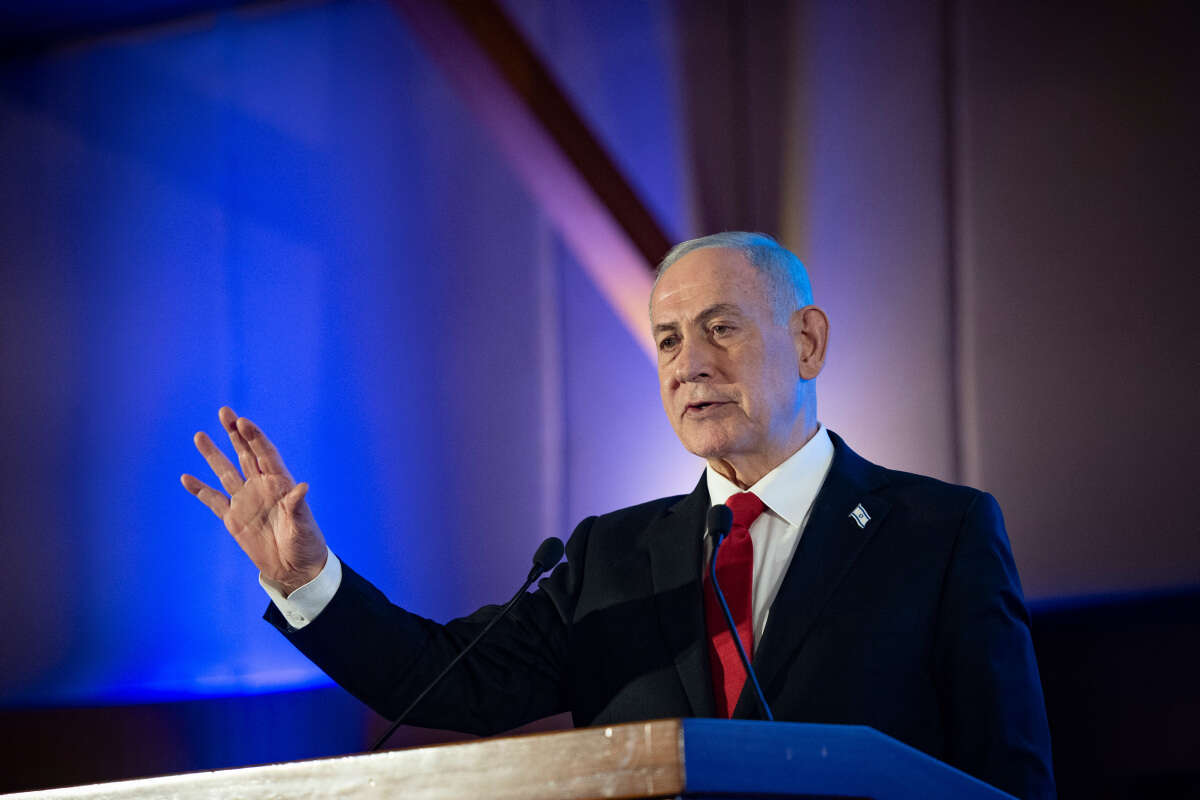
It will be interesting to hear what Netanyahu says when the current campaign ends. His decision to avoid answering questions during the war, unlike the US president and senior officials in Washington, suggests difficulty in presenting the achievements in light of the expectations that were set.
The mistake lies precisely in those expectations. The war itself is justified. Iran is a bitter and ruthless enemy. Had it not been confronted last June, it might already have been on the verge of acquiring nuclear weapons. Had it not been confronted now, it might have amassed a dangerous stockpile of missiles. And had its regional proxies not been targeted, Iran might have rebuilt its ring of fire and terrorism around Israel.
However, it was wrong to claim last June that the problem had been solved, only to return to war less than seven months later and again declare victory at the end.
That could leave Israel back in a similar position within months, potentially in a worse one. Iran now has an open score to settle with Israel, and its new leader may also have a personal motive after losing his father, wife and son and being wounded himself.
Israel's focus must therefore gradually shift from the military front to the diplomatic one.
The war will continue, and hopefully produce significant results. But ultimately the effort to restrain Iran will move to arenas where Israel is far less effective. These include economic pressure by Iran's neighbors, which have increasingly become its adversaries. For example, roughly 80% of Iran's banking activity passes through the United Arab Emirates.
Another path lies in regional alliances with the United States and Israel at the center.
Three scenarios.
The war could end in one of three scenarios. The most optimistic, though currently unlikely, would be the collapse of the Iranian regime.
A somewhat less optimistic scenario would be an agreement significantly limiting Iran in the areas that concern Israel most: nuclear weapons, missiles and proxy forces.
The least optimistic scenario would be an end to the war without clear conditions or agreements. The United States would claim victory. Israel would claim victory. And Iran would certainly claim victory simply because it did not collapse.

Much depends on US President Donald Trump. Patience is not among his most prominent qualities, yet wars of this kind require both patience and time.
Prime Minister Benjamin Netanyahu must secure both from Trump and ensure the US president does not simply decide to end the war by declaring victory without clarifying what that victory actually means. As Trump himself has said, and as Israel understands, it would be extremely difficult to mobilize the forces and international legitimacy needed for a campaign of this scale again in the foreseeable future.
Three key points stand out: First, continued military pressure using all available Israeli and American means to deepen the damage and weaken Iran as much as possible. Second, intensive diplomatic activity aimed at creating a new regional reality in the short and medium term. Third, clear communication of that reality to the Israeli public, which deserves to understand what its leaders expect from it and where they intend to lead the country.


