


The broader goals of the current war can be found in intense discussions over the past week among Washington, Jerusalem, Riyadh, Beirut and several other capitals across the Middle East.
These talks are not only about addressing immediate threats such as missile fire from Iran or Hezbollah, the Lebanese Shiite terrorist organization. They are largely focused on laying the foundations for the postwar era, one in which Iran no longer poses a strategic threat to the region.
Iran's nuclear program and the strategic danger posed by its ballistic missile arsenal served as the casus belli for the war, the immediate reason for launching military action. Another key objective is halting Tehran's support and sponsorship of regional terrorist organizations that fuel conflict and instability.
But from the perspective of the White House, the war's ultimate strategic outcome goes beyond the battlefield. It is tied to an emerging diplomatic framework meant to shape the region afterward. That framework envisions several types of agreements: security and defense arrangements under American sponsorship; commercial initiatives such as energy and communications corridors linking the Gulf with Europe; and political normalization deals expanding the Abraham Accords to additional Arab states, including Lebanon and Gulf countries led by Saudi Arabia.
Under CIA auspices
From Israel's perspective, the discussions are being conducted on several levels. Some involve security and military channels with assistance from US Central Command and the CIA. Others are political discussions led by former minister Ron Dermer. Prime Minister Benjamin Netanyahu is also speaking directly with several regional leaders, as well as with leaders of countries outside the region that have no formal diplomatic ties with Israel.
Diplomatic sources in the region and in the US confirmed the contacts and the direct communication between Jerusalem and other regional leaders. They said the talks intensified after the recent escalation with Hezbollah.
According to those sources, Hezbollah's entry into the conflict by launching attacks on Israel has created an opportunity to remove the group from the Lebanese equation. They noted that the broad Lebanese political coalition opposing the Shiite terrorist organization reflects that possibility.
Israel Hayom reported Saturday that, as part of ongoing contacts between Israel and Lebanon mediated by the US and France, a three-way conversation took place involving senior Israeli, Lebanese and American officials aimed at reaching a comprehensive arrangement between the two countries.
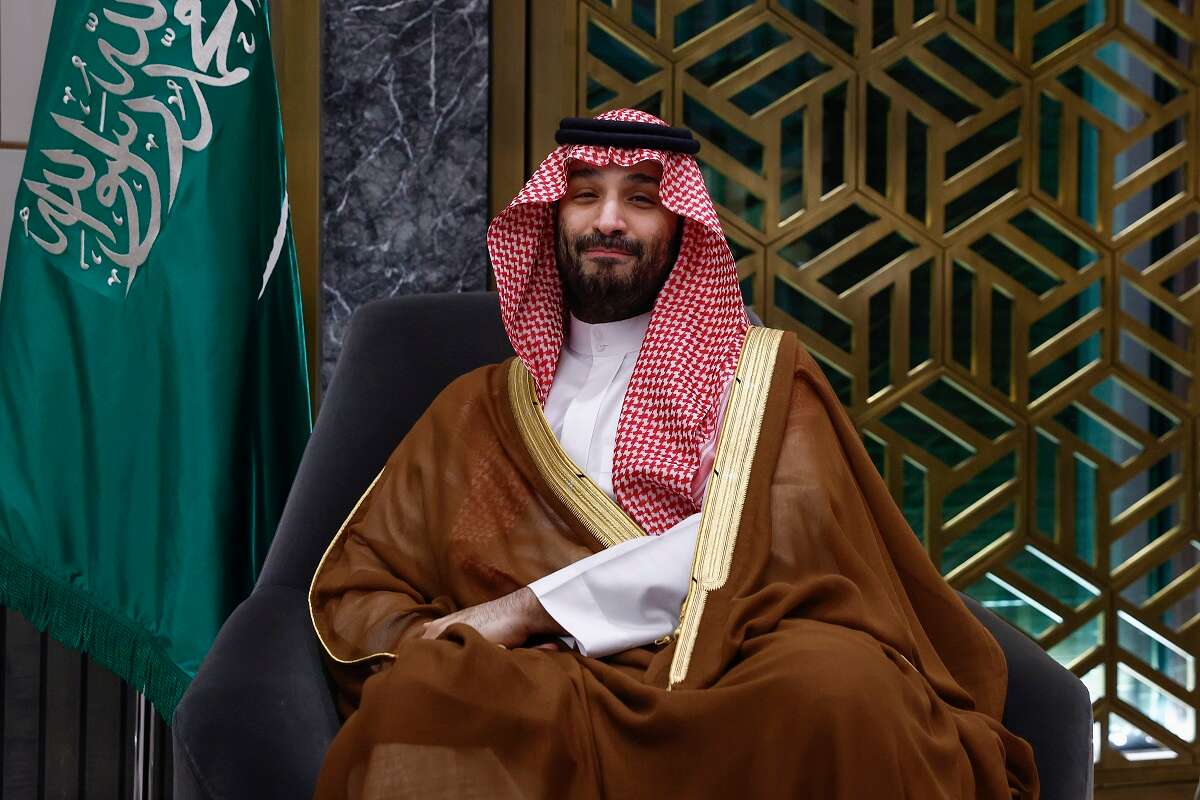
It can now be revealed that Saudi Arabia is also involved in the discussions about Lebanon. Riyadh wants to play a role in any solution and has economic and other interests in Lebanon. Unlike the situation in the Gaza Strip, the Saudis are prepared to invest significant resources in Lebanon provided their investment is not threatened by renewed fighting between Hezbollah and Israel.
There are still no formal, direct negotiations. However, all the frameworks under discussion seek to solve a problem similar to that in Gaza: the disarmament of a heavily armed terrorist organization. In Lebanon the challenge is at least as severe, if not more so, given Hezbollah's large arsenal of heavy weapons. However, the Lebanese government faces the group despite the fact that the country's army currently lacks the capability to dismantle it.
Strengthening the Lebanese army
One proposal under consideration includes a disarmament clause similar to the one outlined in US President Donald Trump's 20-point plan regarding Gaza, along with an international political coalition to guarantee its implementation.
Another idea is to strengthen the Lebanese army by increasing the number of soldiers from communities other than the Shiite population, which currently forms a majority within its ranks. These troops would receive training and advanced weaponry in order to carry out the mission of dismantling Hezbollah.
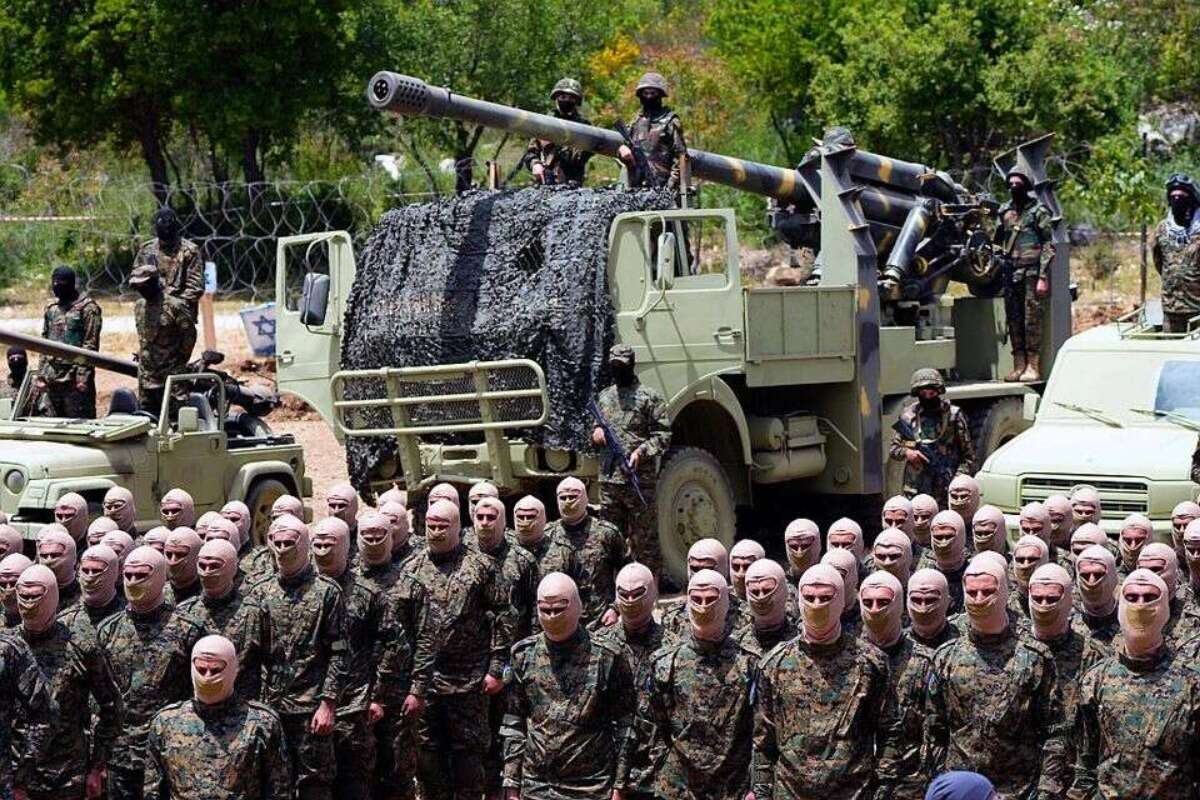
Such a process is expected to take at least several months. However, if Iran's support for Hezbollah is stopped, it could greatly ease the effort and shorten the timeline.
For now, analysts expect that until the main phase of the campaign against Iran is completed, there will be no public progress or direct negotiations between Israel and Lebanon.
The Lebanese issue also serves as a pathway to advance contacts between Israel and Saudi Arabia. In fact, Israel's broader relations with the region are part of the same set of discussions. There are no quick fixes to the region's disputes. Even if Iran is removed from the equation or at least significantly weakened, major issues will remain unresolved, including the Palestinian issue and the situation involving Hamas, the Gaza-based terrorist organization.
These obstacles could delay a comprehensive agreement with Saudi Arabia. However, diplomatic moves with other countries that currently lack formal relations with Israel are expected to advance first.
Turkey's unclear role
Turkey's place in the emerging regional picture remains uncertain, but tensions between Ankara and Tehran appear to be worsening.
Diplomatic sources told Israel Hayom that Turkish Foreign Minister Hakan Fidan and Iranian Foreign Minister Abbas Araghchi held at least two heated conversations in recent days. In one of them, Fidan reportedly accused Araghchi of lying about missile launches toward Turkey.
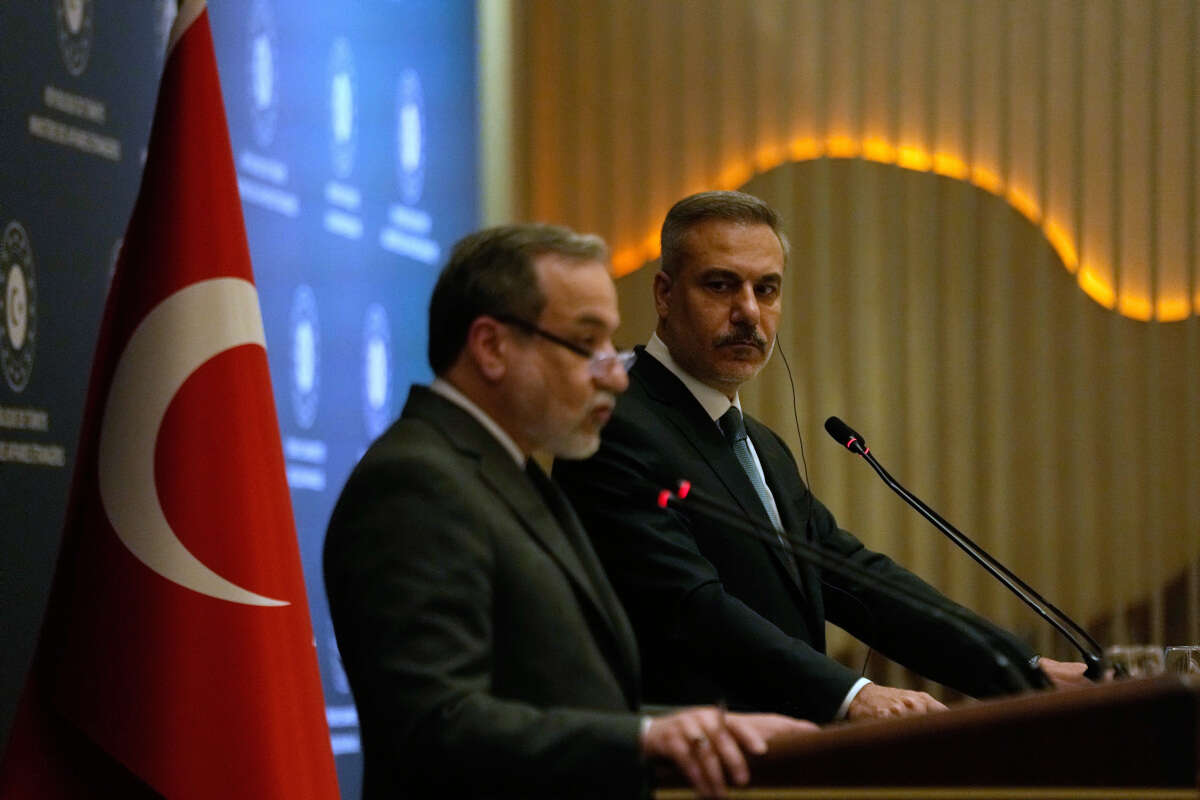
Turkish officials reported at least three incidents in which missiles were fired from Iran into Turkish territory, including two that targeted the US air force base at Incirlik.
During the discussions between the two foreign ministers, Araghchi initially claimed Iran was not involved in the launches. He later said they had been an "exception," and finally acknowledged the missiles had originated from Iran but claimed the launches were unauthorized and carried out by "rogue units."
Fidan reportedly rejected the explanation, and Turkey subsequently stepped back from its role as a mediator between Iran and the US.
Iran seeking negotiations
Iran continues to send messages to the US expressing readiness for ceasefire negotiations through intermediaries including Oman, Russia and France. French President Emmanuel Macron is said to be speaking daily with Iranian President Masoud Pezeshkian.
However, the Americans are insisting on preconditions that in practice amount to Iranian capitulation: handing over enriched uranium, abandoning enrichment activities, removing threats to the Strait of Hormuz and meeting several additional demands.

According to an American source, another reason Washington is rejecting negotiations for now is the belief that the Iranian officials seeking talks lack the backing of the Islamic Revolutionary Guard Corps and therefore do not have authority to reach binding agreements.
"The Revolutionary Guards are effectively running the war," the source said. "They are firing at countries that were not hostile to Iran, trying to stop maritime traffic in the Gulf and doing everything to show that there is no real partner for negotiations."
The source estimated that the Iranian regime's situation is far more serious than it publicly acknowledges. Within several more days of fighting, the number of missiles launched from Iran toward Israel and Gulf states is expected to drop significantly.


