


For two weeks, Saeed Ziad vanished. One of Hamas' most prominent mouthpieces disappeared from Al Jazeera's studios and refrained from commenting on social media, setting off a wave of speculation about his fate. Palestinian activists claimed this week that he had been detained for a time, apparently in order to silence him. In the background were posts and commentary Ziad had published online about the war with Iran without condemning the attacks on Qatar.
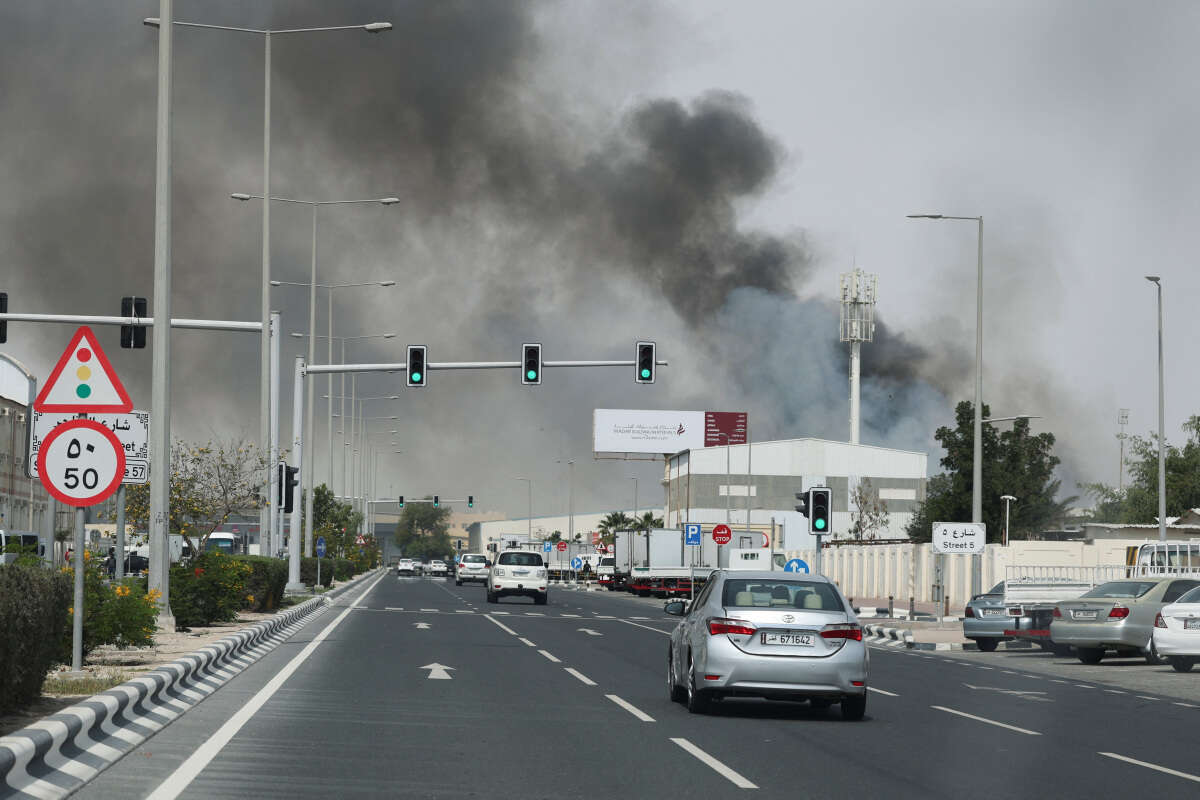
In Doha, it appears, the gloves have come off against anyone suspected of even a hint of subversion. In the war's opening days, two cells suspected of operating on behalf of Iran's Islamic Revolutionary Guard Corps were arrested. Seven of those detained were accused of spying on facilities and bases in the country. Three others were accused of sabotage and of receiving drone training. Beyond that, authorities said more than 300 people of various nationalities had been arrested for filming launches, publishing footage and spreading rumors. Even so, the episode seemed to carry a hidden, ironic message: Hamas can no longer play a double game with Qatar. Members of the terrorist organization must choose a side.
Ziad, a resident of the Jabaliya refugee camp who left the Gaza Strip for life abroad, is one of the regular "analysts" on the Qatari network. Since the war in Gaza, he had been staying in Doha hotels and lavishly praising and defending the terrorist organization on one of the Arab world's most-watched channels. "He disguises himself as a strategic analyst, sits in luxury hotels and restaurants, and then appears on Hamas and Muslim Brotherhood platforms to incite Gaza residents to what he calls jihad and to sacrifice their children," outgoing Israel Defense Forces Arabic-language spokesman Col. Avichay Adraee once jabbed. But since the launch of Operation Lion's Roar, Ziad's praise for terrorist organizations has been less pleasing to Qatari ears.

In the weeks before his disappearance, Ziad echoed Iranian messaging like a spokesman for the Islamic republic itself. A review of his accounts shows he did not devote a single word to condemning the attacks on Qatar and the other Gulf states. Instead, he enthusiastically backed Hezbollah's entry into the war and published Tehran's demands: "Recognition of Iran's rights" (apparently referring to its missile and nuclear programs), compensation payments and guarantees against future attacks.
In one post, he described the cards still left to the US, including striking infrastructure, bombing positions in Sig or deploying forces. "The US can use these cards, but all of them will be met with severe Iranian declarations that will plunge the entire region, and in fact the entire world, into crisis, especially after the threshold of global tolerance for oil prices is crossed." Not only did the hundreds of drone and missile launches at Gulf states go unmentioned, in a sense Ziad even seemed to hope the assault would continue. And that spit in the well from which he drank, it seems, did not go unanswered. According to rumors, it was decided he would be deported to Turkey.
A chorus of wailing
Ziad is not the only one. Sources told Asharq Al-Awsat this week that Qatar had taken measures against several "well-known figures" in Hamas because of their support for Iran's attacks. It appears this practice was adopted as early as last summer. The son of senior Hamas figure Nizar Rayan, who was killed in 2009, said this week that he too had been arrested by Qatar on similar accusations. The son, Baraa Rayan, himself identified with Hamas, said Qatari authorities jailed him, threatened him with a three-year sentence and tortured him. According to him, his story began during Operation Rising Lion last summer, when Al Udeid Air Base in the emirate, where US forces are stationed, was attacked. That was a response to Operation Midnight Hammer, in which the US struck Iran's nuclear facilities.
At the time, Rayan had enjoyed nearly two decades in a coveted position as a lecturer at the College of Sharia Studies at Qatar University. "They [the rulers of the Gulf states] paid Trump trillions to protect them, and then he set their house on fire," he wrote online. The next day, he claimed, Qatari authorities summoned him to a meeting and then placed him under arrest. Later, Rayan said he was accused of "inciting public opinion."
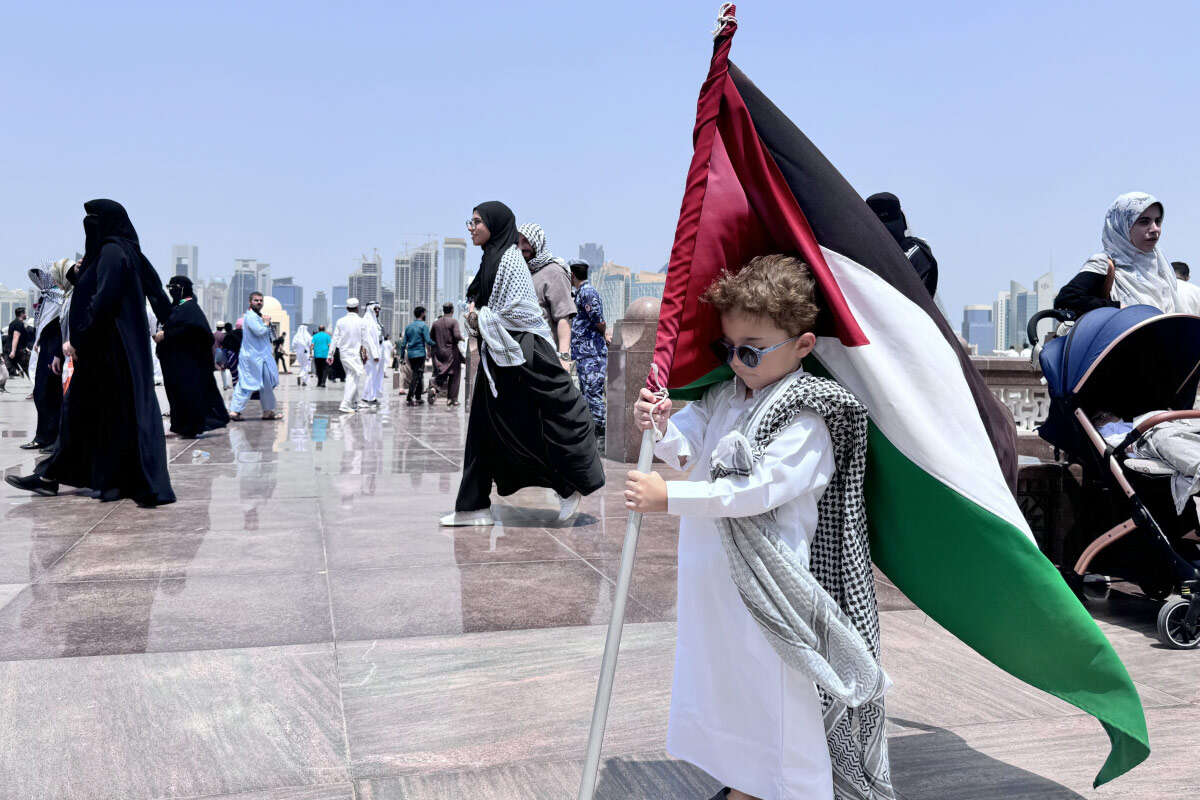
He said that in prison he met other detainees arrested on similar charges. He was later released and left the country. The dream job was left far behind. His brother, a well-known Gazan activist named Bilal Rayan who is in Turkey, did not let the matter pass: "It turns out that those who waved slogans of revolution, freedom and justice are nothing but cheap mouthpieces. This shame will remain a stain on your history and testimony to your corruption."
Bilal was not aiming only at the Qataris, but also at those who found a reason to gloat. "What would have happened if Baraa Rayan and Saeed Ziad had opposed Iran or Assad's Syria or Hamas and lived under their rule?" a Gaza resident mocked them. "In Tehran they would have been sentenced to decades in prison for 'collaboration with the enemy,' in Syria they would have been slaughtered, and in Gaza, under the rule of the resistance they praise, Hamas would have shot them in the legs for harming 'revolutionary unity.' These mercenaries, together with the remnants of the axis, have justified the crimes of the Iranian axis for years. The moment Rayan's salary was cut off and Ziad was detained for a couple of hours, they staged days of lamentation and howling."
Revolving doors
For now, Doha appears to be waiting for the war to end. "After we get through this crisis, we need to turn our attention to some opportunists who dip their faces in the soup," a Qatari activist wrote this week, using a Gulf expression for shameless people. "Ungrateful people full of hatred. If you do not like the country or its policies, why are you still sitting here? Why are you complaining? Qatar is paradise, and those who have lived in it know that. You feel so safe you forget to lock your door."
A member of the Al Thani family agreed with her: "Qatar has always shown generosity to everyone. The ungrateful will never be satisfied. It is enough that people walk safely in the streets and can sleep with the door open. That is exceptional and not something you find in most countries. Our country has given so much, and it deserves loyalty and appreciation. Those who do not respect the policies of the state that opened its door to them, those same doors can lead them to the airport." The comments did not necessarily seem aimed at Hamas' leadership, but rather at the organization's media entourage and lower-level activists who stayed loyal to the Iranian axis when it mattered most.
And not only them. One Gazan who posted a jab at Doha, "Like this if Qatar didn't surprise you," was met with a wave of harsh replies. "Qatar was attacked because of Hamas' leaders," a citizen of the emirate wrote back. "Qatar is the one that rebuilt Gaza dozens of times. Qatar is the one paying salaries to half the residents of Gaza. Qatar is the one providing aid and donations. We all see that as wages, compensation and a way to keep danger away from Qatar, but you have lost the sympathy of the Arab and Muslim people."
Some clearly understood the hint from the authorities. Dr. Ali al-Qaradaghi, head of the International Union of Muslim Scholars in Qatar, the Muslim Brotherhood's top religious ruling body, quickly fell into line with the talking points. "Our union calls for adopting the path of political and diplomatic solutions, while employing dialogue to curb the escalation. In this way stability will be achieved and the interests of peoples preserved, along with the sovereignty of states," he declared.
"The union warns against the expansion of the conflict and its transformation into an international conflict. The entry of major powers will turn the region into an open theater of conflict, carry grave consequences for global security and threaten the international economic balance," he added in another statement. The cleric, who during the Gaza war called for Muslims to wage jihad against the State of Israel, suddenly became a dove.
Another Hamas mouthpiece, a Gazan named Jihad Khales, also closed ranks: "The level of disappointment Qatar is facing at this sensitive time is astonishing. Qatar stood by the Palestinians and suffered greatly for the Palestinian cause. All we should do is wish it well." Even so, some were unimpressed by these declarations of loyalty and complained: "Iran is under siege and under attack, while Qatar did not fire even a single bullet."
Conspiracies
There should be no mistake. At the top of Qatar's leadership, many arrows are still being pointed at Israel even now, and it is viewed as chiefly responsible for the regional war. It was Hamad bin Jassim Al Thani, Qatar's former prime minister, who claimed in an interview with the BBC that Prime Minister Benjamin Netanyahu was seeking to drag the Gulf into escalation. "If anyone believes there will be a total victory, he is mistaken. There is certainly damage to Iran, and to neighboring states as well, but Iran will not surrender in the sense the Israelis and Americans want. ... It seems the aim was a quick victory or even internal regime change in Iran, but none of that happened."
When Israel struck infrastructure connected to Iran's South Pars gas field, the Qataris were furious. "The attack on facilities linked to Iran's Pars field, which constitutes a supply line for Qatar's North Field gas field, is a dangerous and irresponsible step amid the military escalation in the region," Qatar's Foreign Ministry spokesman said. "Attacking energy infrastructure is a threat to global energy security, to the peoples of the region and to the environment." Qatar's concern was clear. Under the Iranian equation, any strike on one asset must be answered with a strike on an equivalent asset. It did not take long before parallel energy infrastructure in Gulf states came under attack.
Nayef bin Nahar, one of Qatar's most prominent voices, with more than a million followers on his accounts, did not stop there. This week he amplified a conspiracy theory according to which the US and Israel are working to weaken the Gulf states. "Trump postponed the strike on Iran's energy infrastructure out of concern for changes in the American market's prices," he argued, "but he sees the Gulf companies, which for more than 20 days have been under Iranian rockets, and the Gulf economies, which are being hit for tens of billions, and that changes nothing in his decisions. When Qatar's energy minister warned his American counterpart that striking the gas field in Iran would lead to strikes on gas fields in the Gulf, they were not interested, attacked Iran, and left the Gulf states to their fate against Iranian missiles.
"They achieved no strategic advantage by attacking Iran's gas fields. They only caused enormous losses to the Gulf energy sector, and every Gulf loss in gas benefits American gas companies. Trump talks only about the Strait of Hormuz and the price of oil, while companies in the Gulf are worth less to him than a barrel. For anyone who still doubts it, the aim of the war is not to topple the Iranian regime, but to bring down the Gulf as well," he added.
According to him, "the desire to wear down the Gulf and drag it into a campaign against Iran is no longer being concealed. American and Israeli officials keep saying that the Gulf is participating in the war. What is the purpose of those statements? The US Defense Department publishes images of missile launches from the Gulf. What is the purpose of that? Lindsey Graham threatens the Gulf if it does not participate in the war. Why does he want the Gulf to participate? Is the US lacking military capabilities?"
"The goal of all this is to kill two birds with one stone," bin Nahar concluded. "To topple the regime in Iran and topple the Gulf model, to weaken it and exhaust it. All this is in preparation for the changes coming to the region. Have you noticed that Israeli officials, including Netanyahu, repeatedly say they intend to 'reshape the Middle East'? What does a 'new Middle East' mean at all?"
From there he moved to the center of the conspiracy theory that has gained traction in the region: "If their goal is only Iran, they should say 'a new Iran' and not 'a new Middle East.' That means toppling Iran is the beginning of the project, not the end. Greater Israel is not Netanyahu's future project, but one already being implemented. Ignoring it will not cancel the project, only speed up its realization."
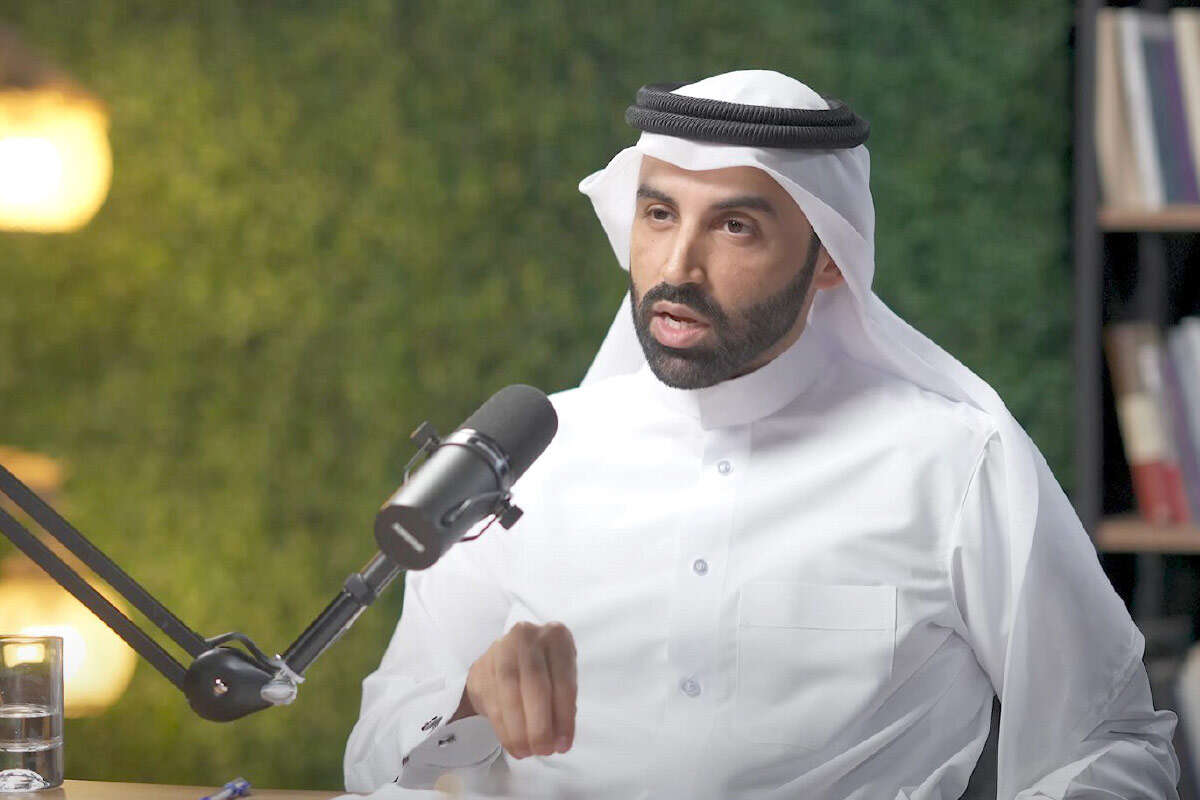
In other words, alongside the understanding in the Gulf about the danger Iran poses to regional security and stability, another trend is emerging: voices in the Middle East warning against Israeli regional hegemony after the Iranian regime is removed from the stage. That position is heard not only in Qatar but also among senior Saudis such as Prince Turki al-Faisal, the former intelligence chief.
In an interview with CNN this month, the Saudi prince argued: "In the region we are dealing with apocalyptic agendas. One is that of Greater Israel, which Netanyahu and other Israeli officials have spoken about. Israel wants to expand from the Nile to the Euphrates. The second agenda is the Iranian one, the return of the imam who disappeared centuries ago and will return. There is also a third agenda, Christian Zionist, which wants to see the return of the messiah. We [the Arab states] are caught in the middle of those agendas, which want to expand their vision onto us. Saudi Arabia is working with its allies in the Gulf to put an end to all this bloodshed."
Addiction
Back to Hamas. Fourteen days after the outbreak of the war, the terrorist organization was forced, as if by demonic compulsion, to call on Tehran to halt the launches at neighboring states. Apparently this came following Qatari pressure. Even so, the day before, the "military wing," the Izz ad-Din al-Qassam Brigades, had praised the Iranian regime on the occasion of Quds Day, observed each year as a display of delegitimization against the State of Israel. Moreover, a few days after voicing opposition to the attacks, the wing issued another statement. "We again call on all the peoples of our nation to stand united against our real enemy," it said, "and to act together for our central goals, foremost among them the liberation of Palestine."
This double language appeared to reflect Hamas' internal tension. On one side stands the camp identified with the Iranian axis, led by Khalil al-Hayya and Zaher Jabarin. These figures, who are in direct contact with the "Palestine Corps" in the Quds Force of the Islamic Revolutionary Guard Corps, believe the alliance with the Islamic republic must be held onto tightly. If the odds of the regime's collapse were doubtful from the outset, why not stick with the familiar alliance? That approach, as the military wing's statements suggest, is backed by Hamas' leaders in Gaza, Izz ad-Din al-Haddad and Ali al-Amoudi. After all, they need enormous sums of money to continue rebuilding their strength.
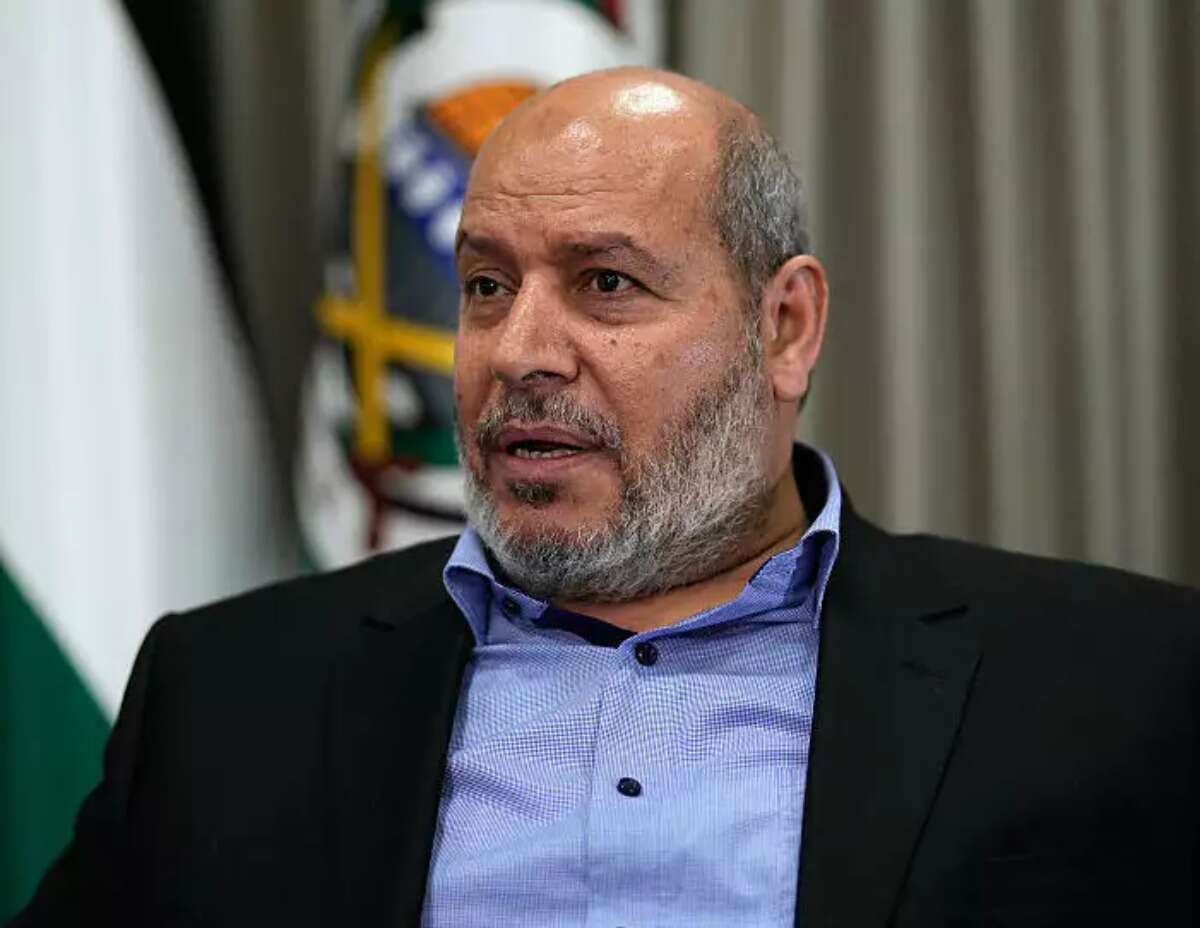
On the other side stands the camp identified with the Muslim Brotherhood axis in Qatar and Turkey. It is led by Khaled Mashaal and Mousa Abu Marzouk. This camp enjoys more support among Hamas branches in Judea and Samaria and in the wider diaspora. Within its ranks, criticism is mounting of the "Sinwar current," which pinned its hopes on members of the Iranian axis and launched the Oct. 7 massacre on the assumption that they would join in with full force. As is well known, that reliance led to a strategic error from the terrorist organization's perspective. Hamas in Gaza lost territory to Israel, as well as many of its capabilities, including in its rocket array, its underground tunnels and countless senior figures who were killed. In short, over the long term Hamas only lost from the gamble.
In any case, the internal tension between the camps has long been causing repeated delays in choosing Hamas' next leader. After the killings of Ismail Haniyeh in Tehran and Yahya Sinwar in Rafah, Hamas set up a five-member leadership council to prevent a vacuum at the top. The council includes five senior figures: Shura Council head Mohammed Darwish, acting Gaza bureau chief Khalil al-Hayya, diaspora leader Khaled Mashaal, the head of Hamas' terrorist operations portfolio in Judea and Samaria, Zaher Jabarin, and Gaza bureau member Nizar Awadallah. Over time it became clear that the council was pulling in different directions. Mashaal wants an artificial solution to the question of weapons in Gaza, one that would not truly bring about demilitarization but would increase pressure on Israel to withdraw. Other figures are unwilling even to hear of it.
Despite the tension between the organization and the Qatari government, it is highly doubtful that Hamas' leadership will soon leave Doha for Erdogan's Turkey. The emirate still sees its ties with the terrorist organization as an asset worth preserving. In Gaza, Hamas survived the war, and so the next round is only a matter of time. Sooner or later, someone will again pick up the phone to the Qatari mediators. Two and a half years after the Oct. 7 massacre, the Israeli side still has not fully severed contact with them. Qatari money is still flowing into Gaza through various projects: a water-wells initiative worth more than $1 million, camps for the displaced, and the distribution of equipment and food.
No one intends to kick the habit. When it comes to Iran as well, it is entirely possible that Qatar will seize the first opportunity to turn itself into a mediator and push Pakistan aside. "At the moment we are not involved in mediation efforts," a Qatari diplomat claimed this week.
Even so, it was possible to detect that Doha was not ruling out the option outright. One of the emirate's in-house commentators even boasted about American praise for "the important role Qatar played in the Gaza talks." Moreover, the return of envoy Steven Witkoff and adviser Jared Kushner, two senior Americans who maintain close ties with Doha, hinted at what may be coming.
In the end, Doha does not want the Iranian regime to collapse, aggressive though it may be. A revolution that brought a pro-Western government to power would indeed dismantle the "axis of resistance" in the Middle East, but it would also weaken the standing of the Gulf emirate. When there are no wars and no regional crises, there is no need for dubious mediation services. Qatar is sitting on the branch of the Islamic republic, and it has no intention of sawing it off. Besides, a sanctions-free regime would very quickly become its main competitor in the gas market. The scenario that seems to appeal more to Qatar's rulers is a regime that is weak, tyrannical and isolated. The status quo works in their favor.


