Friday Mar 27, 2026
NEWSLETTER
www.israelhayom.com
  • Home
  • News
    • Israel
    • Israel at War
    • Middle East
    • United States
  • Opinions
  • Jewish World
    • Archaeology
    • Antisemitism
  • Lifestyle
    • Food
    • Travel
    • Fashion
    • Culture
  • Magazine
    • Feature
    • Analysis
    • Explainer
  • In Memoriam
www.israelhayom.com
  • Home
  • News
    • Israel
    • Israel at War
    • Middle East
    • United States
  • Opinions
  • Jewish World
    • Archaeology
    • Antisemitism
  • Lifestyle
    • Food
    • Travel
    • Fashion
    • Culture
  • Magazine
    • Feature
    • Analysis
    • Explainer
  • In Memoriam
www.israelhayom.com
Home Explainer

Why Iran's struck nuclear sites matter

Israel attacked the heavy water facility in Arak and a plant in Ardakan. The reactor in Arak, which was also struck in June, is capable of producing weapons-grade plutonium, while the nearby plant in Ardakan produces "yellowcake," the raw material used in the uranium enrichment process. Iran said no casualties were reported and no radioactive leaks were detected at either site.

by  Dudi Kogan
Published on  03-27-2026 20:33
Last modified: 03-27-2026 20:33
Why Iran's struck nuclear sites matter

The heavy water facility in Arak. Photo: AFP

Share on FacebookShare on Twitter

The heavy water facility in Khondab, near Arak, and a yellowcake production plant in Ardakan were attacked by Israel Friday, according to reports on social media and official statements from Iranian authorities. The Arak facility is part of the nuclear reactor complex that was already damaged in Israeli strikes during the "12-Day War." The yellowcake plant is located about 35 kilometers (22 miles) north of the city of Ardakan, in Yazd province.

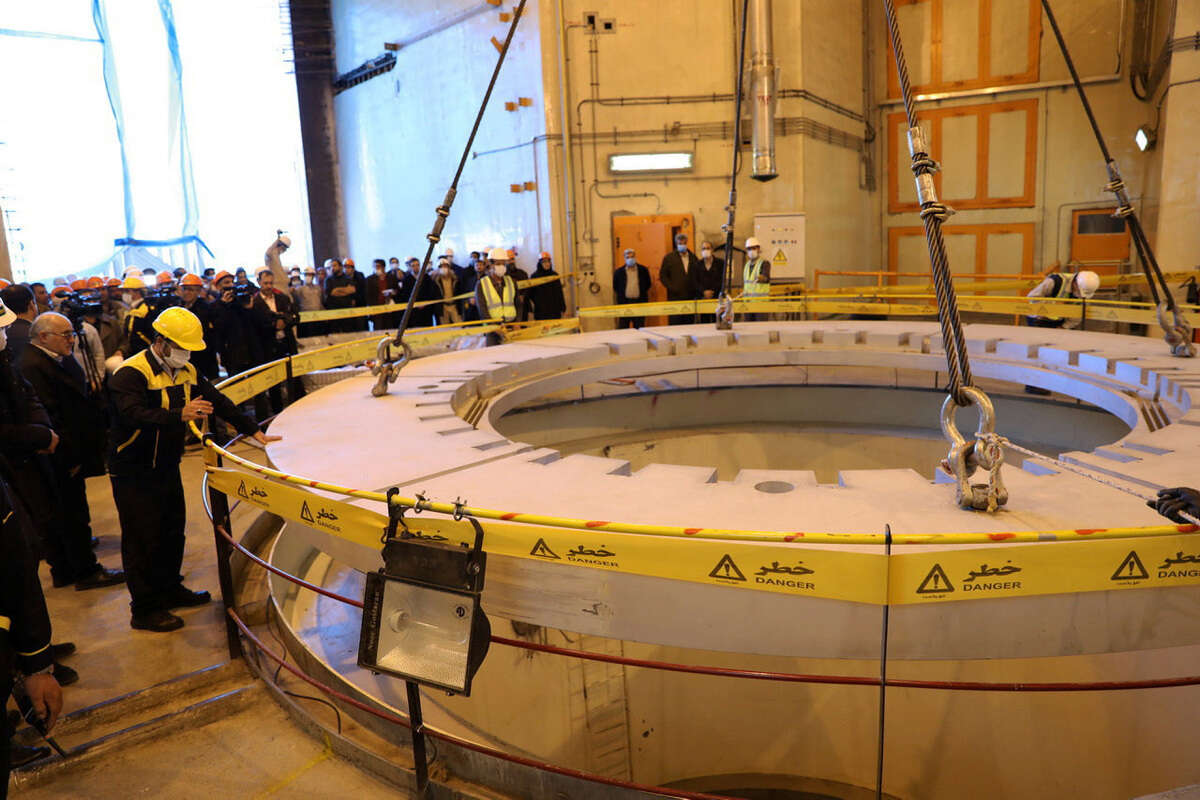
At the center of the Khondab facility, near Arak, is a heavy water reactor located about 250 kilometers (155 miles) southwest of Tehran. The reactor can be used to produce plutonium of a grade sufficient for a nuclear weapon, an alternative path to a bomb that does not require uranium enrichment, similar to reactors in Syria and Iraq that were attacked by Israel. Iran has said the reactor is used for research and for producing isotopes for medical purposes.

Under the 2015 nuclear agreement, Iran committed to redesigning the reactor and filling its core with concrete so it could not be used for military purposes. But it was later reported that Tehran had worked to preserve the option of returning it to its original design. The reactor was attacked during the war in June, and satellite images since then have shown major damage to its dome.

According to Iranian media, it was attacked today in two waves. Authorities said no casualties were reported and that no dangerous radiation was detected in the area.
מפעל המים הכבדים באראק , רויטרס
Media personnel and senior regime officials at the heavy water plant in Arak. Photo: Reuters

The Ardakan plant, named after nuclear scientist Dariush Rezaeinejad, who was assassinated in Tehran in 2011, is located about 35 kilometers (22 miles) north of the city of Ardakan in Yazd province. The facility processes uranium ore mined at the nearby Saghand mine and produces yellowcake, a raw uranium powder that serves as an intermediate stage in the enrichment process. The powder is then converted into gas that is used as feedstock for uranium-enrichment centrifuges. According to the International Atomic Energy Agency, the plant has a production capacity of about 50 tons of uranium a year.

Unlike the Khondab facility, Ardakan was not attacked during the June 2025 war. Iranian authorities said no casualties were reported and that no radioactive material had leaked outside the compound.

Strikes on the steel industry

Earlier in the evening, Iran's largest steel plants were attacked, including the main complex of Mobarakeh Steel in Isfahan and another plant in Ahvaz. At the same time, a quarry belonging to a cement plant in Firuzabad was also attacked. Iranian authorities reported three people killed and four wounded.
אתר הרס באיראן אחרי תקיפה של חיל האוויר , AP
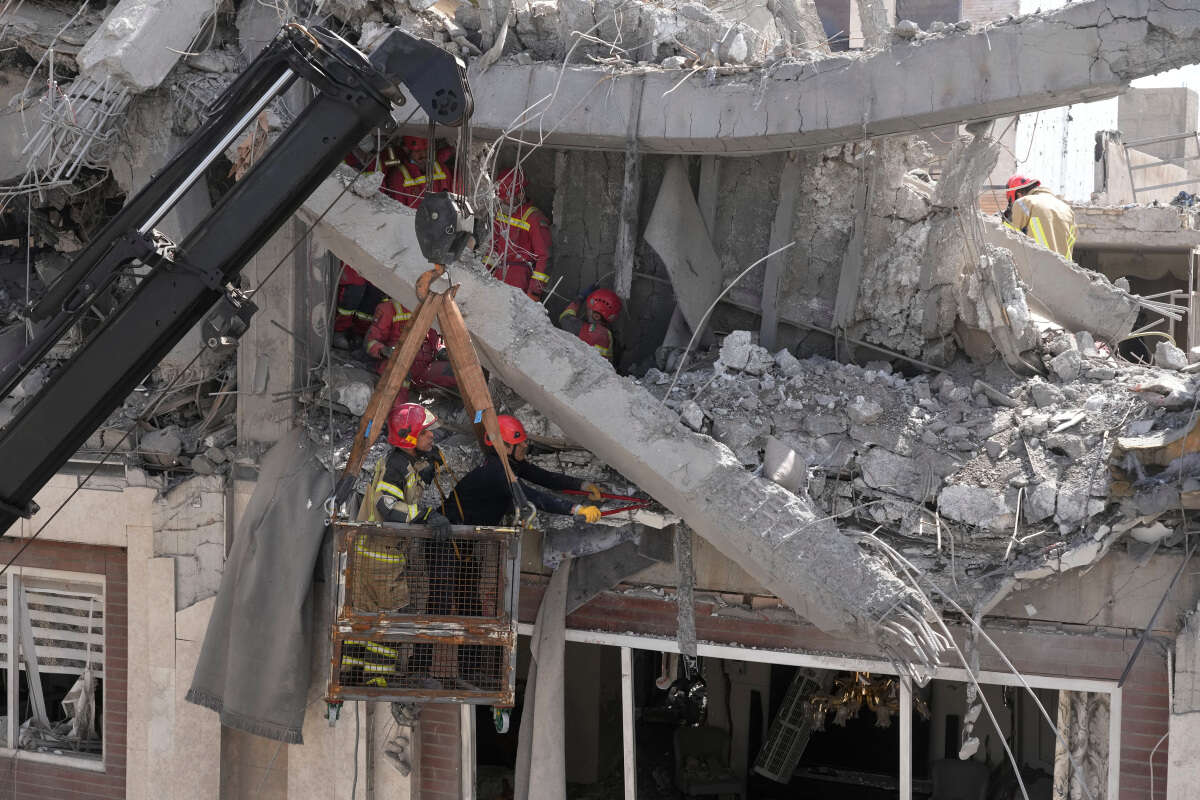
Destruction in Iran after an Israeli Air Force strike. Photo: AP

According to the Fars News Agency, the strike on the Mobarakeh plant targeted a power station and a steel production line. The security commissioner of Isfahan province said one worker was killed and two were wounded, adding that "the attack was carried out while the plant was not closed and workers were at their posts."

It is the largest steel company in the Middle East and North Africa, according to the US Treasury Department, and operates seven industrial sites across Iran. The largest of them is the complex attacked today in Isfahan. The company is responsible for about 1% of Iran's GDP and more than half of the country's steel production.
רשימת המטרות לתגובה שפרסמו האיראנים בעקבות המתקפה על מפעלי הפלדה , רשתות ערביות
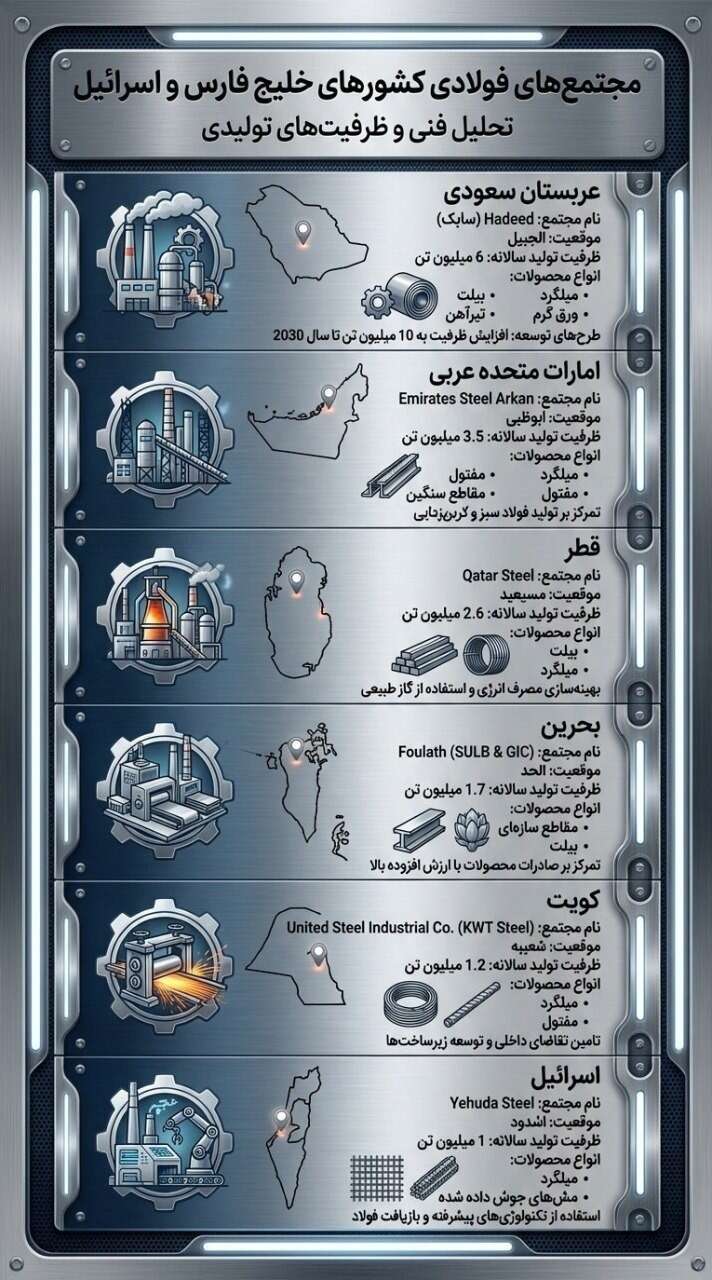
The list of targets for retaliation published by the Iranians following the attack on the steel plants

Iran threatens attacks on similar plants in the Gulf

According to Iranian media, company warehouses were hit at the Khuzestan steel plant in Ahvaz. It is Iran's second-largest steel producer after Mobarakeh. No casualties were reported.

The military commissioner of Fars province said a quarry belonging to a cement plant in Firuzabad was attacked around noon. Two workers were killed and two were wounded. The commissioner said it was a "non-military area" used by civilian workers.

In response to the strikes, the Tasnim News Agency, which is close to the Islamic Revolutionary Guard Corps, reported and published a list of targets for retaliatory attacks: steel plants in Israel, Saudi Arabia, the United Arab Emirates, Qatar, Bahrain and Kuwait. The Revolutionary Guards also warned all employees at industrial companies with American ownership in the region to evacuate their workplaces "immediately."

Tags: Iran war

Related Posts

This is Iran's propaganda machine

This is Iran's propaganda machine

by Lidor Sultan

A new report reveals Tehran combines a narrative of victory with one of victimhood to shape public opinion. The use...

'There will be more rounds with Iran'AFP

This is Israel's multilayered air defense system

by ILH Staff

Why the long distance from Iran is actually an advantage for Israeli air defense, and how does Israel deals with...

The American-Israeli plan: Chaos will push for a coup against Revolutionary GuardsReuters

The American-Israeli plan: Chaos will push for a coup against Revolutionary Guards

by Danny Zaken

Washington has been engaging Kurdish fighters, Baloch operatives and opposition factions inside Iran as part of a coordinated push toward...

Menu

Analysis 

Archaeology

Blogpost

Business & Finance

Culture

Exclusive

Explainer

Environment


Features

Health

In Brief

Jewish World

Judea and Samaria

Lifestyle

Cyber & Internet

Sports


Diplomacy 

Iran & The Gulf

Gaza Strip

Politics

Shopping

Terms of use

Privacy Policy

Submissions

Contact Us

About Us

The first issue of Israel Hayom appeared on July 30, 2007. Israel Hayom was founded on the belief that the Israeli public deserves better, more balanced and more accurate journalism. Journalism that speaks, not shouts. Journalism of a different kind. And free of charge.

All rights reserved to Israel Hayom

Hosted by sPD.co.il

  • Home
  • News
    • Israel at War
    • Israel
    • United States
    • Middle East
    • Sports
  • Opinions
  • Jewish World
    • Archaeology
    • Antisemitism
  • Lifestyle
    • Food
    • Travel
    • Fashion
    • Culture
  • Magazine
    • Feature
    • Analysis
    • Explainer
    • Environment & Wildlife
    • Health & Wellness
  • In Memoriam
  • Subscribe to Newsletter
  • Submit your opinion
  • Terms and conditions

All rights reserved to Israel Hayom

Hosted by sPD.co.il

Newsletter

[contact-form-7 id=”508379″ html_id=”isrh_form_Newsletter_en” title=”newsletter_subscribe”]

  • Home
  • News
    • Israel at War
    • Israel
    • United States
    • Middle East
    • Sports
  • Opinions
  • Jewish World
    • Archaeology
    • Antisemitism
  • Lifestyle
    • Food
    • Travel
    • Fashion
    • Culture
  • Magazine
    • Feature
    • Analysis
    • Explainer
    • Environment & Wildlife
    • Health & Wellness
  • In Memoriam
  • Subscribe to Newsletter
  • Submit your opinion
  • Terms and conditions

All rights reserved to Israel Hayom

Hosted by sPD.co.il