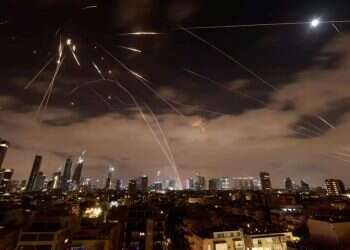
Thousands of soldiers from the US Army's 82nd Airborne Division have begun arriving in the Middle East, Reuters reported, citing two US officials. According to the sources, the force includes the division headquarters, one parachute brigade and logistics and support units. The division, based at Fort Bragg in North Carolina, is joining about 2,500 Marines who arrived in the region over the weekend, as well as thousands of sailors and special operations troops deployed there in recent weeks.
On Friday, US Central Command announced that the amphibious assault ship Tripoli had arrived in its area of responsibility, carrying the 31st Marine Expeditionary Unit, a force of about 3,500 Marines and sailors, including 2,200 Marines, which departed its base in Okinawa, Japan, on March 11. Tripoli is carrying F-35 fighter jets, attack helicopters and transport helicopters. It is operating alongside the support ship New Orleans, which is equipped with amphibious landing capabilities.
U.S. Sailors and Marines aboard USS Tripoli (LHA 7) arrived in the U.S. Central Command area of responsibility, March 27. The America-class amphibious assault ship serves as the flagship for the Tripoli Amphibious Ready Group / 31st Marine Expeditionary Unit composed of about… pic.twitter.com/JFWiPBbkd2
— U.S. Central Command (@CENTCOM) March 28, 2026
The amphibious assault ship Boxer is also on its way to the region, carrying the 11th Marine Expeditionary Unit, a force of about 4,000 Marines and sailors, including 2,500 Marines, which left San Diego on March 20, three weeks ahead of schedule. It is carrying F-35 fighter jets, attack helicopters and transport helicopters, and is accompanied by two support ships equipped for amphibious landings.

On Sunday, The New York Times reported that hundreds of special operations troops, including Army Rangers and Navy SEALs, had arrived in the Middle East and joined forces already in the region. On Thursday, The Wall Street Journal added that the Pentagon was considering sending up to 10,000 additional ground troops, and if Trump approves, the United States would have more than 17,000 ground troops on Iran's doorstep.
The 82nd Airborne Division is one of the US Army's elite infantry units, with a combat legacy stretching from Normandy to the recent wars in Iraq and Afghanistan. It is part of the army's rapid-response force and can deploy within 18 hours of receiving orders. Its primary mission is to parachute into enemy territory, seize airfields and strategic infrastructure, and open the battlefield for forces that follow.
The "oil island"
No decision has yet been made on deploying ground forces inside Iran, but the rapid arrival of troops opens four main possible scenarios for the Trump administration: seizing Kharg Island, breaking the Iranian blockade of the strait, carrying out a military extraction of Iran's enriched uranium stockpile, and a final wave of strikes targeting energy and water infrastructure.
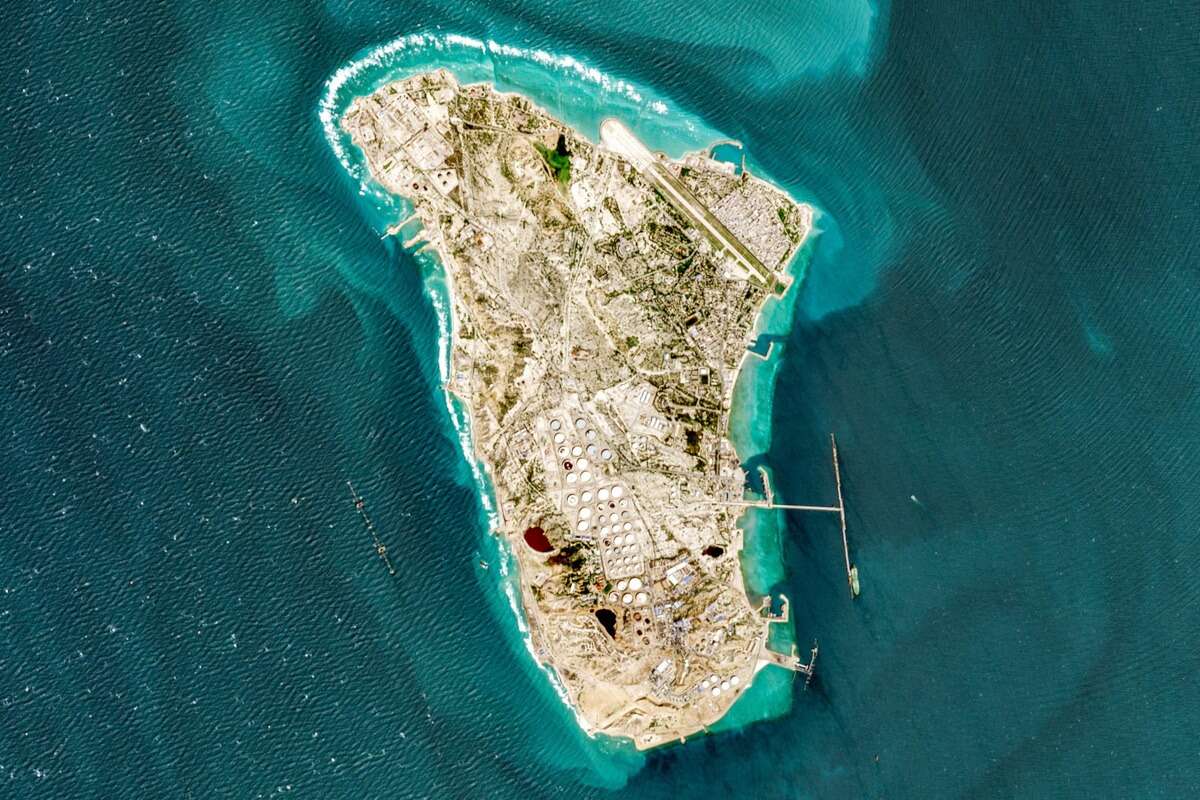
Kharg Island, about 25 kilometers (15.5 miles) off the Iranian coast, is effectively Iran's oil artery, responsible for about 90% of its oil exports. Seizing it could put a gun to the head of the Iranian economy, but it would not immediately reopen the Strait of Hormuz. Beyond mines, air defenses and Iranian ground forces, US troops would also have to contend with sustained fire from mainland Iran and the logistical challenge of supplying a position sitting directly under Iran's nose.
A more complex scenario involves directly breaking the Iranian blockade of the strait. Iran holds seven strategic islands in the strait and the Persian Gulf, allowing it to threaten shipping even after most of its navy has been destroyed, by using a combination of drones, anti-ship missiles, unmanned vessels and naval mines.
Under this operational logic, capturing the islands and seizing key points along the coastline would make it possible to destroy launch sites and reopen the strait. The central challenge is that Iran's Gulf coastline stretches across hundreds of kilometers of mountainous, difficult terrain, and Iran retains long-range missiles and drones capable of striking from deep inside the country even after the coast is captured.
Beyond restoring freedom of navigation in the Strait of Hormuz, there is another issue being cited as one that must be addressed before any declaration that the war is over: the fate of Iran's enriched uranium stockpile. Between 440 and 460 kilograms of uranium enriched to 60%, enough after further enrichment for about 12 nuclear warheads, are buried mostly deep inside an underground tunnel complex in Isfahan, whose entrances were blocked in US strikes, though the facility itself was barely damaged.
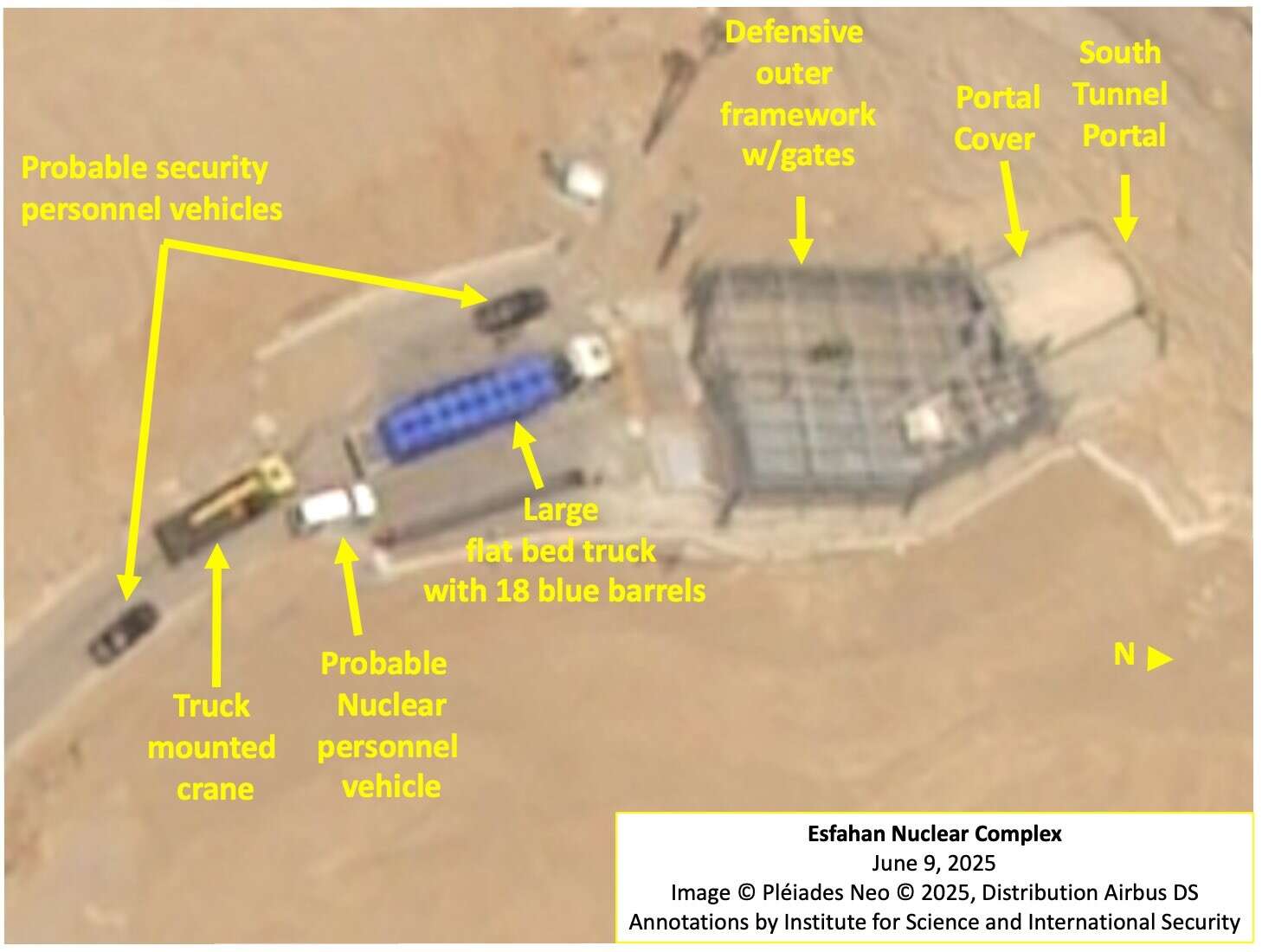
According to the reports, the Trump administration is examining the possibility of a military extraction of the material, but this is far from a simple mission. It would require inserting hundreds if not thousands of troops deep inside Iranian territory and a complex engineering operation involving radioactive materials, all under Iranian fire.
The threat Trump issued in a post on Truth Social echoes the deadline he set for April 6: the US will end what he calls its "pleasant stay" in Iran with a devastating wave of strikes that would include all power stations, oil wells, Kharg Island and "maybe" also desalination facilities.
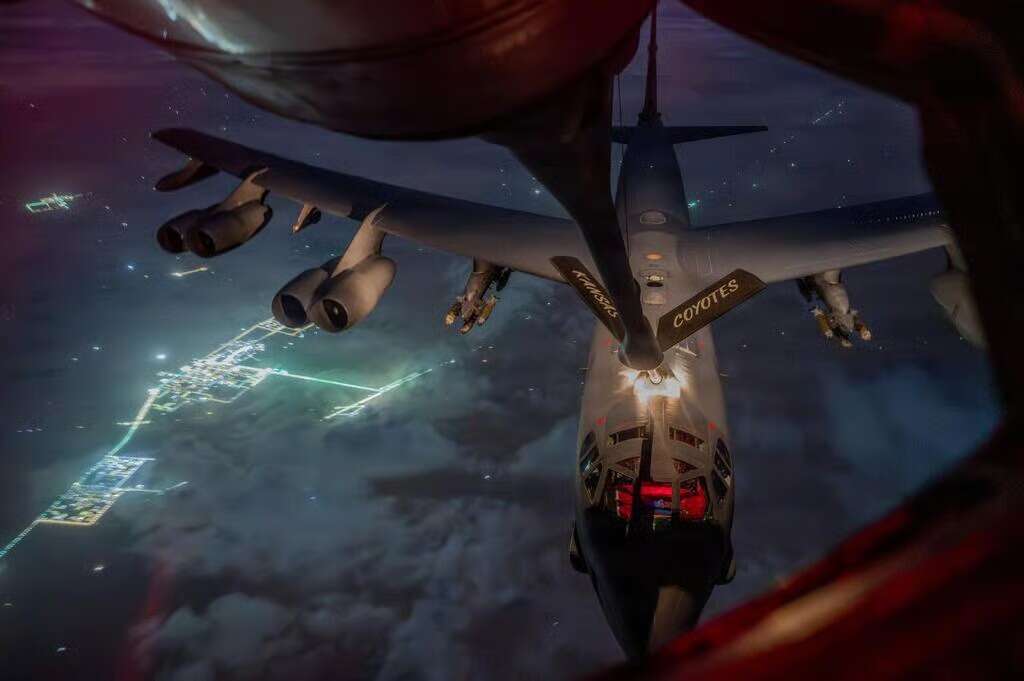
But this is already the second deadline Trump has postponed. First he gave Tehran 48 hours, then five days, and now 10 more, a fact suggesting that he too is wary of the move, even though it is an option that does not require any ground forces inside Iran. It is doubtful whether such a wave of strikes would reopen the strait, but it could lead to the collapse of the Iranian state, not only the regime, and trigger a devastating wave of retaliation across the Gulf.
The Iranian threat
Iran has been threatening every few hours to turn the Gulf's coasts and islands into a "graveyard" for US soldiers. But beyond the bravado, there is a real possibility that American escalation would trigger an Iranian counterstrike that would weigh on any decision by the administration. The Gulf states' extreme dependence on oil, gas and desalination facilities makes them especially vulnerable. Qatar, Kuwait and Bahrain rely on desalination for about 90% of their drinking water, Saudi Arabia for about 70%, and the United Arab Emirates for about 80%.
For example, a strike on regional gas facilities, such as Qatar's Ras Laffan gas complex, could also affect almost all Qatari exports for years to come. In that situation, the finishing move could become the opening move in a new war.
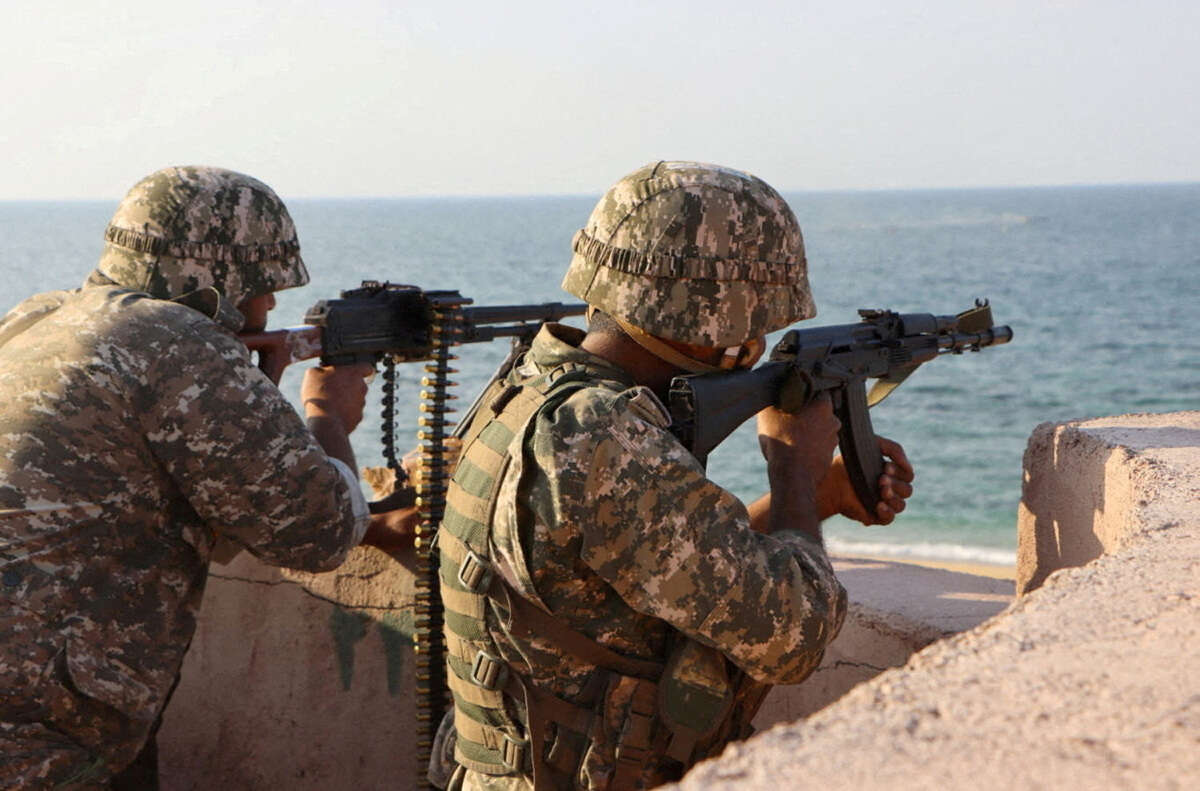
An AP-NORC poll published this week found that 60% of Americans believe the military action has already "gone too far," even before any discussion of ground troops. Some 62% oppose such a deployment, reflecting the impact of the scars of the wars in Iraq and Afghanistan on the American public. For Trump, who promised to end the "forever wars" waged by previous administrations, any decision to deploy ground troops would carry heavy political weight, especially given that Congress has yet to approve the military action.
The American consumer is already feeling the war at the pump, and a ground operation could also lead to troop casualties. Images of coffins draped in the Stars and Stripes could be devastating for Republicans in the November midterm elections.