


Regional developments, during which the US and Iran announced that the two countries are entering a two-week ceasefire, immediately raise the question of when flights and Ben Gurion Airport will return to normal operations.
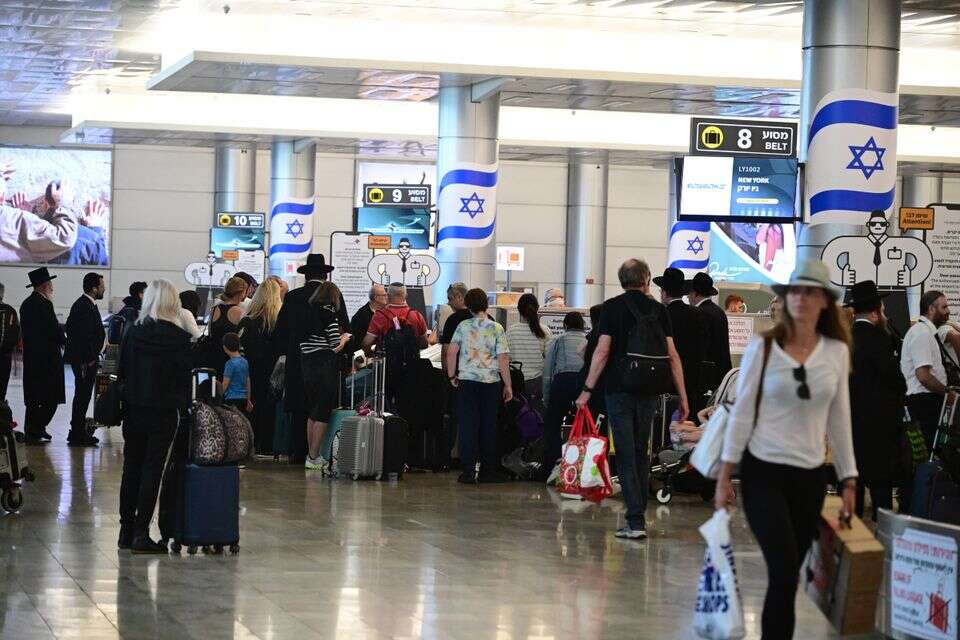
First, as long as Home Front Command guidelines on civilian protection policy remain unchanged, no change will be announced. There must first be a change in Home Front Command instructions following a halt in the fire, and only then is Ben Gurion Airport expected to reopen for normal operations. As long as the home front remains under missile threat and restrictions on gatherings are in place, Ben Gurion Airport is no exception, especially given that it is one of the most heavily targeted locations.
What happened in Operation Rising Lion?
Operation Rising Lion, the previous major Israeli operation against Iran, ended after 12 days. On the very day the ceasefire took effect, IDF Home Front Command authorized a full return to routine, and only afterward was the directive issued at Ben Gurion Airport that normal operations would resume and Israeli airlines would return to operating a full flight schedule.
Once IDF Home Front Command announces easing measures, Ben Gurion Airport will reopen immediately. Limits on occupancy at the airport will be lifted. The number of passengers on each outbound flight, currently capped at 100, as well as the number of takeoffs and landings permitted each hour, are expected to return to normal. Israeli airlines will then also be able to depart Ben Gurion Airport with full planes.
The airlines that resumed flights within a day or two of the ceasefire were Blue Bird, TUS, flydubai, Etihad, HiSky, TAROM, FlyOne and Cyprus Airways. But some airlines took what they saw as a safety buffer. These included Aegean, Air Europa and Air France, which returned two weeks after the ceasefire. United resumed flights after a month, while Wizz Air and Lufthansa returned gradually after a month and a half. British Airways returned only after four months. In other words, even if the restrictions are lifted, we are unlikely to see the immediate and full return of all airlines. Some carriers will want to see that calm is maintained before updating their flight schedules to the region.
Why is this time different?
This time, the ceasefire is only for two weeks, and it is unclear whether calm will hold at the end of that period or whether Iranian missile fire will resume. airlines that already postponed their return to Israel to a later date are unlikely to bring it forward. Second, Ben Gurion Airport is being used by the US military, including US refueling aircraft that are taking up space needed for civilian planes. For airlines to return, those US military aircraft will have to make room.


