At the start of the war, Israel's Energy Ministry ordered the shutdown of the Leviathan and Karish gas platforms, on the recommendation of the IDF and the Defense Ministry. They remained closed for 30 and 40 days, respectively, and the economic damage caused by their shutdown is estimated at 1.5 billion shekels.
A bit of history. The challenge of defending Israel's economic waters, and in practice its gas platforms, is not new. It has accompanied the defense and energy ministries, the Israel Defense Forces, the Israeli Navy and the companies operating the gas fields for many years. Many billions have been invested in protecting these assets: ships were acquired for this purpose, including Sa'ar 6 corvettes, intelligence and interception capabilities were assigned to the mission, and the companies themselves were also required to make various investments.
All of this was meant to enable the platforms to continue operating even under threat, in order to ensure full continuity in Israel's energy sector. In practice, immediately after the Hamas terrorist attack on October 7, the Energy Ministry, acting on instructions from the Defense Ministry and the IDF, ordered the shutdown of the Tamar platform, located about 30 kilometers (19 miles) west of Ashkelon. During the 12-day war with Iran in June last year, the ministry ordered the shutdown of the Leviathan and Karish platforms.
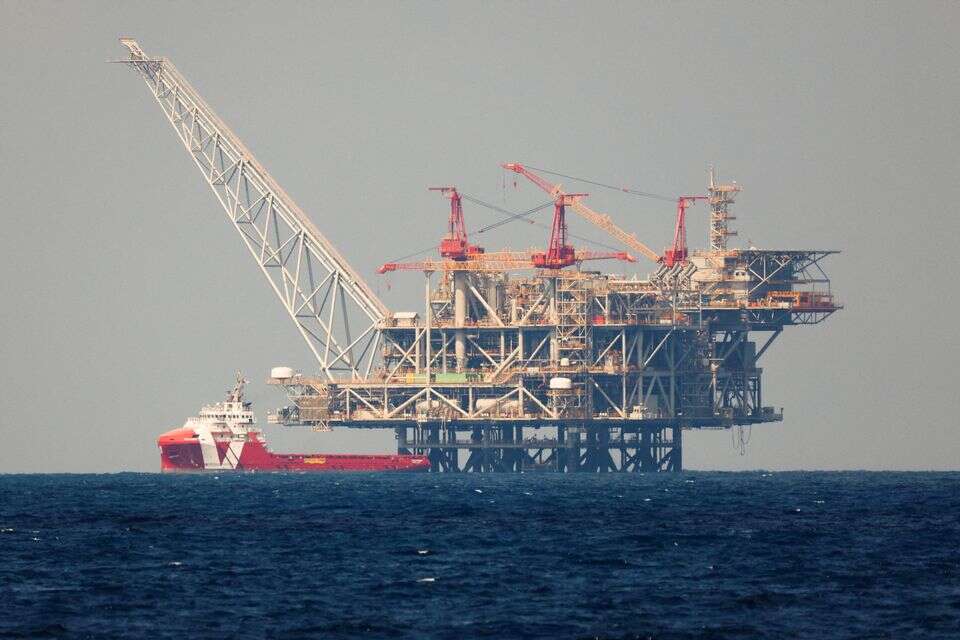
A similar instruction was issued on February 28 this year, immediately after the start of Operation Roar of the Lion. As noted, the Leviathan platform, located about 10 kilometers (6 miles) west of Hadera, resumed operations after 30 days, while Karish, located about 80 kilometers (50 miles) west of Nahariya, resumed operations after 40 days. The reason for the gap between the decisions regarding the two platforms is a matter of dispute. Government ministries say it stems from the level of risk to each platform as a result of the ability to defend it, as well as internal calculations related to maintaining continuous activity in the energy sector. Other sources say the explanation is somewhat different and reaches the highest levels: Leviathan, like Tamar, is operated by the US company Chevron, while Karish is operated by the British company Energean.
Shutting down gas platforms has three dimensions. The first is operational and engineering: the damage caused to systems by shutdown and restart. The second is economic: the losses sustained by the companies, and by the broader economy, as a result of the shutdown. The third is perceptual and psychological: the damage caused by halting a central component of the energy sector, meaning the enemy's success in harming the full functioning of state systems during wartime.
Chen Herzog, chief economist at the BDO accounting firm, wrote in a document at the end of March that the cost to the economy from shutting down two of Israel's three gas reservoirs was estimated at 1.5 billion shekels. That figure includes a 22% increase in Israel's monthly electricity costs due to greater use of coal and diesel, about 600 million shekels; a loss of state revenue from royalties and taxes that would have been collected from natural gas exports, about 400 million shekels; and harm to gas companies' profits, leading in turn to a decline in gross domestic product, about 500 million shekels.

Global impact
In addition, the reduction in exports worsened the global gas shortage, which is affected primarily by the crisis around the Strait of Hormuz. That translated into higher gas prices worldwide and harm to global energy resilience. Security officials attribute the directive to halt activity on the platforms to the various threats involved. After October 7 it was Hamas, and over the past year it has been Hezbollah, the Lebanese terrorist organization, and Iran.
These threats include everything from shore-to-sea missiles to suicide drones. According to these officials, there is a vast difference between striking a "cold" platform and striking a "hot" one. In the first case, at most, steel structures would be damaged and could be repaired. In the second, the entire platform could explode and never operate again, not to mention the enormous psychological blow such an event would inflict on Israel. "There was no hair-trigger response," they say. "We could have shut everything down for the entire period, but at every moment we kept some platforms operating in order to preserve continuity in the energy sector, and even when the platforms were shut down we continued to protect them out of the understanding that they are a vital asset."
It is possible to understand the concern that led to the decision, and it is also possible to argue with it from both perspectives: continuity of function and security. The energy sector did continue operating, but the data published by Herzog show it was certainly harmed. Exports, for example, to Egypt and Jordan were halted completely during the war, and the country was forced to use gas substitutes that are more expensive and more polluting.
On the security side, a defensive envelope was built based on an analysis of the threats, which have not changed and in recent years have only diminished as a result of the damage done to the capabilities of Hezbollah and Iran. Evidence of that can be found in statements issued by the Israel Defense Forces Spokesperson's Unit since October 7.
A brief search under the phrase "shore-to-sea missiles" turned up dozens of such statements. One example is a June 1, 2025 announcement about a strike on shore-to-sea missiles in the Latakia area of Syria, which "posed a threat to Israeli and international freedom of navigation." Another is a November 25, 2024 announcement about a strike on a "headquarters used by a shore-to-sea missile unit." Another is a September 28, 2024 announcement about the destruction of "Hezbollah shore-to-sea missile storage facilities hidden in underground infrastructure beneath six different civilian buildings in the heart of the Dahiyeh in Beirut," which "threatened international shipping and trade routes and the strategic assets of the State of Israel and the region." There is additional evidence of the destruction of enemy capabilities, as well as interception capabilities. For example, in an August 2, 2025 announcement, the military reported a "successful interception test using the LARD system," which is part of the Barak Magen defense system installed on Sa'ar 6 ships and is capable of dealing with "a wide range of threats, including aircraft, unmanned aerial vehicles, cruise missiles, steep-trajectory threats, shore-to-sea missiles and more." And there is more.

But all of these many successes, which were published in official statements, did not change the decision to order the shutdown of the platforms in the current campaign or in previous ones. Sources familiar with the field question the logic, especially when other facilities, from the oil refineries in Haifa to desalination plants, continued operating as usual even though the threat to some of them was greater. The refineries in Haifa were even hit during the war.
Accordingly, they ask whether this is a reality that will become routine. Shutting down the platforms for such prolonged periods at such short intervals has enormous economic implications for the companies, and those implications must be taken into account if rounds of fighting with Iran and Hezbollah return every few months. As noted, those implications also affect the Israeli economy, given the direct and indirect costs of the shutdown.
One source even raised the theory that a conspiracy lies behind the directive to shut down the platforms: a desire to secure additional budgets in order to procure more assets, mainly warships. Otherwise, he added, there is no way to explain the fact that the Israel Defense Forces is unable to defend a familiar challenge against a familiar threat using the means it acquired for precisely this mission. A security official who was asked about this responded that it was a baseless claim. According to him, the Israeli Navy succeeded in preserving continuity in the energy sector despite the threat, especially compared with other critical systems, for example Ben Gurion Airport, which almost completely ceased functioning.
Responses
The Israel Defense Forces Spokesperson's Unit said: "Situational assessments on this matter are held regularly and frequently together with the Energy Ministry, the National Emergency Authority and the National Security Council. Within that framework, the full range of security considerations is taken into account in order to enable functional continuity while safeguarding the strategic assets of the State of Israel over time. The defense ships operate continuously throughout the fighting and beyond, and ensure protection of the strategic assets of the State of Israel at this time as well."
The Energy Ministry said: "The energy sector functioned flawlessly during the war. Due to the security situation and in accordance with assessments by the defense establishment, some of the platforms were silenced during it. At the same time, the platforms that remained in operation supplied all of the energy sector's needs, and at no point was the State of Israel short of energy."