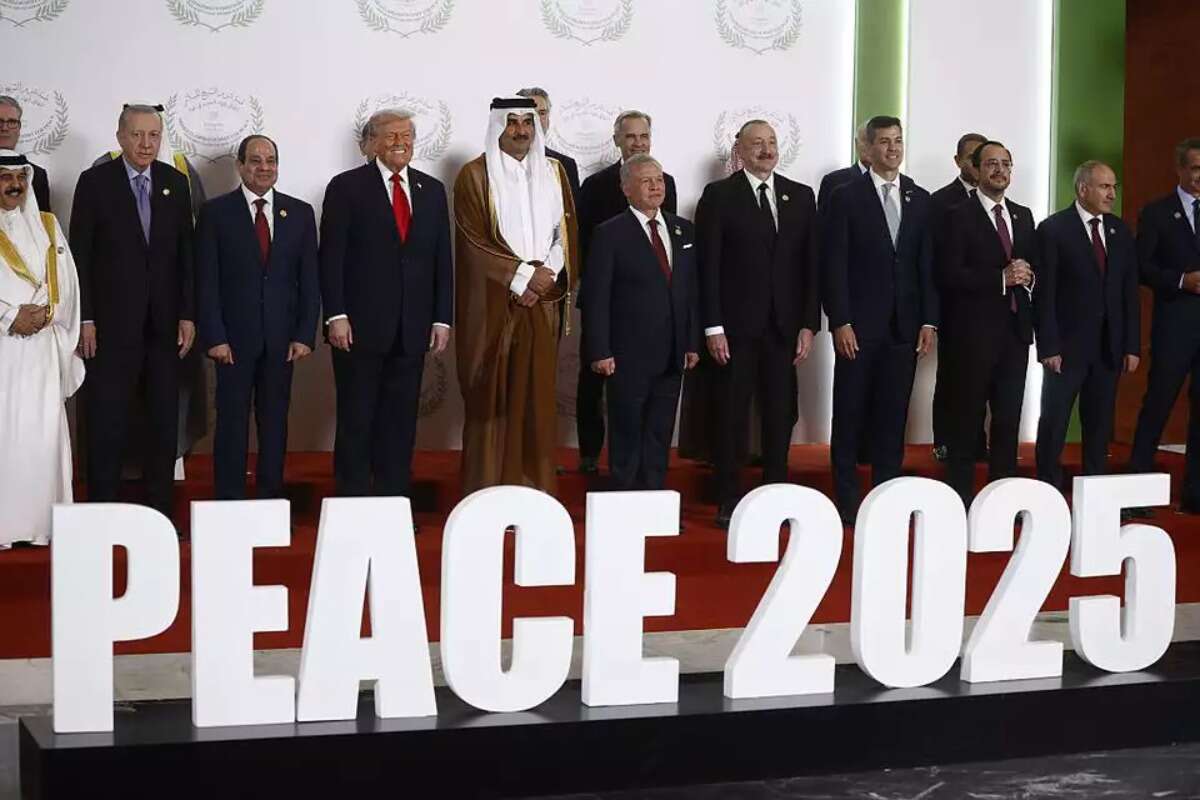
The peace summit in Sharm el-Sheikh was meant to be a major diplomatic event, but it rapidly lost its relevance, despite the participation of nearly all Arab and Western leaders. The reason: the summit excluded the most dominant figure in the conflict, Prime Minister Benjamin Netanyahu. Although he was politely invited by the host, Egyptian President Abdel Fattah el-Sissi, his absence rendered the summit toothless.
Netanyahu's absence — or cancellation, as it was officially described — was expected. The reasons were more about internal coalition dynamics than a fear of shaking hands with Palestinian Authority President Mahmoud Abbas, despite Turkish President Recep Tayyip Erdogan's threat to boycott the summit if Netanyahu showed up.
US President Donald Trump can claim full credit for the summit's only tangible achievement: securing a ceasefire that resulted in the release of hostages, no small accomplishment. Still, it was not a peace agreement, nor even a framework for one. Just a ceasefire, vulnerable to collapse at any moment.
Trump has shown a strong preference for conflict resolution over actual peace agreements. But now he has an opportunity to complete what he started and make a real bid for the Nobel Peace Prize. Walking away from this issue now would be a historic mistake, especially for someone who understands how critical reconciliation between the peoples is. Without it, the cycle of conflict will continue for decades to come.
The Sharm el-Sheikh summit was little more than a publicity event, lacking any real political substance. Neither of the main parties to the conflict was present. There was no framework for an agreement or even a foundation for meaningful negotiations. Nothing to guarantee Israel's security or to ensure the eventual creation of a Palestinian state, regardless of its final configuration.
Israel's leadership, and Netanyahu in particular, must face the public and acknowledge a hard truth: war, even if endless, cannot manage the conflict. It cannot resolve it, and it certainly will not bring lasting security to Israel. Peace, and more importantly, reconciliation, is the only way forward, even if it requires a shift in the natural composition of his governing coalition.
On the Palestinian side, the leadership must move swiftly to send Abbas, now elderly, worn out, and weak, into dignified retirement. A new Palestinian leader must emerge — someone capable of genuinely advancing toward reconciliation and an end to the conflict. This must begin with a single legal system and a single armed force under the Palestinian Authority. Yes, that would likely intensify internal Palestinian strife, but it is a necessary step. Only a unified Palestinian voice can truly negotiate and decide.
At a time when Israel is achieving real security gains and has reshaped the regional landscape, it must now make bold internal decisions, ones that will require historic compromises. To break free of international isolation and fend off war crimes allegations at The Hague, Israel must be willing to pay the price of ending the conflict and relinquishing control over the territories it captured in the 1967 Six-Day War.
Trump remains the only figure who can impose a solution on both sides. And when Arab and Muslim countries are extending a hand to Israel, willing to pay political and financial costs for peace, often more than Israel is, the moment is ripe for bold American leadership. A real peace summit must be convened — not in Sharm el-Sheikh, but in