


For 31 years, peace between Israel and Jordan has been more than a treaty – a system of security and restraint built on vigilance, not illusion. Because that peace works, it now stands in the crosshairs of the Iran–Syria axis, reinforced by Turkey and Qatar. To destabilize the Hashemite Kingdom is to destabilize the region itself; Jordan's steadiness remains the hinge of Middle Eastern stability.
Networks smuggling Captagon also move weapons and explosives, turning crime into a proxy-war corridor financed by Tehran and Damascus – an industry of destabilization along Jordan's northern frontier, where pro-Iranian militias exploit chaos. Amman has moved from passive defense to pre-emptive deterrence: precision strikes deep in Syria destroy drug and weapons sites and intercept infiltrations before they reach Jordanian towns or Israel's border. It is intelligent border warfare – containing fire before it spreads, sovereignty turned into strategy.
In January 2024, a drone attack on Tower 22 killed three US troops, blamed on Iran-backed militias – the same proxies testing Israel and Iraq now probing Jordan. Since then, Amman has built layered air defense with US and Israeli support – Patriots, counter-UAS radars, and shared warning. Tower 22 was more than an attack; it was a strategic shock that pushed Jordan toward integrated deterrence.
Three months later, as Iran launched hundreds of drones and missiles toward Israel, the Royal Jordanian Air Force intercepted several over its skies – an act of pure sovereignty: lawful, limited, decisive. That night's coordination among Amman, Washington, and Jerusalem proved that Jordan's airspace had become a shared shield, not a buffer – a model of necessity and restraint under fire.
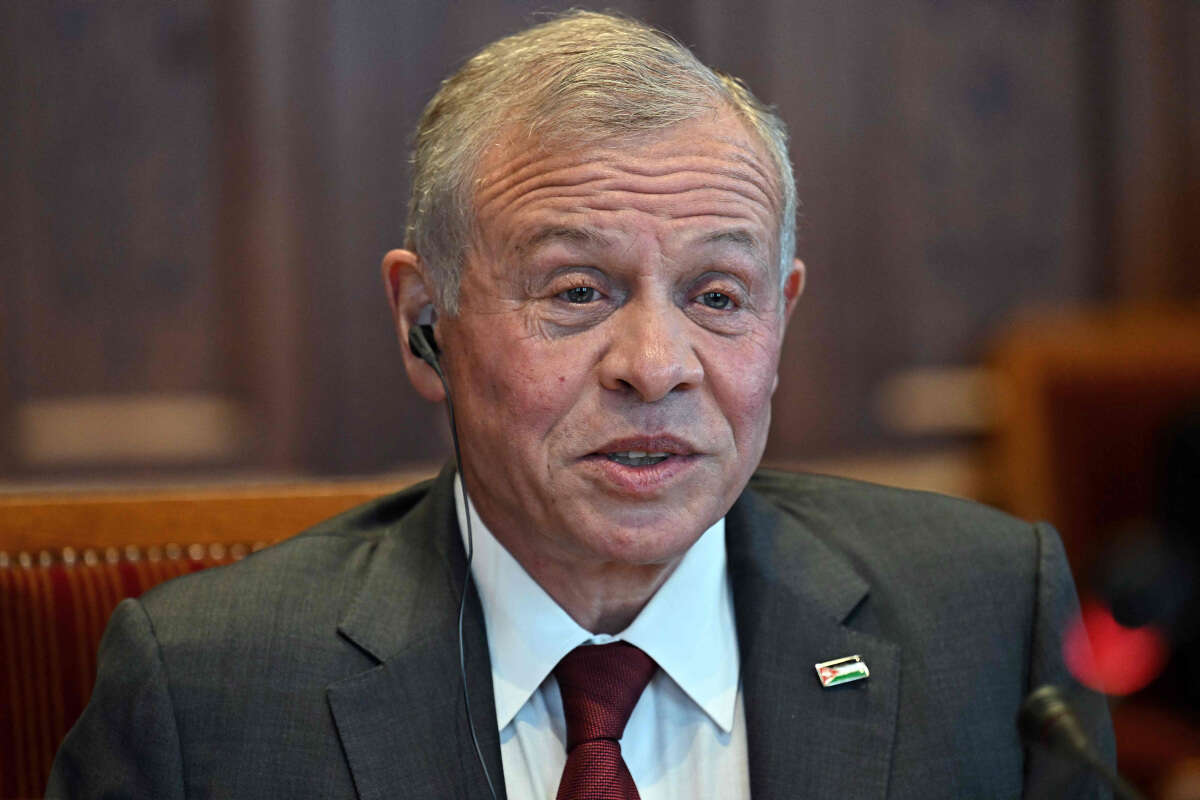
Yet the assault on Jordan is not only kinetic. Intelligence and financial evidence reveal a coordinated campaign by Turkey and Qatar to erode the Hashemite Kingdom from within. Through media, charities, and exile networks, both states fund Islamist movements, foremost the Muslim Brotherhood and Hamas. This soft power turned into a hard weapon – a calculated effort to weaken cohesion, radicalize discourse, and hollow out the monarchy's legitimacy. Sanctions confirm the pattern: OFAC designations in 2023-24 exposed Hamas financiers operating openly in Istanbul and Doha, using humanitarian covers to channel money into affiliated networks across the region. Jordan's April 2025 decision to outlaw the Muslim Brotherhood – following the arrest of a rocket-drone cell trained in Lebanon – was not repression but national defense: a firewall against external radicalization and a pre-emptive move to preserve stability. The international community must see it for what it is – a foreign strategy to collapse a pillar of regional order – and respond accordingly.
Jordan bears a humanitarian burden few nations could sustain. Hosting over 1.3 million Syrian refugees – nearly one in ten citizens – Jordan turned crisis into statecraft through the Jordan Compact with the World Bank, integrating them into the economy through legal work and enterprise. Where elsewhere camps breed militancy, Jordan built resilience: a humanitarian pillar whose restraint under strain reinforces regional security. That achievement is also strategic. Tehran and Damascus have sought to weaponize the refugee crisis – flooding Jordan with human pressure or exploiting camps for recruitment.
Across Jordan's northern border, the Druze community of Sweida has become a stabilizing counterforce. Its "Men of Dignity" movement has resisted corruption, repression, and the Captagon cartels pushing south. By intercepting convoys and defying militias, the Druze indirectly defend Jordan's frontier – a rare convergence of local courage and regional stability. Each truck they stop is one less infiltration into the kingdom.
This is why Jordan matters to Israel. The kingdom is a buffer zone, an early-warning outpost, and a partner in maintaining calm along the Jordan Valley and Jerusalem's holy sites – a role enshrined in the 1994 peace treaty. A stable Jordan keeps Israel's eastern border quiet and forms the hinge of its security architecture.
Israel is equally vital to Jordan. Under the water annex, Israel supplies tens of millions of cubic meters of water yearly – life from cooperation, not charity. Natural gas from Israel's Leviathan field powers Amman's grid; joint "water-for-energy" projects with the UAE have turned geography into strategy. In an age of climate stress and shifting alliances, Israel has become Jordan's most reliable source of water, energy, and deterrence – proof that peace has become infrastructure, measured in cubic meters, megawatts, and minutes of warning.
Long before peace was formalized, the bond was real. In 1970, when Palestinian factions rebelled and Syrian tanks rolled into northern Jordan, Israel moved to deter Damascus. Israeli jets skimmed the border, signaling that the Hashemite monarchy would not fall – and the armor withdrew. Three years later, on the eve of the Yom Kippur War, King Hussein personally warned Golda Meir of the coming attack – a warning lost in the fog of preconceptions. During the war, he sent a token brigade to Syria, quietly coordinated with Israel, preserving Arab appearances without endangering Israeli positions – statesmanship of balance and restraint. Those moments forged a doctrine that endures: Israel's deterrence and Jordan's stability form a single system.
Jordan's security is not a favor Israel grants; it is part of Israel's own defense. And Israel is not Jordan's insurance policy but its partner in survival. Whoever seeks to shake the Hashemite Kingdom will find both nations standing together, as in the past, and as they will again if history calls.
That clarity – proven when Jerusalem sent its jets aloft without hesitation, knowing that Jordan's survival was its own – still endures. If others once more test that frontier – through Syrian chaos, Qatari intrigue, Iranian reach, or Turkish tides – Jerusalem will not stand aside. This truth speaks the same language in other waters; the flags may disguise themselves, but the hands behind the storm are the same, and the stance against it remains unchanged.
Shay Gal is an expert in international politics, crisis management, and strategic communications. He operates globally, focusing on power relations, geopolitical strategy, and public diplomacy, and their impact on policy and decision-making.


