

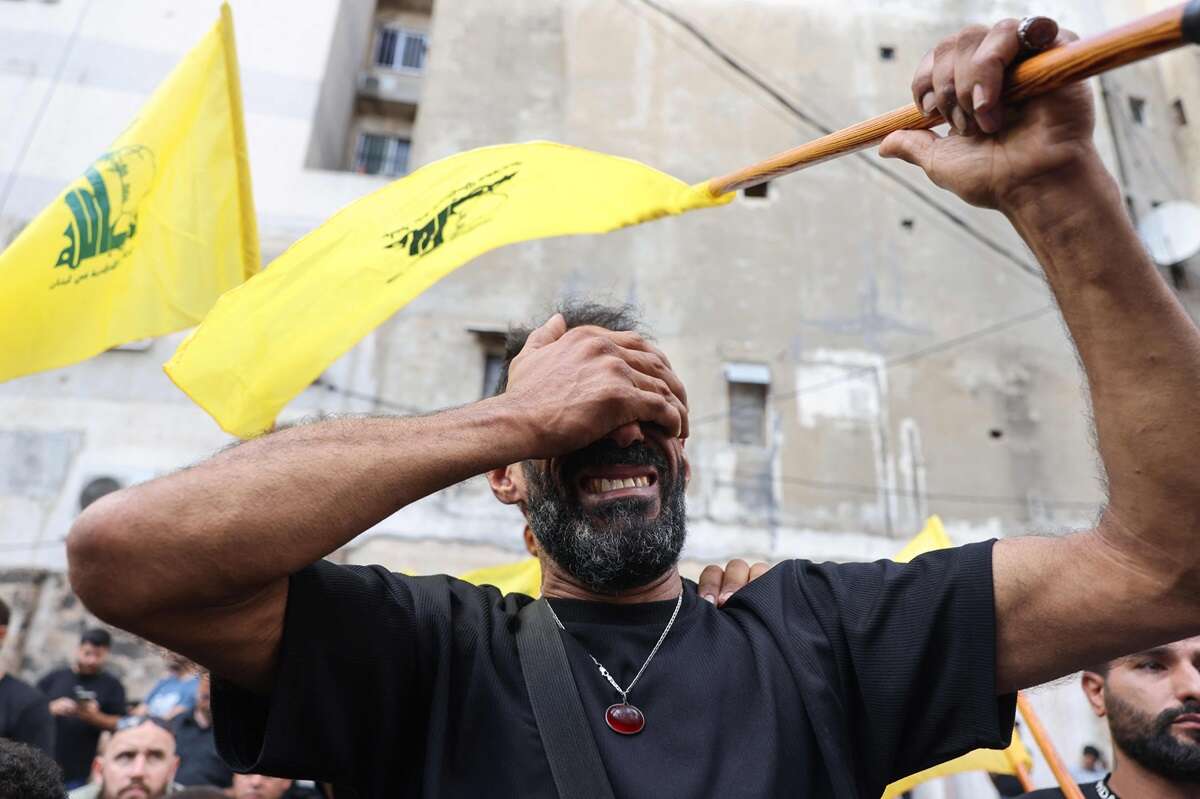
The war launched against Israel by the Hezbollah terrorist organization on Oct. 8, 2023, the day after Hamas' murderous surprise attack on communities near the Gaza border, ended in Hezbollah's defeat. Much of its senior leadership and military command was eliminated, as were many of its military capabilities. Yet this was not an absolute victory. Hezbollah was not destroyed and still retains considerable strength, waiting for the moment to rise again.
The blow dealt to Hezbollah gave Lebanon a rare chance to break free of the stranglehold the organization had imposed on it. President Joseph Aoun, elected largely thanks to Hezbollah's defeat after it opposed his candidacy, and Prime Minister Nawaf Salam, who formed a new government, reflect the overwhelming desire among the Lebanese public to pursue a new path of rebuilding the state instead of waging Iran's proxy war against Israel. But for this to happen, Hezbollah must be disarmed. The Lebanese know their fresh start was made possible by the blows Israel inflicted on Hezbollah, and that the future of their country depends on Israel continuing to strike the group whenever it seeks to reassert itself.
Still, the truth must be said: Lebanon cannot be relied upon. It is not that the Lebanese do not wish to see Hezbollah disarmed, they do. But they lack both the power and the political will to carry it out. Historically, Lebanese factions have never fought for causes that were not directly tied to their sectarian or family interests.
Moreover, Hezbollah is not only a military force that can be weakened by killing commanders and destroying weapons. It is also a political and social movement representing Lebanon's Shiite community, the country's largest sect, comprising nearly a third of its population. Many Shiites continue to support Hezbollah, not necessarily out of loyalty to its ideology, but because they see no alternative force defending their interests and guaranteeing their communal status. Meanwhile, Hezbollah maintains control through its extensive social infrastructure of schools, clinics and welfare services.
The Lebanese government, for its part, wants to have it both ways: to appear before the Americans as acting against Hezbollah, while at the same time avoiding a confrontation with the group that could plunge the country into another civil war. After all, 60% of the Lebanese army's soldiers are Shiites, and it is unrealistic to expect them to turn their weapons on their own community.
Lebanon's strategy has always been one of wishful thinking. Beirut's government did take the bold step of tasking the army with preparing a plan to disarm Hezbollah, but that plan hinges on the group's own consent. Hezbollah's deputy leader, Naim Qassem, has already declared that its weapons are a red line and that it will never agree to disarm, fearing, like Hamas in Gaza, that disarmament would spell its demise. In addition, Lebanese officials argue that it would take many years and billions of dollars to prepare the army for such a mission, making Hezbollah's disarmament an unrealistic prospect in the foreseeable future.
Israel welcomed Lebanon's decision and promised that every Lebanese step would be met with a reciprocal Israeli move. This means that as long as the Lebanese army does not actually begin disarming Hezbollah, Lebanon can forget about any Israeli withdrawal from vital border positions protecting Upper Galilee communities, and certainly forget about an end to Israeli strikes on Hezbollah targets throughout Lebanon, which are aimed at preventing the group from rebuilding its military power.
Israel ended its campaign in Lebanon prematurely last November and has since been acting against Hezbollah only in a restrained, limited fashion. Yet we cannot overlook the significant achievements of that war. The mission now is to preserve these gains. For that, Israel must not ease the pressure. Otherwise, we risk facing once again the same perilous reality that existed on our northern border on the eve of Oct. 7.


