

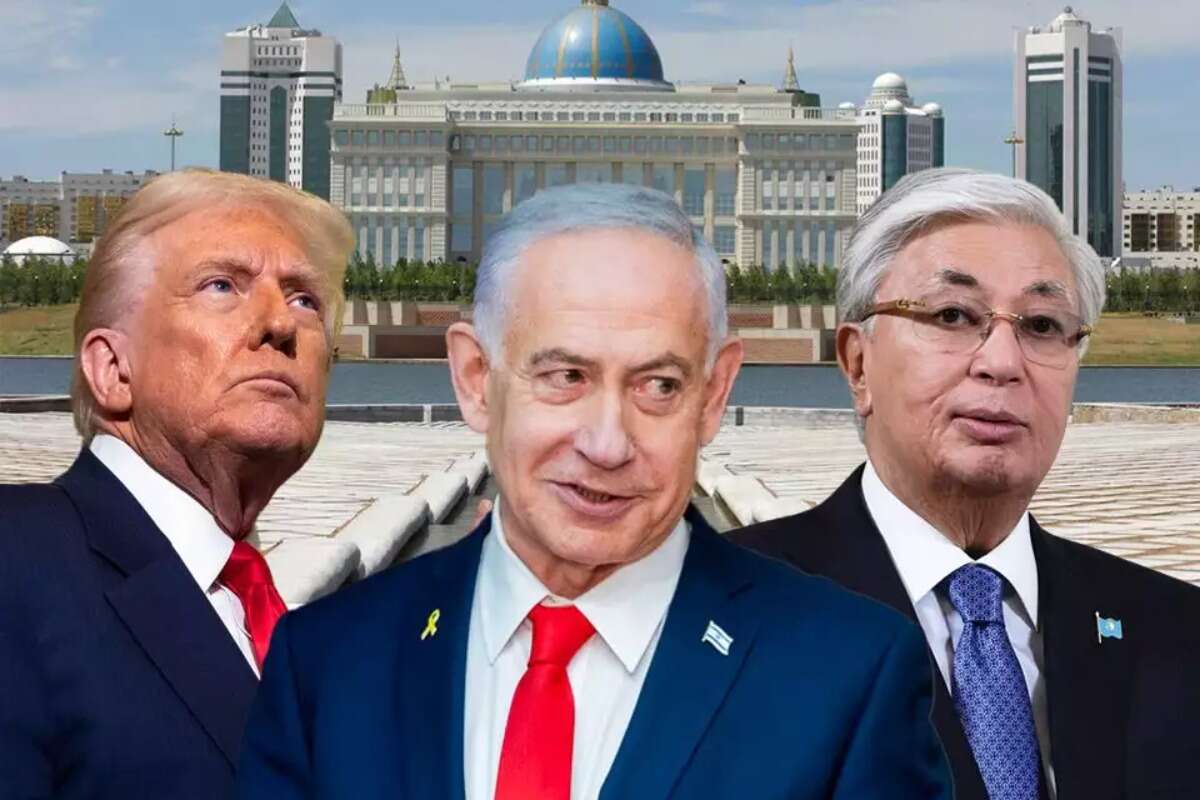
When Donald Trump announced Kazakhstan's "joining" of the Abraham Accords, it was a geostrategic placebo.
Israel and Kazakhstan have had relations since 1992, with visits by Peres (2009) and Netanyahu (2016). Israeli firms work in tech and agriculture; Kazakh oil is refined in Haifa; AMOS satellites launch from Baikonur. There was nothing left to normalize.
In Jerusalem, the news landed without warning - or applause. It embarrassed Israel, manufacturing a breakthrough where none existed. Ministers were instructed to stay silent. No statement followed. That silence was policy - Jerusalem chose not to play in someone else's theatre.
The episode exposed a deeper flaw: Washington is selling two maps at once, deciding where pipelines, railways and loyalties run. Those maps are more than geography - competing blueprints for order itself. Each route tells a story.
The Middle Corridor, backed by Turkey, runs from China through Kazakhstan across the Caspian to Azerbaijan, Georgia and Europe - Ankara's bid to bypass Moscow and anchor Eurasia. By contrast, IMEC - launched in September 2023 by India, Israel, Greece, Cyprus, Saudi Arabia, the UAE, Jordan, EU and U.S. - links South Asia to Europe through Gulf ports and the Eastern Mediterranean. Its anchors are Sovereign Edge States - nations on the frontier of coercion that remain connected to the open order, fusing trade, energy and digital systems into a resilient Indo-Mediterranean spine of sovereignty.
By inviting Kazakhstan - core to the Middle Corridor, not IMEC - into the Abraham Accords, Trump blurred the map. Its economy remains tied to Moscow through the Eurasian Economic Union. Wrapping it in Middle-Eastern branding confused allies about which path Washington truly backs. The move offered a headline without leverage: uranium and rare-earth access was the motive; Washington gained only symbolism. Ironically, the gesture undermined Trump's own IMEC doctrine - an architecture of coherence undone by theatrical inconsistency.
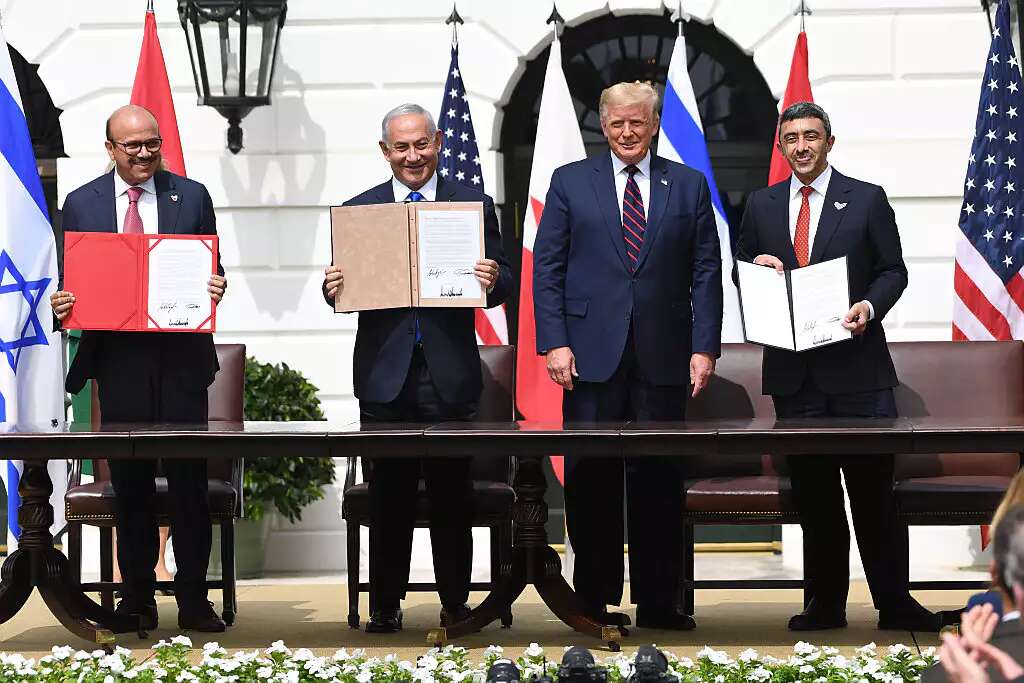
To grasp the stakes, recall what followed IMEC's debut. Announced in New Delhi on 9 September 2023, it froze a month later when Hamas's 7 October assault halted normalization. That attack did more than strike Israel - it struck the logic of IMEC itself: integration through stability. The Iranian axis, from Gaza to Yemen, had every reason to torch a corridor uniting India, the Gulf, Israel and Europe under U.S. alignment. By igniting Gaza and unleashing the Houthis, Tehran aimed to derail Israel-Saudi normalization and choke the Red Sea route IMEC was to secure.
The Houthis' attacks halved Suez traffic, cost Egypt billions, and sent 700 ships around Africa as insurance tripled. Shippers quietly conceded that Turkey's Middle Corridor now looked safer than Suez. Erdogan seized the moment: denouncing U.S.-U.K. strikes as turning the Red Sea into a "sea of blood," he sold his Caspian-Caucasus route as Europe's alternative. In truth, Ankara had long cultivated the Houthis as its unofficial navy - funneling funds and equipment through Iranian and Qatari networks. Istanbul-based fronts moved Quds Force money; German sensors surfaced in Houthi missiles. A deliberate "controlled-crisis" doctrine engineered instability at Bab al-Mandeb, turning each ship leaving Suez into Ankara's gain.
The 2025 Armenia-Azerbaijan peace, reopening the Zangezur corridor, locked Central Asia deeper into this network, completing a puzzle a decade in the making. The wars in Ukraine and Gaza did the rest: crippling the northern route and the Red Sea alike, pushing cargo south through Turkey and tightening its grip on Eurasian supply lines while stalling the Indo-Mediterranean alternative.
Operation Sindoor proved that deterrence returns through decisive, network-enabled action - power lies as much in connectivity as in firepower, the logic on which IMEC is built. India learned it can no longer depend on one artery through Suez. IMEC is not a luxury; it is a necessity.
India's edge is strategic autonomy. Where Washington seeks alignment, New Delhi seeks balance - ensuring IMEC's endurance. A BRICS power without subservience, it engages Washington and Brussels while keeping open doors to Moscow and Beijing. It invests in Haifa, leads IMEC, deepens Gulf partnerships. This is sovereignty through openness - geography turned into independence.
IMEC's architecture already exists: from Mumbai to Jeddah and Dammam, by rail to Haifa, across the Mediterranean to Piraeus, and on into Europe - a modern spine of energy, data and logistics. Each partner plays a precise role - India as industrial engine, the UAE as logistics hub, Saudi Arabia as land bridge, Jordan as transit hinge, Israel as maritime and digital gateway, Greece and Cyprus as Europe's entry and energy grid. Reinforced by the EU-funded Great Sea Interconnector (€657 million CEF support), these are active projects - not press releases.
This week's Athens Energy Forum and P-TEC ministerial confirmed the momentum. Greece revived the 3 + 1 mechanism with Israel, Cyprus and the U.S. and expanded LNG partnerships. What remains is coherence from Washington: finalize IMEC standards, synchronize customs and data layers, and establish a Red Sea risk-mitigation facility so insurers can price the route even when Bab el-Mandeb runs hot.
For Israel, the message was clear. Jerusalem saw the announcement blur Washington's signal abroad and boost Ankara at home. Instead of echoing confusion, it chose restraint. Its horizon lies not in symbolic gestures but in the Indo-Mediterranean system now forming - one that fuses economic depth with deterrent strength.
The Middle Corridor diversifies routes, not power - swapping dependence on Moscow for Ankara. IMEC is true diversification - an Indo-Arab-Mediterranean bridge shortening supply lines, embedding digital and renewable infrastructure, binding partners that share Western interests. That is where Europe's investment belongs.
Leadership isn't adding flags to maps but choosing the right road when the map is confused. Corridors are moral choices disguised as trade routes; only one leads to sovereignty. Between a geostrategic placebo and a living artery of deterrence, the decision writes itself: Lead on IMEC.
Shay Gal is an expert in international politics, crisis management, and strategic communications. He operates globally, focusing on power relations, geopolitical strategy, and public diplomacy, and their impact on policy and decision-making.


