


The war in Iran is causing an international uproar, though not for the same reasons that matter most to Israelis. The main reason is Iran's decision to close the Strait of Hormuz, located between its southern coast and the United Arab Emirates.
The Strait of Hormuz is the main artery of the global energy market and the gateway to one of the world's most important energy hubs: the Arabian Gulf, better known as the Persian Gulf. About 20% of the world's traded oil and more than 20% of global liquefied natural gas exports pass through it.
Those hit by the closure are, of course, the oil suppliers, Saudi Arabia, Iraq, Kuwait and the United Arab Emirates, most of whose oil exports pass through the strait, as well as LNG exporters, chiefly Qatar. They also include energy-consuming countries, led by China, which receives a third of the Qatari gas that passes through the strait; European countries, which since the war in Ukraine have relied on Qatari gas as an alternative to Russian gas; and many downstream consumers. A shortage of such a large volume of oil and gas will send energy prices soaring, driving up prices across the broader economy.
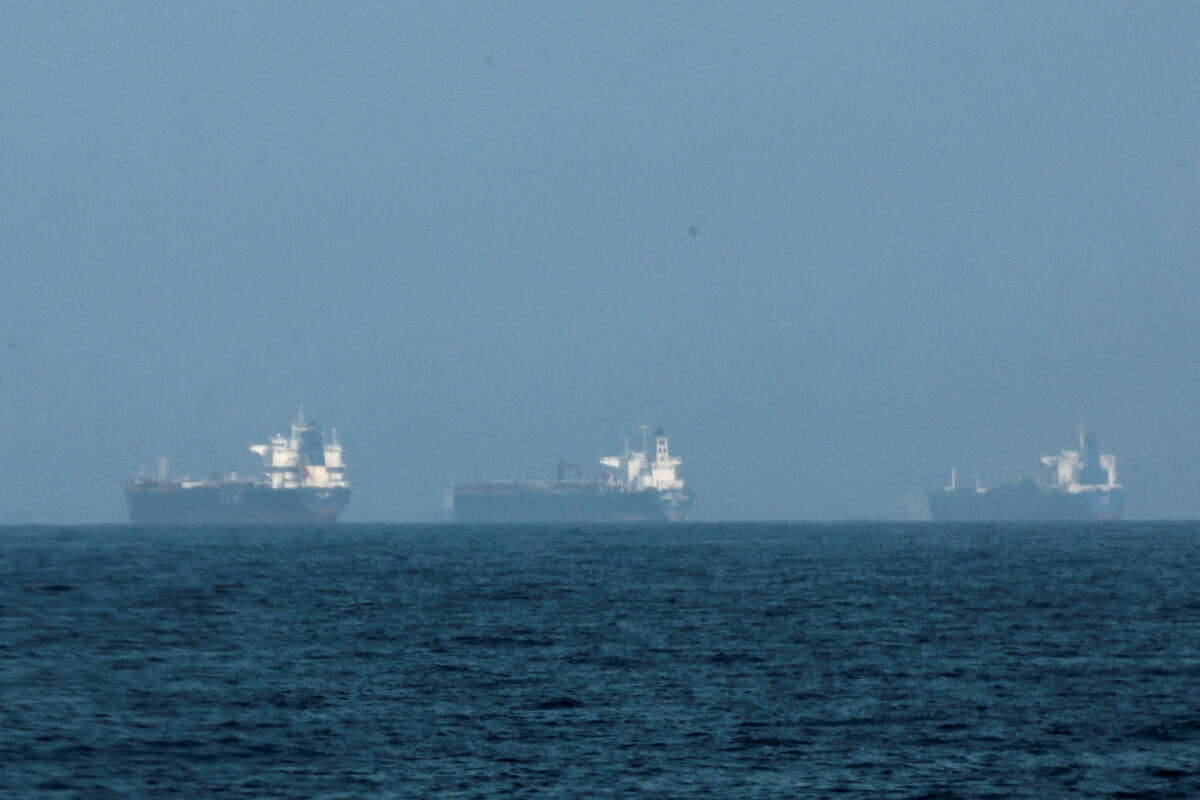
The economic blow the world is now absorbing from the closure of the Strait of Hormuz comes on top of the damage it has suffered over the past two years from the terrorism imposed by the Houthis, proxies of the ayatollah regime, at the Bab el-Mandeb Strait.
According to the Fitch index, the disruptions caused by the Houthis along the maritime trade route linking the East to Europe through the Suez Canal drove shipping costs between China and Europe up by nearly 400% and global shipping prices up by about 160%. Those increases, in turn, pushed up the prices of end products worldwide.
Iran's control over the Strait of Hormuz and Bab el-Mandeb, two of the six most important chokepoints in global trade routes, and the ease with which it can disrupt the regular flow of goods between East and West, underscore not only the need to weaken it and reduce its regional influence, but above all the need for an alternative trade corridor that will free the world from economic dependence on it.
That alternative corridor is IMEC, the massive international project the US has been advancing since September 2023, centered on creating an economic trade corridor that bypasses both maritime chokepoints and links India to Europe overland through the United Arab Emirates, Saudi Arabia, Jordan and Israel.
IMEC would not only reduce the need to rely on the threatened waterways of Hormuz and Bab el-Mandeb, thereby helping restore stability and security to international trade, it would also be shorter and faster than the maritime alternatives. Those advantages would make it possible to significantly cut security and shipping costs and, as a result, substantially lower the prices of end products, in a way that would be felt in every household across the Western world.
Speeding up the IMEC project should be the civilian move that complements the military campaign being led by the US and Israel, one that would significantly weaken the influence of Iran and the anti-Western axis across the region and turn political and economic stability in the Middle East from something temporary into something long-term. One may hope this is the reason for the upcoming visit to the region by Steve Witkoff and Jared Kushner.
Before the outbreak of the war with Iran, voices were heard in Europe calling for the planned IMEC route to be diverted so that it would bypass Israel, either to the north through Syria and Lebanon or to the south through Egypt. The strength and audacity Israel has demonstrated in the current war in particular, and since Oct. 7 more broadly, along with its unwavering commitment to the US and its enormous contribution to restoring security and stability in the Middle East, once again underscore how vital it is to stick to the original American plan and route IMEC through Israel.
Israel is the anchor of regional stability, and only through it can the new trade corridor be guaranteed to fulfill its purpose.


