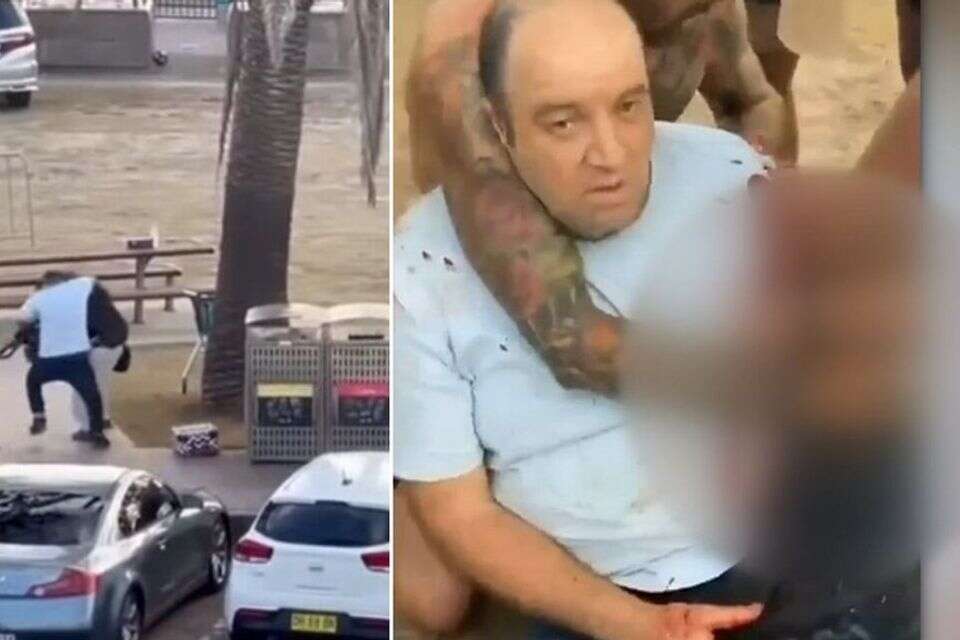
On Sunday, many of us felt, for a moment, a little racist. Let's admit it. Amid the horrific reports and images coming out of Australia, one figure suddenly stood out: a man crouching between parked cars, waiting for the right moment, then lunging at an armed terrorist and grappling with him for several seconds until he managed to wrest the weapon from his hands and turn it on him.
Because the incident took place at a Hanukkah event attended by thousands of Jewish celebrants, and because of the distant footage and the white shirt that looked a bit like the kind worn by ultra-Orthodox Jews, the natural assumption was that this was one of the Jewish participants. And since it was Hanukkah, a little Jewish heroism would hardly have offended anyone.
Then came the surprise. The hero turned out to be someone whose name left no doubt about his religion or origins: Ahmed al-Ahmed, a Syrian-born man who emigrated to Australia in 2006 and runs a vegetable stand near the site of the attack. Al-Ahmed himself was shot several times and seriously wounded.
Once his identity became known, confusion set in. On the one hand, Islamist antisemitic terrorism targeting Jews; on the other, an Arab Muslim hero risking his life to save Jews. That contradiction quickly spilled over onto social media. On the left, people celebrated the proof that not all Muslims are terrorists. On the right, critics were forced to soften their rhetoric about Arab Muslims. Both camps were taken aback by the plot twist. There is a term for this reaction: racism of low expectations. It is a harsh label, but if we are honest, we are not entirely to blame for falling into it. We look around us and recognize the grim reality of our own swamp.
"The uninvolved who decided to get involved," said Eitan Mor, a former hostage, with painfully precise irony in a Saturday night interview on Channel 14's The Patriots. He described how, on October 7, after helping partygoers at the Nova music festival escape while terrorist gunfire whistled around him, he was captured by Gazans. Not Hamas terrorists, but civilians armed with "knives, saws and hammers," as he put it, some of them even elementary school-aged children.
Mor is not alone. Eli Albag, the father of Liri, a surveillance soldier who was abducted and later released, recounted that his daughter told him after her return: "There are two million terrorists there, don't make a mistake. I sat with an 8-year-old boy and 4-year-old children who would spit and say 'death to the Jew.'" Eli Sharabi, another heroic survivor, said: "No one in Gaza helped me. Civilians saw us suffering and cheered the terrorists. There is no such thing as 'uninvolved.'"
Nearly every hostage who returned from Gaza described how civilians—men and women, young and old—were part of the machinery that abused them during the abduction and throughout the long months in captivity. In some cases, the supposedly "uninvolved" civilians were crueler than the Hamas terrorists themselves.
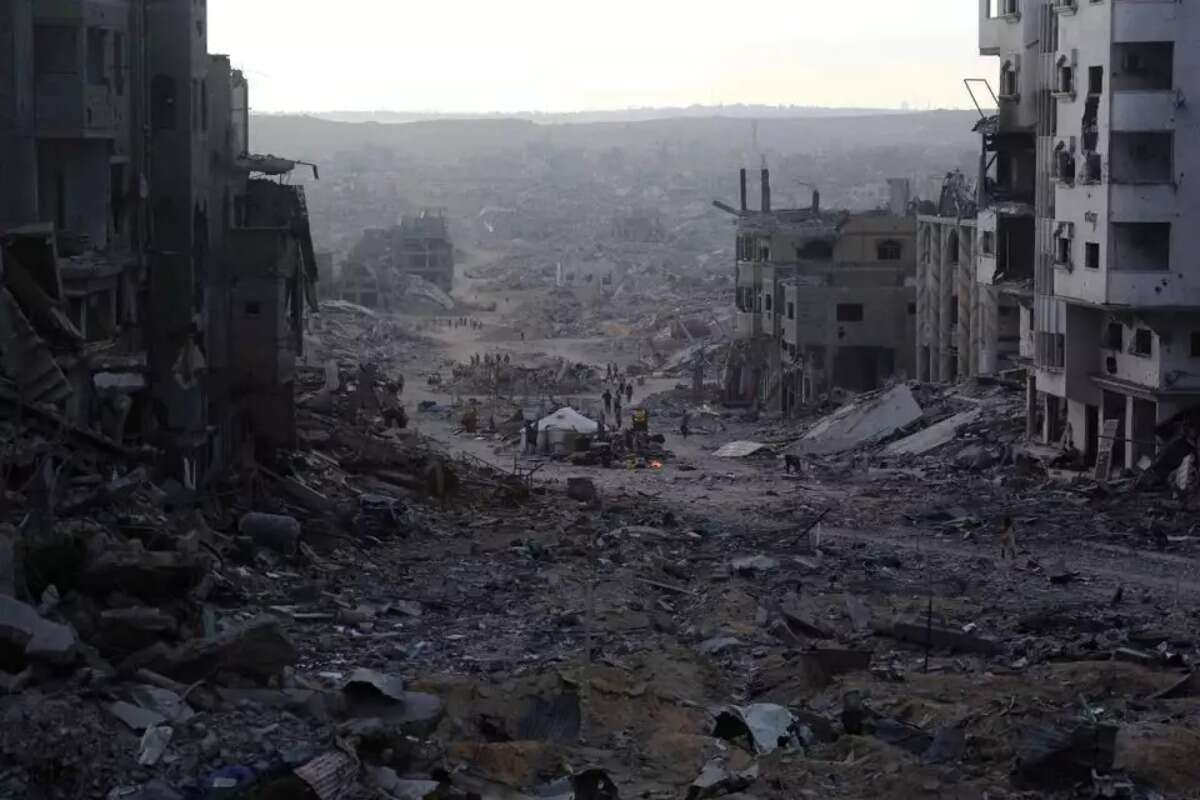
From the very first day of the war, which began on Simchat Torah in 2023, until now, concepts associated with World War II have been heard repeatedly. "Nazis," "genocide," "ethnic cleansing," "extermination." Some were used by us to describe Hamas and its accomplices; others were hurled at us by our enemies or their supporters in Israel and around the world. But one concept was never mentioned: Righteous Among the Nations.
More than 30,000 Righteous Among the Nations from the Holocaust era have been recognized to date. The definition is clear: a non-Jew who acted to save Jews during the Holocaust, at personal risk and without compensation. The list of countries they came from is impressive, ranging from Poland, the Netherlands and France, with thousands of honorees, to Egypt, Turkey and El Salvador, with just one each.
On October 7, 251 people were abducted. Some were held alive for months, even years. And yet not a single Gazan chose to become the first Righteous Among the Nations from Gaza. Ahmed al-Ahmed, somewhere in distant Sydney, showed us that it does not have to be this way. That an Arab Muslim can choose good, can act humanely, can risk his life to save Jews.
When the video of Ahmed's heroism was first published, before his identity was known, someone tweeted on X: "Is there already a medal or decoration named after the late Aner Shapira?" Indeed, Ahmed deserves recognition, and one can only hope that the State of Israel will grant him the honor he deserves.