Friday Dec 5, 2025
NEWSLETTER
www.israelhayom.com
  • Home
  • News
    • Israel
    • Israel at War
    • Middle East
    • United States
  • Opinions
  • Jewish World
    • Archaeology
    • Antisemitism
  • Lifestyle
    • Food
    • Travel
    • Fashion
    • Culture
  • Magazine
    • Feature
    • Analysis
    • Explainer
  • In Memoriam
www.israelhayom.com
  • Home
  • News
    • Israel
    • Israel at War
    • Middle East
    • United States
  • Opinions
  • Jewish World
    • Archaeology
    • Antisemitism
  • Lifestyle
    • Food
    • Travel
    • Fashion
    • Culture
  • Magazine
    • Feature
    • Analysis
    • Explainer
  • In Memoriam
www.israelhayom.com
Home Environment & Wildlife

Marine biology experts unpack Israel's jellyfish problem

Experts from the University of Haifa's Charney School of Marine Sciences dive into the ongoing phenomenon of Israel's jellyfish swarms and explain how to keep the situation under control.

by  JNS and Israel Hayom Staff
Published on  07-15-2019 06:00
Last modified: 07-15-2019 15:46
Marine biology experts unpack Israel's jellyfish problemYehuda Peretz

Jellyfish on the Ashdod beach, July 2019 | Photo: Yehuda Peretz

Share on FacebookShare on Twitter

Israel's yearly jellyfish season is well and truly here, inconveniencing local beach-goers and tourists alike. Amid a swarm, consisting of tens of millions of jellyfish, reaching Israel's coast over the past week and invading a power station in southern Israel, concerns also exist over the sea creatures' effect on local fish life.

Dr. Tamar Lotan and Professor Dror Angel, experts at University of Haifa's Leon H. Charney School of Marine Sciences, explain what's behind this year's increased jellyfish swarms and what must be done moving forward.

Follow Israel Hayom on Facebook and Twitter

Q: Are we seeing increasing rates of jellyfish coming to Israel's coast?

These swarms have been happening in our region since the 1980s and in varying abundances, so until we carry out large-scale quantitative assessments (rather than impressions), the jury is out on whether there is an increase.

This year specifically is anomalous because the recent winter had exceptionally high rainfall that washed out large quantities of nutrients to our normally nutrient-poor sea, driving production rates up and providing lots of food to all members of the marine food web, including the jellyfish. The swarms recur in this region year after year because the jellyfish have become established here.

Q: What threat do they pose?

The impacts of jellyfish to the ecosystem are numerous and not necessarily all negative:

Consider that:

The jellyfish compete directly and quite efficiently with larval and young finfish over planktonic food, and in some cases, the jellies have caused these fish populations to "starve."

Jellyfish are predators, and massive swarms/blooms with large predation pressure can cause ecosystems to become unbalanced.

Jellyfish blooms mean considerable biomass in the water column, and when that material sinks and decomposes on the seafloor, it can either cause the formation of hypoxic and anoxic sediments (dead zones) or a feast to bottom dwellers (benthos) that enjoy the food (like manna in the sea).

Jellyfish blooms can cause mechanical clogging of coastal power plants that use seawater to cool their turbines, problems to desalination plants that use seawater to generate freshwater, problems to fisherfolk that want to target finfish or other marine species, all marine recreation and aquaculture farms that grow fish in cages.

Q: Can we avoid jellyfish swarms in the future?

We cannot avoid swarms, as these are natural phenomena, but we must do more research to understand the dynamics of the swarms better in order to eventually be able to predict these.

Common knowledge assumes there is ongoing competition between larval (and young) finfish and jellyfish because they all rely on the same planktonic organisms for food. Overfishing or heavy fishing pressure often results in reduced finfish populations, which may give the upper hand to their competitors, the jellyfish. So if we maintain healthier populations of finfish, this may reduce jellyfish swarms.

The same argument is applied to coastal development. Many finfish have natural nurseries near the shore, and if coastal development encroaches on these, this adds pressure to natural fish populations and threatens their survival. A solution to this is to establish marine-protected areas where coastal development does not happen to protect natural biota; this may also ultimately reduce jellyfish swarms.

Jellyfish also seem to be less affected by pollution than other marine groups. So if the sea is polluted by chemicals or other agents, the jellyfish may fare better than other groups – once again boosting their populations and success in comparison to their competition.

The solution here, of course, is to reduce marine pollution.

Reprinted with permission from JNS.org.

Tags: Israeljellyfishmarine lifemediterranean seasting

Related Posts

Teenager mauled to death by lioness in front of shocked visitorsSocial media

Teenager mauled to death by lioness in front of shocked visitors

by Erez Linn

Gerson de Melo Machado, 19, killed by lioness at Brazil zoo enclosure

Ethiopian volcano erupts after 10,000 yearsUsage under Israel's Intellectual Property Law Article 27(a)

Ethiopian volcano erupts after 10,000 years

by Miri Weissman

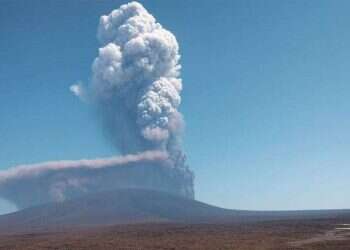
Ash from Ethiopia's Hayli Gubbi drifts across continents, affecting air travel as far as India.

Northern lights tonight: US states, UK expect show to continueOwen Humphreys/PA via AP

Northern lights tonight: US states, UK expect show to continue

by Erez Linn

Another powerful solar storm barrels toward Earth with potential to create spectacular aurora displays Wednesday across dozens of states and...

Menu

Analysis 

Archaeology

Blogpost

Business & Finance

Culture

Exclusive

Explainer

Environment


Features

Health

In Brief

Jewish World

Judea and Samaria

Lifestyle

Cyber & Internet

Sports


Diplomacy 

Iran & The Gulf

Gaza Strip

Politics

Shopping

Terms of use

Privacy Policy

Submissions

Contact Us

About Us

The first issue of Israel Hayom appeared on July 30, 2007. Israel Hayom was founded on the belief that the Israeli public deserves better, more balanced and more accurate journalism. Journalism that speaks, not shouts. Journalism of a different kind. And free of charge.

All rights reserved to Israel Hayom

Hosted by sPD.co.il

  • Home
  • News
    • Israel at War
    • Israel
    • United States
    • Middle East
    • Sports
  • Opinions
  • Jewish World
    • Archaeology
    • Antisemitism
  • Lifestyle
    • Food
    • Travel
    • Fashion
    • Culture
  • Magazine
    • Feature
    • Analysis
    • Explainer
    • Environment & Wildlife
    • Health & Wellness
  • In Memoriam
  • Subscribe to Newsletter
  • Submit your opinion
  • Terms and conditions

All rights reserved to Israel Hayom

Hosted by sPD.co.il

Newsletter

[contact-form-7 id=”508379″ html_id=”isrh_form_Newsletter_en” title=”newsletter_subscribe”]

  • Home
  • News
    • Israel at War
    • Israel
    • United States
    • Middle East
    • Sports
  • Opinions
  • Jewish World
    • Archaeology
    • Antisemitism
  • Lifestyle
    • Food
    • Travel
    • Fashion
    • Culture
  • Magazine
    • Feature
    • Analysis
    • Explainer
    • Environment & Wildlife
    • Health & Wellness
  • In Memoriam
  • Subscribe to Newsletter
  • Submit your opinion
  • Terms and conditions

All rights reserved to Israel Hayom

Hosted by sPD.co.il