


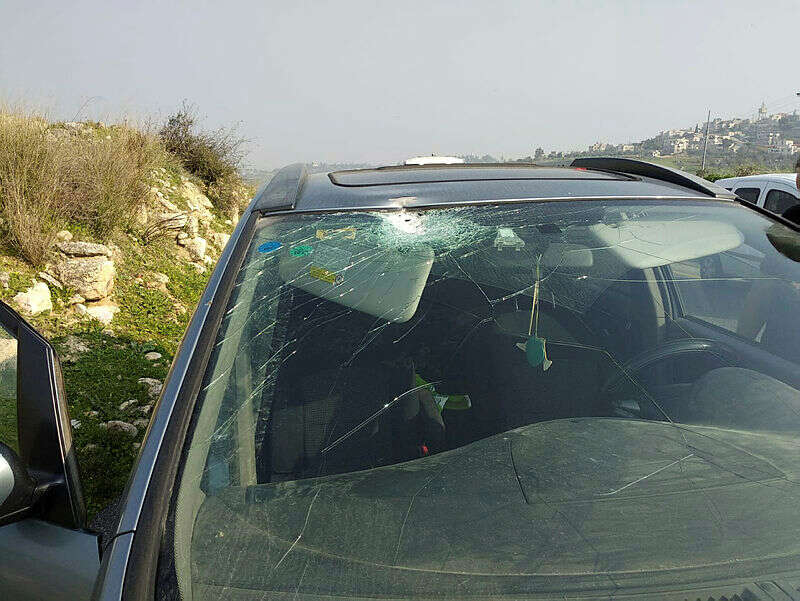
The horrible stone-throwing attack in early January on Route 465 in the western Binyamin region of Judea and Samaria – in which Rivka Teitel, a resident of Shvut Rachel, was seriously wounded – indicated a disconcerting trend. On one hand, the incident illustrated the clear uptick in popular terrorist attacks in recent months, and on the other hand, it made clear to those who still haven't understood or have forgotten that this brand of terror is dangerous as well as sophisticated. It is no longer a matter of hurling tiny rocks from a safe distance – which is dangerous, in and of itself, when they hit their target – but well-planned ambushes involving small boulders, from point-blank range, at vehicles with Israeli license plates, with far greater lethal potential.
Follow Israel Hayom on Facebook and Twitter
IDF officials view these incidents gravely, as they point to prior planning, level-headedness, patience and intelligence gathering on the part of the terrorists, who often wait on the side of the road, meticulously observe the vehicles passing by and make sure the passengers are Israeli before heaving the boulder they need both hands to lift. The attack that wounded Teitel, who was driving with two of her children, could easily have ended in a deadly crash were it not for the resourcefulness of her older son, who lifted the handbrake to stop the car from spinning out of control.
The increasingly grievous nature of these incidents weighs very heavily on the senior army commanders in the field, mainly because they have come in the wake of a relatively calm period of time, and just one incident is enough to quickly ignite the combustible area. According to assessments by officers in the field, the recent rock-throwing attacks, primarily on Route 465, are part of a chain reaction sparked by the terrorist attack at Tel Menashe in December, when Esther Horgan was murdered, the shooting attack at the Temple Mount the following day, the death of Ahuvia Sandak – who although was killed by Israeli police officers, the Palestinians have since sustained the brunt of the anger – and the subsequent rash of incidents due to daily friction between Jews and Arabs, including stone-throwing by Jewish hilltop youths and far-right activists at Palestinian cars, blocking roads, arson attacks, vandalizing Palestinian villages and more. The situation on the ground has become more precarious, and the number of Palestinian disturbances of public order across Judea and Samaria are also on the rise.
Any shred of information helps
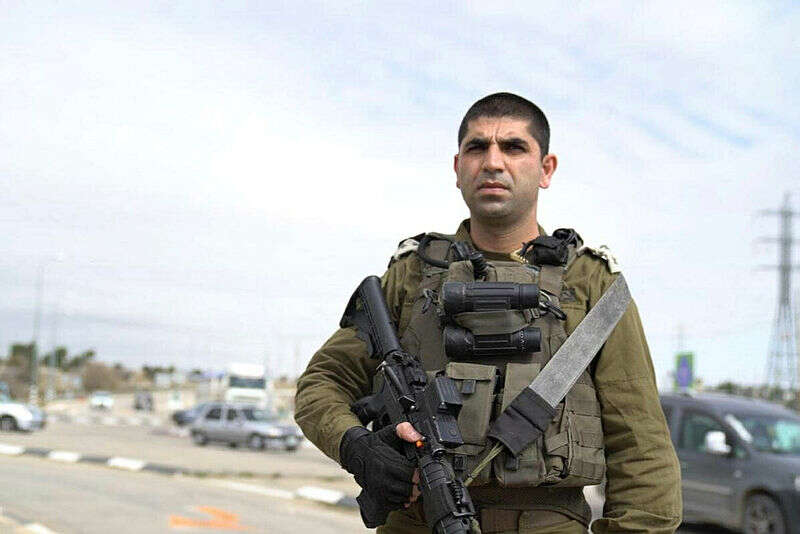
Lt. Col. Faiz Fares, commander of the Nachshon Battalion, which is currently deployed in the Gush Etzion area, notes a rise in the number of rock and Molotov cocktail-throwing incidents on Highway 60 and a rise in the number of attempts to carry out terrorist attacks at Gush Etzion Junction. In January, two stabbing attacks were foiled at the junction, which has always been a target of terrorists because of the bustling shopping center there. In recent weeks, the Palestinians have begun rioting on a routine basis in the area of Beit Ummar, putting those traveling via Highway 60 in danger. The battalion's response to several of the rock-throwing attacks along Highway 60 was heavy-handed, including sending some 80 troops into the village of Al Aroub, patrols, interrogations and even arrests. Consequently, the number of rock-throwing incidents on that road saw a sharp drop. "Our response created deterrence," Fares says.
Lt. Col. Gal Rich, commander of the Haruv reconnaissance battalion, which is currently on operational duty in the Binyamin region, says Ahuvia Sandak's death and pre-existing land disputes have led to increased friction between Jewish and Palestinian residents of the area. In recent months, violent demonstrations and riots have been a regular Friday occurrence in the eastern Binyamin sector, and is just another challenge with which IDF forces on the ground must contend.
On top of everything, the harsh economic impact of the coronavirus has affected the mood on the Palestinian street and the Palestinian Authority is struggling to govern over large swathes of Judea and Samaria – the direct result of ceasing security coordination with Israel in mid-2020. Although this coordination was reinstated with the election of US President Joe Biden, the damage was already done. These recent months have been characterized by a dramatic spike in crime in rural Palestinian areas, and the PA is having a hard time restoring control in places it was lost. The PA's security services still cannot enter many areas, places where they once had deterrence, without having to scratch and claw their way out, in the best-case scenario.
With the rise in popular terrorist incidents is also a rise in the number of arrests the IDF has made in Judea and Samaria. The IDF is using, among other things, technological tools which help it apprehend the perpetrators mere hours after their attack, as was the case with Rivka Teitel's assailants. Ten minutes after the incident, IDF troops had already surrounded Kafr Deir Nizam, the home of her attackers.
The new intelligence warriors
The main difficulty facing the IDF in the campaign against popular terrorism is the lack of intelligence, both before and after an incident occurs. While at the division and central command level the army is busy fighting organized terror, local cells and foiling planned terrorist attacks – the grassroots brand of terror on the roads has largely fallen into a vacuum. The response usually comes only after the attack has occurred, and IDF commanders have understood over the past year that to protect the roads they must be effective in other areas as well. Deploying soldiers to cover every inch of every road in Judea and Samaria isn't feasible. The IDF realizes – and is embarrassed – that on a daily basis terrorists are able to target Israeli vehicles with boulders, rocks and firebombs, and that despite the technological means at the disposal of one of the world's most advanced militaries, essentially no effective intelligence exists that can help prevent these attacks and identify the attackers on the spot.
The IDF's Ephraim Brigade has developed several tactical methods to contend with this type of terrorism. In recent months, the brigade has introduced pilot programs it said were successful and provide a more focused and quick response operationally and in terms of intelligence. "The objective is to mark the sector where we usually see rock-throwing and firebombing incidents and focus our technological capabilities there so we can immediately identify who threw the rock, boulder or Molotov cocktail, and detain him as quickly as possible," a senior IDF official told Israel Hayom.
In conjunction with several private companies, a kit was developed that uses sophisticated and classified technologies that allow the forces on the ground to quickly identify and close in on perpetrators. The mobile kit can be transferred to any sector that sees an uptick in this form of popular terrorism. The technology can identify the terrorists at the scene, sometimes almost immediately, which also helps the army build deterrence.
Another method developed and tested in recent months by the Ephraim Brigade is the formation of an intelligence cell, a type of new force alignment that focuses on improving operational and intelligence gathering effectiveness. Within the framework of the pilot, the brigade has upgraded the tools it has to identify individuals with a propensity for popular acts of terror and tracks them with sophisticated technologies. The goal, essentially, is to cast some light into the black hole of intelligence surrounding rock throwers. This pilot is in its early stages, but a senior officer says the change in the field is already noticeable.
"We believe the program will allow us to see what's happening and identify connections and contacts. From intelligence darkness, we've transitioned to intelligence daylight."
To fill in the remaining intelligence gaps, Ephraim Brigade commanders also decided to take spotters tasked with detecting Palestinian crossing into Israel illegally and to upgrade their job. These "Terrain Intelligence Controllers," as they are now called, have been attached to mobile command and control vehicles that go where they are most needed. Once in position, they launch a drone into the air to scan the surrounding area, locate potential perpetrators, and guide the other units on the ground to the suspected terrorists.
These Terrain Intelligence Controllers have proven themselves, and everywhere they have been operational during the past year has seen a dramatic drop in the number of popular terrorist attacks on the roads. Officers in the Ephraim Brigade believe the new tactical tools they have recently developed will improve operational effectiveness and significantly alter the current reality on the ground.
Subscribe to Israel Hayom's daily newsletter and never miss our top stories!


