

A real-world test of Pfizer's COVID-19 vaccine in more than half a million people confirms that it's very effective at preventing serious illness or death, even after one dose.
Follow Israel Hayom on Facebook and Twitter
The study was led by researchers from Israel's Clalit Research Institute and Ben-Gurion University of the Negev, with Harvard University in the US. It did not report on the safety of the vaccine, just effectiveness, but no unexpected problems arose in the previous testing.
Researchers compared nearly 600,000 people aged 16 and older in Israel's largest national health fund who were given shots in December or January to an equal number of people of similar age, sex and health who did not receive the vaccine. None of the participants had previously tested positive for the virus.
The vaccine was estimated to be 57% effective at preventing any symptoms of COVID-19 two to three weeks after the first dose, and 94% a week or more after the second dose.
Effectiveness was 74% after one shot and 87% after two for preventing hospitalization, and 46% and 92% for preventing confirmed infection. Reducing infections gives hope that the vaccine may curb the spread of the virus, but this type of study can't determine if that's the case.
Wednesday's published results, derived from Israel's mass vaccination campaign, give strong reassurance that the benefits seen in smaller, limited testing persisted when the vaccine was used much more widely in a general population with various ages and health conditions.
It seemed as effective in folks over 70 as in younger people.

"We were surprised because we expected that in the real-world setting, where cold chain is not maintained perfectly and the population is older and sicker, that you will not get as good results as you got in the controlled clinical trials," senior study author Ran Balicer said. "But we did and the vaccine worked as well in the real world."
"We have shown the vaccine to be as effective in very different sub-groups, in the young and in the old in those with no co-morbidities and in those with few co-morbidities," he added.
"This is more great news, confirming that the vaccine is around 90% effective at preventing documented infection of any degree of severity from seven days after the second dose," said Peter English, a British government consultant in communicable disease control.
"Previous recently studied papers from Israel were observational studies. This one used an experimental design known as a case-control study ... giving greater confidence that differences between the groups are due to their vaccination status, and not to some other factor."
The study published on Wednesday was the first analysis of a national COVID-19 vaccination strategy to be peer-reviewed. It also offered a more detailed look at how the vaccine was faring at weekly intervals, while matching people who received the shot to unvaccinated individuals with similar medical histories, sex, age and geographical characteristics.
"This is immensely reassuring ... better than I would have guessed," said the Mayo Clinic's Dr. Gregory Poland.
Vanderbilt University's Dr. Buddy Creech agreed: "Even after one dose we can see very high effectiveness in prevention of death," he said.
Neither doctor had a role in the Israel study but both are involved in other coronavirus vaccine work.
Both doctors also said the new results may boost consideration of delaying the second shot, as the United Kingdom is trying, or giving one dose instead of two to people who have already had COVID-19, as France is doing, to stretch limited supplies.
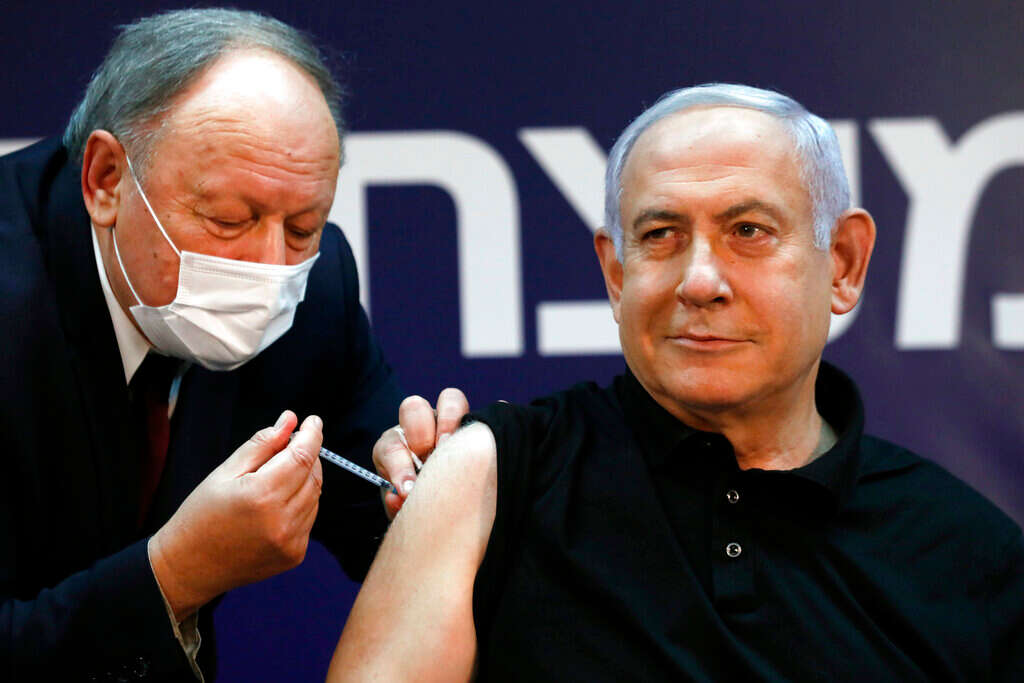
"I would rather see 100 million people have one dose than to see 50 million people have two doses," Creech said. "I see a lot of encouragement on one dose" in the results from Israel, which were published by the New England Journal of Medicine.
The vaccine, made by Pfizer and its German partner BioNTech, is given as two shots, three weeks apart, in most countries.
Israel now has vaccinated nearly half of its population. A newer variant of the virus that was first identified in the United Kingdom became the dominant strain in Israel during the study, so the results also give some insight into how well the vaccine performs against it.
Earlier this week, two UK studies suggested benefits even after one dose of the Pfizer vaccine or a different one from AstraZeneca. The UK is delaying the second shot for up to 12 weeks after the first one to try to give more people some level of protection.
Subscribe to Israel Hayom's daily newsletter and never miss our top stories!
Other research centers in Israel, including the Weizmann Institute of Science and the Israel Institute of Technology have shared several studies in recent weeks that show the vaccine to be effective.
At least three studies out of Israel have also suggested the vaccine can reduce coronavirus transmission, but the researchers have cautioned that wider studies must be conducted in order to establish clear-cut conclusions.


