Friday Dec 5, 2025
NEWSLETTER
www.israelhayom.com
  • Home
  • News
    • Israel
    • Israel at War
    • Middle East
    • United States
  • Opinions
  • Jewish World
    • Archaeology
    • Antisemitism
  • Lifestyle
    • Food
    • Travel
    • Fashion
    • Culture
  • Magazine
    • Feature
    • Analysis
    • Explainer
  • In Memoriam
www.israelhayom.com
  • Home
  • News
    • Israel
    • Israel at War
    • Middle East
    • United States
  • Opinions
  • Jewish World
    • Archaeology
    • Antisemitism
  • Lifestyle
    • Food
    • Travel
    • Fashion
    • Culture
  • Magazine
    • Feature
    • Analysis
    • Explainer
  • In Memoriam
www.israelhayom.com
Home Commentary

The battle for dominance under the sea

Beneath the ocean waves, we transmit gas, oil, electricity, and vast amounts of data. However, hostile nations are increasingly threatening the seabed, prompting a global imperative to consider: how can we safeguard this vital infrastructure.

by  Nitzan David Fuchs/Makor Rishon
Published on  01-02-2025 10:00
Last modified: 01-03-2025 20:21
The battle for dominance under the seaGettyImages

The same vessel was present at both damage sites — and was caught (illustration). | Photo: GettyImages

Share on FacebookShare on Twitter

Under the sea, a quiet and dangerous battle is unfolding. In November, two undersea communication cables in the Baltic Sea were severed — one linking Sweden to Lithuania, and the other connecting Finland to Germany. A Chinese cargo vessel, the Yi Peng 3, is suspected of carrying out the sabotage. This incident is just one example of the vulnerability of critical infrastructure essential to our daily lives beneath the waves. The ship reportedly dragged its anchor along the seabed, snapping the cables —not exactly rocket science. Nevertheless, the result was both severe and costly to repair, disrupting communication between the Baltic nations.
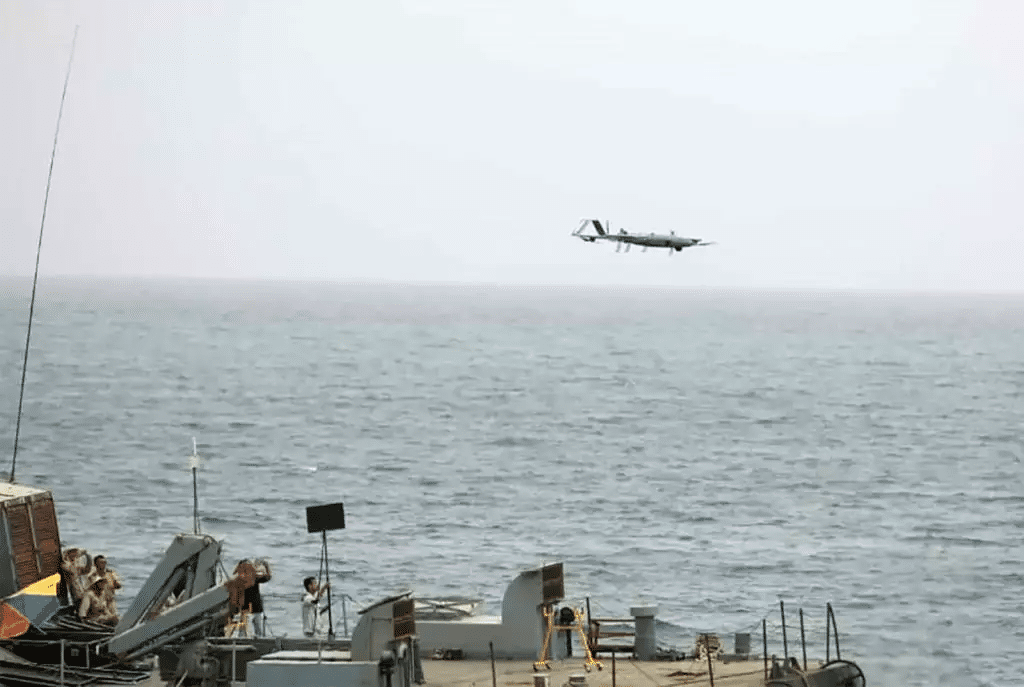
A UAV launched from an Iranian vessel in the Indian Ocean. Photo: AFP

Every day, undersea communication cables carry approximately $10 trillion worth of financial transactions worldwide. Every video call with family abroad, every bank transfer, and every streaming session depends on this extensive network of cables lying on the ocean floor. Damage to this network could cripple entire nations. In Lithuania, for example, internet capacity dropped by about one-third after the cables were sabotaged.

These undersea systems aren't just about data. The Baltic seabed hosts a complex network of energy infrastructure, including the Balticconnector gas pipeline between Finland and Estonia, the Baltic Pipe transporting gas from the North Sea via Denmark to Poland, and the NordBalt and Estlink power cables connecting Sweden and Finland to the Baltic states. These systems are critical to European efforts to reduce reliance on Russian energy, enabling Finland to link to the European power grid and allowing Norway's natural gas to flow to the continent. Any damage to this infrastructure would send shockwaves across Europe.

Iranian supreme leader Ayatollah Ali Khamenei delivering a speech during a meeting with Iranian scientists and officials during an exhibition of the country's nuclear industry achievements in Tehran, Iran on June 11, 2023 (EPA)

The threats to undersea systems are varied and sophisticated. In 2022, explosions destroyed the Nord Stream gas pipelines between Germany and Russia, with evidence pointing to deliberate sabotage, including traces of explosives. Other methods include anchor dragging, as seen in the recent Baltic incident, or deploying divers from submarines for sabotage missions — a notable threat from Russia. Even nature poses risks: in 2006, an earthquake in Taiwan damaged several communication cables, significantly reducing internet capacity across East Asia. Repairs took nearly two months.

An increasing number of nations view the undersea domain as both a battlefield and a critical area requiring protection. Yet safeguarding these systems presents unprecedented technological challenges. How can infrastructure located kilometers beneath the sea be monitored continuously? And when threats are detected, how can they be addressed swiftly and effectively?

Data is transmitted through internet cables (illustration). Photo: Getty Images

Countries are exploring various solutions to these challenges. The UK recently invested in a specialized vessel equipped with advanced monitoring systems, including autonomous tools to oversee its communication, gas, and oil pipelines. NATO is driving innovation in sensor technology and unmanned vessels to enhance the detection of suspicious activity. Meanwhile, the US is developing solar-powered unmanned submarines to patrol strategic areas in East Asia and other key regions.

As time goes on, the importance of the undersea will only grow. Ambitious plans for intercontinental power cables, underwater mining, and the expansion of the global communication network will make protecting this infrastructure even more crucial. Israel, for example, is eyeing a connection to Europe through a submarine power cable.

The struggle for dominance in under the sea will remain one of the great challenges of this century, even if much of the public remains unaware of the battle unfolding beneath the waves.

Related Posts

Netanyahu is gambling with Israel's security

Netanyahu is gambling with Israel's security

by Yoav Limor

Prime Minister Benjamin Netanyahu has named Roman Gofman as director of the Mossad, despite Gofman having no background in intelligence...

Netanyahu's Washington visit comes with a hard decisionChip Somodevilla / POOL / AFPף EPA/WILL OLIVERף Stephanie Lecocq/Pool via AP

Netanyahu's Washington visit comes with a hard decision

by Danny Zaken

While the US is set to request curbs on IDF operations, officials acknowledge that no comprehensive Middle East arrangement is...

Netanyahu spoke with Qatari prime minister, apologizes for Doha strikeAP

The real meaning behind Netanyahu's White House invitation

by Danny Zaken

Prime Minister Benjamin Netanyahu is expected to travel to Washington in the coming weeks to meet President Donald Trump. On...

Menu

Analysis 

Archaeology

Blogpost

Business & Finance

Culture

Exclusive

Explainer

Environment


Features

Health

In Brief

Jewish World

Judea and Samaria

Lifestyle

Cyber & Internet

Sports


Diplomacy 

Iran & The Gulf

Gaza Strip

Politics

Shopping

Terms of use

Privacy Policy

Submissions

Contact Us

About Us

The first issue of Israel Hayom appeared on July 30, 2007. Israel Hayom was founded on the belief that the Israeli public deserves better, more balanced and more accurate journalism. Journalism that speaks, not shouts. Journalism of a different kind. And free of charge.

All rights reserved to Israel Hayom

Hosted by sPD.co.il

  • Home
  • News
    • Israel at War
    • Israel
    • United States
    • Middle East
    • Sports
  • Opinions
  • Jewish World
    • Archaeology
    • Antisemitism
  • Lifestyle
    • Food
    • Travel
    • Fashion
    • Culture
  • Magazine
    • Feature
    • Analysis
    • Explainer
    • Environment & Wildlife
    • Health & Wellness
  • In Memoriam
  • Subscribe to Newsletter
  • Submit your opinion
  • Terms and conditions

All rights reserved to Israel Hayom

Hosted by sPD.co.il

Newsletter

[contact-form-7 id=”508379″ html_id=”isrh_form_Newsletter_en” title=”newsletter_subscribe”]

  • Home
  • News
    • Israel at War
    • Israel
    • United States
    • Middle East
    • Sports
  • Opinions
  • Jewish World
    • Archaeology
    • Antisemitism
  • Lifestyle
    • Food
    • Travel
    • Fashion
    • Culture
  • Magazine
    • Feature
    • Analysis
    • Explainer
    • Environment & Wildlife
    • Health & Wellness
  • In Memoriam
  • Subscribe to Newsletter
  • Submit your opinion
  • Terms and conditions

All rights reserved to Israel Hayom

Hosted by sPD.co.il